
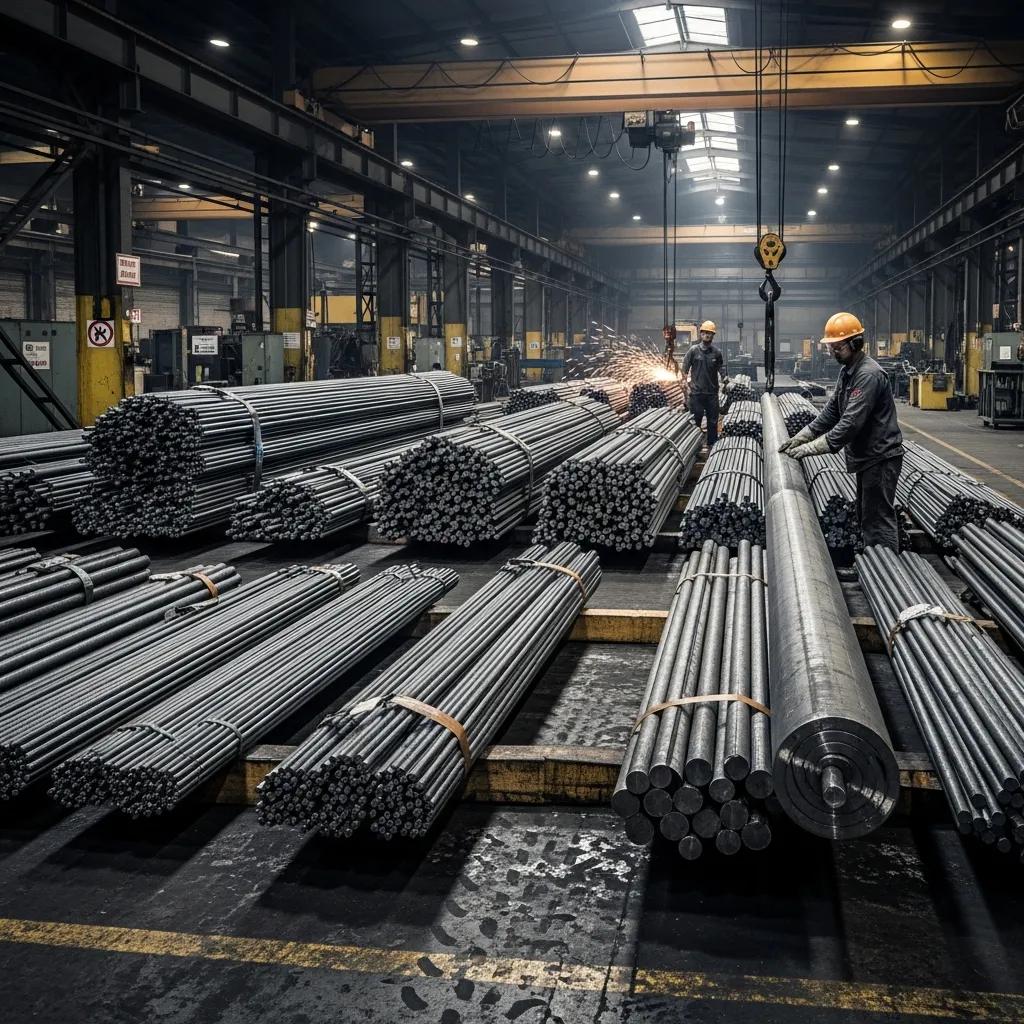
Common Mistakes When Choosing Steel Grades — A Practical Guide to Preventing Selection Errors and Material Failures
Picking the right steel grade means matching a material’s chemistry, strength, temper and finish to the component’s loads, environment and manufacturing plan. Mistakes at this stage often become the root cause of failures in service. This guide explains why grade selection matters, how mismatches in yield strength, chemistry, temper or surface finish cause performance and safety problems, and which practical checks cut lifecycle costs and downtime. Read on for the most frequent selection errors, how fabrication and environment shift grade choices, and the supplier checks that keep parts fit for purpose.
What Are the Most Common Steel Grade Selection Errors?
Selection mistakes happen when designers, buyers or fabricators specify material without fully aligning mechanical, chemical and service requirements to the part’s expected life. Those errors show up as deformation, brittle fracture, corrosion-related section loss or poor machinability that increases production time. Listing the recurring errors helps teams add quick checkpoints to design reviews and procurement. Below are the top five errors, each with a short definition and a prevention tip you can apply immediately.
Common selection errors and quick prevention tips:
- Spec mismatch (mechanical / chemical): Ordering a grade without confirming yield, tensile or chemical limits risks overload or brittle failure. Prevention: verify datasheets and mill test certificates at design handoff.
- Ignoring the environment: Using non‑corrosion resistant steel in humid, chloride or chemical exposure speeds deterioration. Prevention: pick corrosion‑resistant alloys or appropriate coatings for the service conditions.
- Prioritizing price over properties: Choosing the cheapest material can increase lifetime costs through rework and downtime. Prevention: run a simple life‑cycle cost comparison and ask suppliers for validated equivalents.
- Overlooking temper and finish: Wrong temper or poor surface finish hinders machining and creates fatigue initiation sites. Prevention: specify temper, tolerances and finish, and require inspection on receipt.
- Supplier verification failures: Accepting material without certification or traceability risks wrong batch properties. Prevention: request mill test reports, batch traceability and perform spot checks.
These five errors account for most material failures across industries. Each one is manageable with targeted specification controls and supplier verification. The sections that follow explain how chasing price or neglecting specs turns into field failures—and what to check in practice.
How Does Ignoring Steel Grade Specifications Lead to Material Failures?
Grade specifications combine mechanical properties, chemistry and permitted tolerances. Overlooking any element invites predictable failure modes. For example, a low‑yield steel in a load‑bearing shaft can deform elastically or plastically under service loads, producing permanent set and fatigue cracks at stress concentrators. Similarly, a grade lacking sufficient chromium in a corrosive environment will pit and lose section, cutting fatigue life and load capacity. Prevention starts with checking the full spec: yield and tensile values, carbon and alloying elements, required heat treatment, and the applicable standard (ASTM/EN/SAE/IS). Practically, compare the design’s required minimum yield to the supplier’s certified minimum and insist on mill test reports that trace composition and test results to the delivered batch. Verifying specs early avoids late engineering fixes and extends component service life.
Intro to a quick comparison table: the table below contrasts commonly confused grades by key properties so you can see why misselection happens and how to match grades to function.
| Steel Grade | Key Property (Yield / Ductility / Corrosion) | Typical Consequence of Mismatch |
|---|---|---|
| SAE 1018 / C20 | Lower yield, good machinability / moderate ductility | Deformation under high loads when a higher yield is required |
| SAE 4140 / 42CrMo4 | High strength, good hardenability / moderate corrosion resistance | Risk of brittle fracture if heat treatment is incorrect or under‑quenched |
| IS 2062 E350 / EN8 | Structural strength / variable weldability | Premature failure at welded joints if filler, preheat or procedure are wrong |
| 12L14 / SAE 1144 | Excellent machinability (leaded) / lower corrosion resistance | Unsuitable for corrosive environments despite easy machining |
This comparison highlights why matching strength, ductility and corrosion behavior to service conditions prevents common failures. The next section looks at the hidden costs of trading quality for lower price.
Why Is Compromising Steel Quality for Price a Critical Mistake?
Buying a lower‑priced grade without evaluating long‑term risks often costs more over the component’s life. Direct costs include faster wear, frequent replacements and higher warranty claims; indirect costs include production stoppages, rework and reputational damage when parts fail in service. For example, a cheaper grade that is hard to weld may require extra preheat or PWHT, erasing the apparent savings and slowing throughput. Procurement should use a light life‑cycle cost checklist that compares upfront price with expected replacement and downtime over the service life. That checklist should also consider machinability, weldability and corrosion mitigation so the selected grade minimizes total ownership cost, not just purchase price. Effective procurement policies balance immediate cost with long‑term durability.
How Do Environmental Factors Influence Steel Grade Selection?
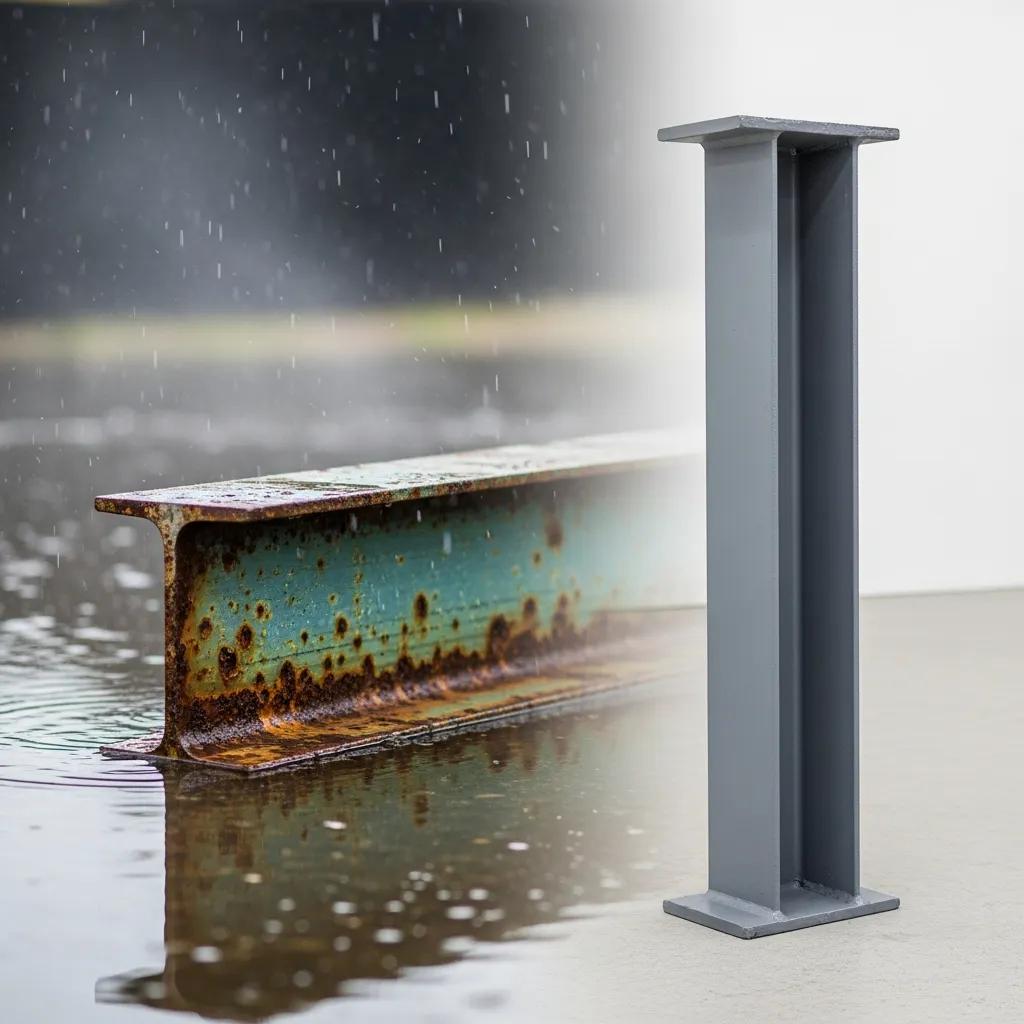
Environment—corrosion exposure, operating temperature, chemical contact and humidity—is a primary driver for grade choice because it defines how the material will degrade. Assessing the environment early ensures the chosen grade has the corrosion resistance, thermal stability and oxidation behavior needed for the intended life. Options include stainless or alloy grades, protective coatings, or surface treatments for bright bars. A clear environmental assessment during design or procurement tells you whether plain carbon steel will do or whether stainless, alloy or coated solutions are required. The subsections below outline specific corrosion risks and a practical selection flow for common industry environments.
Intro list of environmental factors and their effects:
- Corrosive media: acids, chlorides and seawater increase pitting and crevice corrosion risk.
- Temperature extremes: high temperature reduces strength and promotes scaling; low temperature raises the risk of brittle fracture.
- Humidity and salt spray: accelerate general corrosion and undermine protective films.
Rank these factors by severity to select grades or treatments before finalizing the bill of materials.
When environmental drivers are correctly assessed, teams can pick grades or coatings that match exposure and reduce maintenance frequency—next we cover the corrosion mechanisms to watch for.
What Are the Risks of Neglecting Corrosion Resistance and Environmental Conditions?
Ignoring corrosion resistance accelerates section loss and weakens structures via pitting, stress corrosion cracking and uniform thinning. Pits concentrate stress and can start fatigue cracks in cyclic parts; stress corrosion cracking can cause sudden failure even below yield loads. This neglect is common when general‑purpose carbon steels are specified for chloride‑rich, humid or chemically active environments without coatings or alloying elements that resist attack. Mitigation includes choosing stainless or alloy steels with the right chromium and molybdenum, applying protective coatings, or using cathodic protection where feasible. The most reliable approach combines the correct material with an appropriate protective finish to reduce inspection and replacement frequency.
How to Choose Steel Grades Suitable for Specific Industrial Environments?
Use a stepwise selection flow: assess loads and fatigue cycles, identify corrosive agents and temperature ranges, shortlist grade families that meet mechanical and corrosion needs, then confirm manufacturability and finishing limits. For instance, agricultural and construction equipment exposed to soil and moisture may need weathering steel or coated carbon grades, while high‑fatigue rail and heavy engineering components typically require quenched‑and‑tempered alloy bars such as SAE 4140 or EN24 after validation. Validation steps include requesting mill test reports, confirming heat‑treatment records, and running representative samples through simulated environmental tests when conditions are extreme. This flow reduces incorrect alloy selection and aligns material properties with service conditions before procurement.
Why Is Understanding Steel Temper, Tolerances, and Surface Finish Essential?
Temper, dimensional tolerances and surface finish are precision attributes that directly shape machining, assembly fit, fatigue life and final appearance—especially for bright bars used in precision parts. Temper sets hardness and ductility trade‑offs; tolerances determine whether secondary machining is needed; surface finish influences friction, fatigue initiation and corrosion spots. Accurate specifications for these items prevent rework, assembly issues and premature failures. The next sections explain how to choose temper and tolerances and why surface finish should be decided early when specifying bright bars.
Intro list of key specification items for bright bars:
- Temper / heat treatment: define target hardness and fracture toughness.
- Dimensional tolerances: state permissible deviations for fit and assembly.
- Surface finish metrics: specify Ra or equivalent parameters to control fatigue and wear.
Clear specifications here avoid surprises in machining and ensure procurement requests the correct product form.
How Do Temper and Dimensional Tolerances Affect Fabrication and Performance?
Temper and tolerance choices dictate how a steel bar behaves during machining, forming and cyclic loading. Annealed cold‑drawn bright bars machine and form easily but have lower strength; quenched‑and‑tempered bars deliver higher strength and better fatigue resistance but are harder to machine and may distort. Tight tolerances cut secondary operations and ensure accurate fits, reducing assembly time and scrap. When specifying bright bars, include machining allowance, expected distortion from heat treatment and target hardness to balance manufacturability and performance. Validate these details with the supplier and include them on the purchase order so delivered material meets fabrication needs.
Intro to EAV table: The table below links bright bar types and processes to temper, tolerance and finish and explains their downstream effects.
| Bright Bar Type / Process | Temper / Tolerance / Surface Finish | Effect on Fabrication and Performance |
|---|---|---|
| Cold‑drawn bright bar (annealed) | Lower hardness, tight dimensional tolerance, smooth finish | Easier machining, good formability, lower strength |
| Quenched & tempered alloy bar | Higher hardness range, standard tolerances, finished OD | Improved fatigue life, harder to machine, may require grinding for tight fits |
| Leaded free‑machining grades (e.g., 12L14) | Lower strength, excellent machinability, moderate finish | Fast turning and threading, not recommended for corrosive exposure |
| Precision ground bars | Very tight tolerances, high surface finish | Minimal secondary work—ideal for precision assemblies |
Specifying temper and tolerances correctly reduces rework and ensures parts perform as intended in service. Next we focus on how surface finish affects fatigue and corrosion initiation.
What Are the Consequences of Overlooking Surface Finish in Bright Bars?
Surface finish controls stress concentration, corrosion initiation and dimensional accuracy. Rough finishes create microscopic notches that act as crack starters under cyclic loads. In fatigue‑sensitive components, a poor Ra can cut life dramatically compared with a polished surface. In corrosive environments, rough finishes accelerate crevice and pitting corrosion. Overlooking finish often forces costly post‑processing—grinding or polishing—or results in rejected assemblies due to poor mating surfaces. Inspection tips: specify Ra values, run visual and profilometer checks on receipt, and include acceptance criteria for scratches, scoring and burrs. Prioritizing surface finish in the specification prevents hidden costs and improves field reliability.
How Does Supplier Expertise and Certification Impact Steel Procurement?
Supplier expertise and certification significantly reduce procurement risk. Knowledgeable suppliers provide traceability, proper grade matching and technical support that connects material properties to application needs. Certified suppliers deliver mill test reports, batch traceability and can supply representative samples or perform batch testing so engineering teams can verify properties before broad use. Beyond paperwork, supplier technical review and grade recommendations prevent mismatches and post‑delivery surprises. The subsections below list the documents to request and the ways supplier support cuts selection errors.
Intro list: Essential certification and document checks procurement should request:
- Mill Test Report (MTR): confirms chemical composition and mechanical test results for the supplied batch.
- Traceability documentation: links delivered items to specific production lots and heat numbers.
- Standards compliance references: shows conformance to ASTM/EN/IS/SAE specifications.
These documents are the evidence you need to accept material confidently and to escalate when properties don’t match the specification.
Why Is Verifying Supplier Certifications Crucial to Avoiding Procurement Mistakes?
Checking certificates ensures delivered material matches the order by confirming heat numbers, chemistry and mechanical test results. Red flags include missing heat numbers, composition ranges inconsistent with the stated grade or absent tensile/yield data. Procurement should spot‑check certificates and perform basic incoming inspection—dimensional checks, hardness readings and visual surface checks—to corroborate documentation. When doubt remains, random batch testing for critical properties reduces risk. Critical in‑service parts should never be released without matching MTRs and traceable heat numbers. Regular verification prevents incorrect batches and the high cost of installing undocumented material.
Intro to EAV table: Below is a concise checklist linking supplier checks to expected evidence and outcomes to guide procurement validation.
| Supplier Check | Verification Step | Expected Evidence / Outcome |
|---|---|---|
| Certification review | Request Mill Test Report with heat numbers | Confirms chemistry and mechanical properties |
| Traceability check | Verify batch/lot linkage on delivery documents | Ensures repeatability and recall capability |
| Spot testing | Perform hardness or tensile sample testing | Confirms conformity where consequences are high |
| Standards conformity | Match grade to referenced ASTM/EN/IS specification | Ensures correct grade interpretation and acceptance |
Verifying supplier certifications and doing spot checks lowers procurement risk and sets the stage for useful technical support from the supplier. The next subsection explains how supplier technical assistance prevents grade‑selection errors.
How Can Technical Support from Suppliers Prevent Steel Grade Selection Errors?

Supplier technical support prevents mistakes by reviewing specs, proposing grade matches and providing trial samples that reveal mismatches before full production. Practical support includes a supplier review of load and environment requirements, recommendations for equivalent grades with documented properties, small trial batches for machining trials and batch testing on request. Procurement teams should ask suppliers for a spec review, heat‑treatment evidence and sample parts for fit and finish checks when tolerances matter. Key questions to ask are: “Can you provide mill test reports for this heat?” and “Would you recommend a heat treatment or coating for this service environment?” Turning supplier expertise into early checks reduces selection risk.
What Are Common Fabrication and Handling Mistakes with Bright Bars?
Fabrication and handling errors with bright bars usually come from weak process control, excessive welding heat input or careless storage that damages finishes. These mistakes harm dimensional accuracy, surface quality and mechanical performance—leading to assembly issues, faster wear or premature failure. Solving these problems requires clear process parameters, in‑process inspections and handling instructions included in procurement documents. The next sections consider fabrication impacts and give practical handling and storage best practices to protect bright bars.
Intro list of common fabrication mistakes:
- Improper machining parameters: feeds and speeds that induce work hardening or chatter.
- Incorrect welding heat input: producing brittle heat‑affected zones or distortion.
- Insufficient cleaning before surface treatments: causing coating adhesion failures.
These problems are avoidable with documented process parameters and staged inspections.
How Do Fabrication Errors Affect Structural Integrity and Product Quality?
Fabrication errors—excessive welding heat or wrong machining parameters—change microstructure and introduce residual stresses that reduce fatigue life and dimensional stability. Overheating in welding can create brittle martensite in the heat‑affected zone that cracks under cyclic loads; aggressive machining on hardened surfaces can cause subsurface damage that shortens part life. Controlling process parameters, applying proper preheat/post‑weld heat treatment and inserting nondestructive checks at key stages reduce these risks. Place inspections after heat treatment, after machining and before coating to catch fabrication‑induced defects and ensure parts meet specifications. These controls protect product quality and prevent field failure.
What Best Practices Ensure Proper Handling and Storage of Steel Bright Bars?
Proper handling and storage preserve bright‑bar finish and dimensions by reducing exposure to corrosives, preventing surface damage and avoiding deformation from poor stacking. Recommended practices include:
- Store bars off the ground on clean supports
- Separate dissimilar metals to avoid galvanic corrosion
- Keep storage areas low in humidity where practical
- Use protective covers or temporary coatings for long‑term storage
- Lift with padded slings or cradle supports to prevent contact marks
- Inspect each delivery for scratches, dents or rust before acceptance
Following these steps lowers scrap rates and delivery rejections, keeping bright bars fit for precision use.
How Can Dhand Steels Help You Avoid These Common Steel Grade Selection Mistakes?
Dhand Steels manufactures, supplies and exports high‑precision bright bars and related metal sections from Ludhiana, Punjab, India. We offer a wide range of grades and customizable finished shapes for manufacturing, automotive, railways, agriculture, construction and heavy engineering. Our product range includes bright bars, alloy bright bars, HHB and HB wires, round, hex, square and special‑shaped bars across common engineering and alloy tool steels. For procurement teams aiming to avoid the errors above, Dhand Steels provides grade‑matching consultation, precision product forms and batch traceability documentation to support specification verification and post‑delivery QA. Request mill test reports, sample pieces for fit checks and clarification of heat‑treatment when ordering to build supplier verification into your procurement process.
Intro list linking mistakes to supplier actions:
- Spec mismatch: request mill test reports and ask for grade‑matching consultation.
- Environmental mismatch: ask the supplier for alloy alternatives or coating recommendations for corrosive service.
- Temper / finish issues: specify required temper and surface finish and request inspection reports at delivery.
Combining precision products with targeted technical consultation helps reduce rework and total ownership cost. Ask for a consultation or quote to align supplied material with your application requirements.
What Innovative Solutions Does Dhand Steels Offer for Optimal Steel Grade Selection?
Dhand Steels offers a broad selection of bright bar products and grades so you can match design and environment precisely. Our workflow can include specification review, sample provision and batch testing as part of order fulfilment. A typical supplier workflow looks like this:
- Buyer submits specification
- Supplier performs a technical review and recommends a grade
- Supplier supplies sample or trial batch for validation
- Supplier provides mill test reports and traceability for approved lots
This process validates machining behaviour, temper results and finish quality before full procurement, lowering the risk of incorrect alloy selection. Use these capabilities to convert design intent into verified material deliveries.
How Does Dhand Steels’ Expertise Ensure Quality and Cost-Effective Steel Procurement?
Dhand Steels focuses on precision finishing, a wide grade range and customizable shapes that reduce secondary processing and total cost of ownership. By stocking alloy and carbon bright bars across commonly specified engineering and tool steels, we help buyers balance strength, machinability and corrosion resistance for each application. Our attention to raw‑material selection and post‑sales support aligns with procurement goals: less rework, longer part life and predictable supply outcomes.
For teams evaluating suppliers, request a consultation or formal quote to map component requirements to available grades and finishes.
Frequently Asked Questions
1. What factors should be considered when selecting a steel grade for a specific application?
Consider mechanical properties (yield, tensile, ductility), chemical composition, operating environment (corrosives, temperatures), and manufacturing processes. Evaluate expected loads, fatigue cycles and service life to choose a grade that meets performance and durability needs.
2. How can lifecycle cost analysis influence steel grade selection?
Lifecycle cost analysis compares upfront material cost with long‑term expenses—maintenance, replacement and downtime. A higher initial cost can be justified if it reduces replacements and disruption. Include machinability, weldability and corrosion mitigation when assessing total ownership cost.
3. What role does surface finish play in the performance of steel components?
Surface finish affects stress concentration, fatigue life and corrosion resistance. A smoother finish reduces crack initiation under cyclic loads and improves coating performance. Specifying the right Ra or finish parameter is essential for reliable, long‑lasting components.
4. How can environmental assessments improve steel grade selection?
Environmental assessments identify the media, temperature and humidity a component will face. With that information you can select grades or coatings with the right corrosion and thermal resistance, reducing premature degradation and maintenance needs.
5. What are the benefits of working with certified suppliers for steel procurement?
Certified suppliers provide the documentation and traceability—MTRs, heat numbers and standards references—that prove material conformity. Their technical expertise also helps match grades to applications, lowering the risk of procurement errors and ensuring compliance with specifications.
6. What common mistakes should be avoided during the procurement of steel grades?
Avoid failing to verify specifications, overlooking environmental factors, prioritizing cost over suitability and not requesting necessary certifications. Use spot checks, lifecycle cost analysis and supplier consultations to prevent costly mistakes.
7. How can technical support from suppliers enhance steel grade selection?
Supplier technical support brings grade recommendations, heat‑treatment advice and sample testing. They can review your spec, propose equivalents and provide trial pieces to validate machining and finish—preventing mismatches before full‑scale orders.
Conclusion
Choosing the right steel grade determines performance, durability and total cost of ownership. By understanding common selection mistakes and assessing environmental and fabrication constraints, procurement teams can avoid costly failures. Working with certified, technically capable suppliers adds traceability and informed guidance that keeps material matched to application needs. If you want to reduce risk and improve part life, start with a specification review and supplier consultation to ensure your steel selections meet the intended service demands.


Comments
0 Comment On Post