
Why Heat Treatment Matters for Carbon & Alloy Steels — Benefits, Processes and Applications
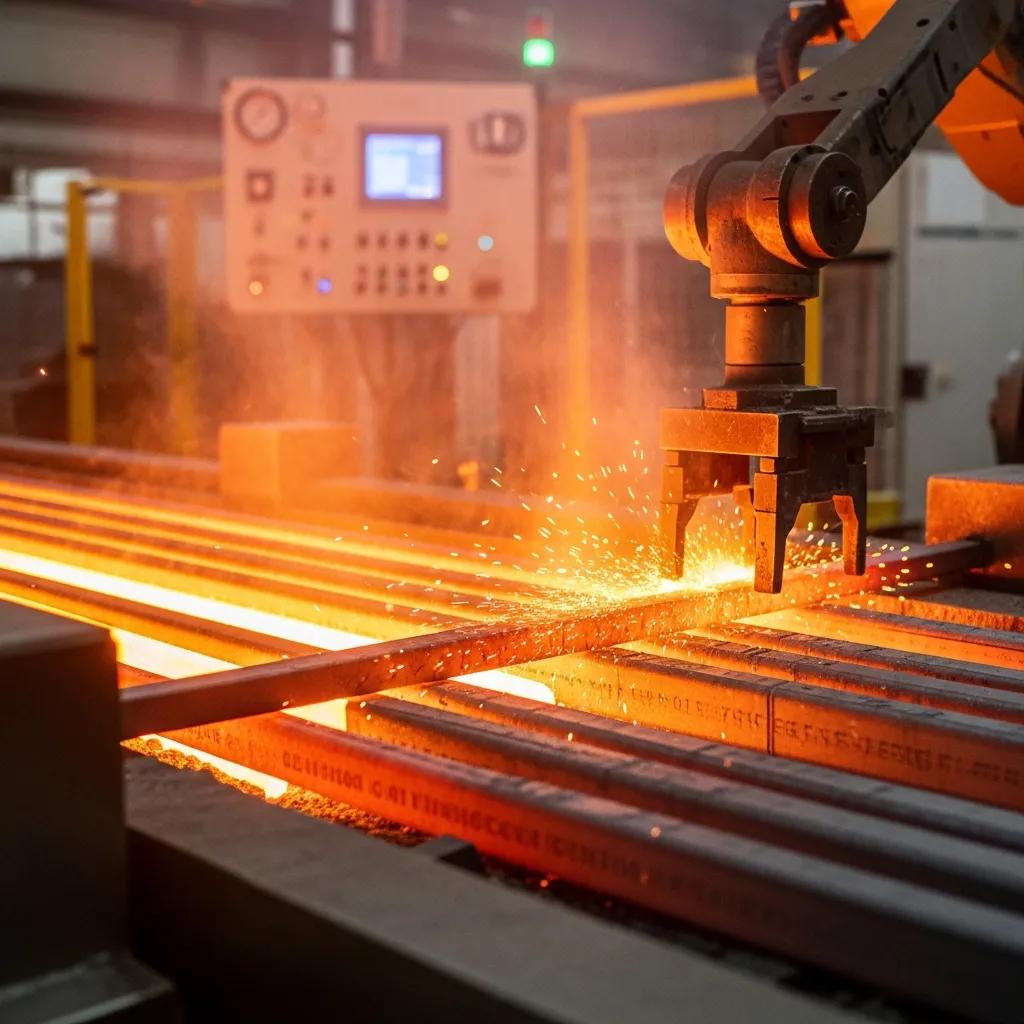
Heat treatment uses controlled temperature cycles to change the microstructure of carbon and alloy steels, delivering specific mechanical properties — hardness, strength, ductility and toughness — that parts need in service. By moving phases (for example converting austenite to martensite or refining ferrite–pearlite) engineers can tune components for wear resistance, fatigue life, machinability and dimensional stability. This guide explains why heat treatment is essential for bright bars and engineered parts, outlines the common industrial processes, compares carbon versus alloy steel responses, and gives practical examples from automotive, heavy engineering and agriculture. You’ll get clear guidance on choosing annealing, normalizing, quench & temper and surface-hardening routes, and how grade-specific behaviour (SAE4140, EN24, EN19, etc.) drives process selection. Tables and process-to-property mappings make it easy to use these insights in procurement and design decisions.
What Are the Key Benefits of Steel Heat Treatment?
Heat treatment turns basic steel stock into application-ready components by tailoring microstructure to match load, wear and environment. The result is predictable gains in mechanical performance, easier manufacturing and longer in-service life. Properly specified heat-treated parts reduce downtime, cut maintenance costs and allow tighter dimensional and surface tolerances for precision components. Below are the core benefits engineers and buyers should expect when they specify heat-treated steel.
Steel heat treatment gives these practical advantages:
- Greater Hardness and Strength: Targeted hardening boosts resistance to plastic deformation and increases load capacity.
- Balanced Ductility and Toughness: Tempering and controlled cooling tune impact resistance while retaining strength.
- Improved Wear Resistance and Fatigue Life: Bulk and surface treatments extend component life under cyclic or abrasive conditions.
- Easier Machining and Better Surface Finish: Soft-annealed conditions reduce cutting forces; subsequent grinding preserves dimensional accuracy.
Those improvements let designers reduce weight or extend maintenance intervals. Next, we look at how microstructural changes produce these mechanical gains.
How Does Heat Treatment Enhance Mechanical Properties of Steel?
Heat treatment changes the fraction and morphology of phases in steel — forming martensite, bainite or refined pearlite — and that directly defines hardness and tensile behavior. Fast quenching converts austenite to martensite for high hardness and strength; tempering then relaxes internal stresses and redistributes carbides to restore toughness. Normalizing refines grain size and reduces defects, improving toughness and uniformity through a section. Those microstructural adjustments translate into measurable property shifts that engineers use to meet fatigue, wear and load-bearing requirements.
Knowing these mechanisms simplifies process selection for specific service demands and highlights why hardness and durability matter for critical parts.
Why Is Heat Treatment Crucial for Improving Steel Hardness and Durability?
Many machine failures start at the surface: wear, contact fatigue or crack initiation under cyclic loads. Heat treatment attacks those failure modes by increasing surface and core resistance to deformation and crack growth. For gears and shafts, a hardened case or a quenched‑and‑tempered core raises contact fatigue limits and cuts abrasive wear, producing measurable life extension. Hardness changes depend on grade and route, but case-hardening or quench & temper can shift Rockwell hardness by tens of points while tempering preserves required toughness. Those gains lower replacement frequency and servicing cost; the following section surveys the processes that produce them.
Which Types of Heat Treatment Processes Are Used for Carbon and Alloy Steels?
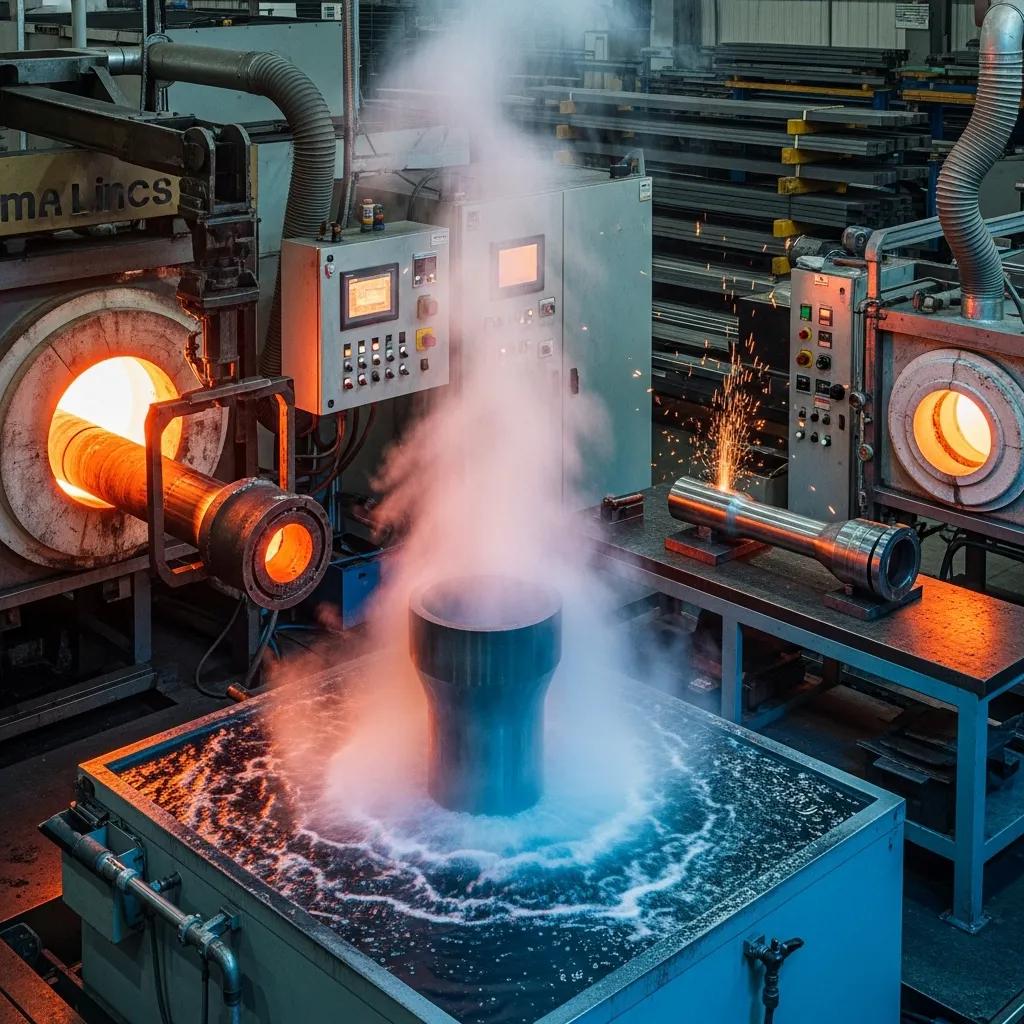
The main heat treatment families for carbon and alloy steels are annealing, normalizing, quenching, tempering and surface-hardening (carburizing, nitriding). Each uses different temperature ranges and cooling rates to produce distinct microstructures and properties. Choice depends on chemistry (carbon and alloy content), part geometry and performance needs: annealing and normalizing improve ductility and uniformity; quenching creates high hardness; tempering adjusts toughness; carburizing and nitriding build wear-resistant cases. The compact table below gives practical process parameters and common use-cases for quick engineering decisions.
| Process | Typical Parameters | Typical Outcome / Use-cases |
|---|---|---|
| Annealing | Heat above critical, slow furnace cool | Softening, stress relief and improved machinability |
| Normalizing | Heat above critical, air cool | Grain refinement, uniform microstructure, higher toughness |
| Quench & Temper | Austenitize, rapid quench, temper at controlled temperature | High strength and hardness with tailored toughness |
| Carburizing | Carbon-rich atmosphere at 850–950°C, quench | Hard case on a ductile core for gears and cams |
| Nitriding | 500–600°C nitrogen diffusion, minimal quench | Hard surface with low distortion and excellent wear resistance |
This reference clarifies where each process fits typical engineering needs and leads into more detailed comparisons of core treatments.
What Are the Differences Between Annealing, Normalizing, Quenching, and Tempering?
The four processes differ mainly by target temperature, cooling rate and the resulting microstructure, so each produces a different mix of hardness, ductility and residual stress. Annealing uses slow cooling to produce soft, ductile structures for machining and stress relief; normalizing uses faster air cooling to refine grains and standardize properties; quenching uses rapid cooling (water, oil, polymer) to form hard martensite; tempering reheats quenched steel to reduce brittleness and tune toughness. Choice depends on the desired final properties and the part’s tolerance for distortion — normalizing commonly precedes machining, while quench & temper is used for high‑strength, load-bearing parts.
These distinctions naturally lead to surface-hardening options when wear resistance is needed only at contact surfaces.
How Do Advanced Processes Like Carburizing and Nitriding Improve Steel Performance?
Carburizing and nitriding are diffusion-based surface-hardening techniques that create a hard, wear-resistant case while retaining a tougher core. Carburizing adds carbon at elevated temperatures followed by quench and temper to form a hard case ideal for gears, splines and shafts. Nitriding diffuses nitrogen at lower temperatures to form hard nitrides with minimal distortion — ideal for precision parts needing high fatigue resistance. These methods are chosen when geometry or dimensional control rules out heavy quenching, or when long case life with little post-process machining is required.
Knowing these surface treatments lets engineers specify correct case depth and core properties to meet service-life targets, and prepares them to quantify expected property changes.
How Does Heat Treatment Affect the Properties of Carbon and Alloy Steels?
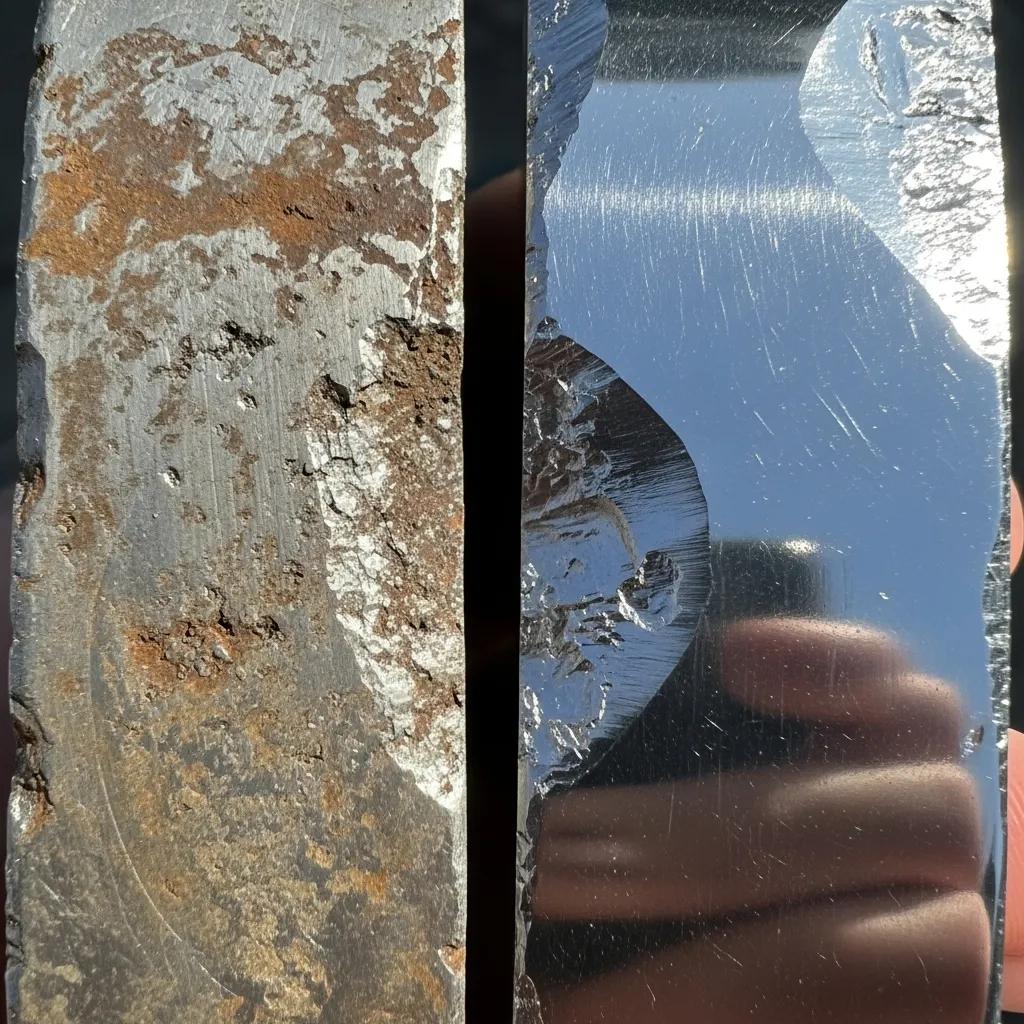
Heat treatment changes key mechanical metrics — hardness, tensile strength, ductility, toughness, wear resistance and fatigue life — by altering microstructure and introducing residual stress patterns that affect crack initiation and growth. Hardening increases hardness and strength but typically reduces ductility; tempering and other post-treatments restore balance. Surface-hardening raises surface hardness and wear resistance while leaving a ductile core; case depth controls how load is shared between surface and core. The table below gives grade-specific before/after examples to make these effects concrete for design and procurement.
| Grade | Property | Typical Change (Before → After) |
|---|---|---|
| SAE4140 | Hardness (HRC) | ~20 HRC → 40–50 HRC after quench & temper |
| EN24 | Tensile Strength (MPa) | ~600 MPa → 850–1000 MPa after quench & temper |
| SAE1018 | Ductility (% elongation) | ~20% → 12–15% after hardening (tempering restores some) |
This engineering-style comparison shows how process choice drives measurable property shifts and helps estimate in-service behavior for selected grades.
What Changes Occur in Hardness, Strength, and Ductility After Heat Treatment?
Quenching or case-hardening typically raises hardness and tensile strength, but reduces ductility unless tempered. For example, SAE4140 can move from the low‑20s HRC into the mid‑40s or low‑50s HRC after quench & temper, with corresponding gains in tensile strength. Tempering at controlled temperatures reduces brittleness and restores some ductility while keeping higher strength. Engineers therefore specify tempering windows to hit target combinations of yield, toughness and permitted elongation for reliable, durable components.
These trade-offs also shape post-heat-treatment machining plans and how to meet final surface finish and dimensional targets.
How Does Heat Treatment Influence Wear Resistance and Fatigue Life?
Wear resistance improves when surface hardness increases and case depth prevents subsurface shear failure; fatigue life benefits when compressive residual surface stresses and refined microstructures delay crack initiation. For sliding or rolling contacts, a hard case from carburizing or deep induction hardening reduces abrasive and adhesive wear while a tough core resists crack growth under cyclic loading. Residual compressive stresses introduced by certain surface treatments or shot peening further raise fatigue limits. Sectors like automotive and agriculture gain directly from these improvements, where component life and maintenance intervals drive costs.
The performance implications above point to practical method choices for carbon steels, discussed next.
What Are the Common Heat Treatment Methods for Carbon Steel?
For carbon steels, common industrial choices are annealing (stress relief and machinability), normalizing (grain refinement and uniformity) and quench & temper (high strength with controlled toughness). Selection depends on carbon content, geometry and end-use: low‑carbon bright bars are often annealed for easier machining and dimensional control; medium‑carbon steels are quenched & tempered for shafts and axles; some parts receive surface treatments to combine wear resistance with a tough core. The process-to-property table below guides practical selection for common carbon grades.
| Grade | Recommended Process | Resulting Property Improvements |
|---|---|---|
| SAE1018 | Full anneal or normalize | Improved machinability, reduced residual stress, better surface finish |
| EN8D | Normalize or quench & temper | Grain refinement and increased toughness for shafts |
| Low-carbon bright bars | Soft anneal | Easier cutting and tighter dimensional control during machining |
This mapping helps manufacturers pick treatments that meet machining and tolerance needs, and shows where supplier quality (straightness, finish) supports downstream work.
In production, annealing is particularly useful for stress relief before final machining — a key consideration when sourcing bright bars.
How Is Annealing Applied to Carbon Steel for Stress Relief?
Annealing involves heating carbon steel above the upper critical temperature, holding to homogenize the microstructure, then cooling slowly in a furnace to produce a softer, ductile condition. The result is reduced residual stress, improved dimensional stability and easier machining — all important when parts demand close tolerances. For bright bars used in precision work, annealing reduces distortion during cutting and grinding by relaxing internal stresses, cutting scrap and rework and preparing the part for subsequent cycles such as normalizing or quench & temper when higher strength is required.
That sets the stage for quench & temper when strength and toughness are primary targets.
What Role Does Quenching and Tempering Play in Carbon Steel Strength?
Quenching rapidly cools austenitized carbon steel to form martensite, producing high hardness and strength; subsequent tempering reheats the material to a controlled temperature to reduce brittleness and achieve the intended toughness–hardness balance. The temper temperature controls final hardness — lower tempering keeps higher hardness, higher tempering increases toughness and ductility. Quench & temper cycles let designers meet strict strength specs for load-bearing parts while avoiding catastrophic brittleness. Specifying quench media, temper windows and machining allowances ensures parts hit both mechanical and dimensional requirements.
With carbon steel processes covered, alloy steels add complexity because alloying elements change hardenability and transformation behaviour.
How Is Heat Treatment Applied to Alloy Steels to Enhance Their Performance?
Alloying elements like chromium, molybdenum and nickel increase hardenability and shift transformation temperatures, letting alloy steels develop high strength and toughness through thicker sections via quench & temper or by carburizing/nitriding. Alloy steels can achieve deeper hardening and better mechanical performance in larger components than plain carbon steels. Process choice focuses on matching cooling rates to an alloy’s hardenability and selecting tempering windows that maximise toughness without undue softening. The table below maps common alloy grades to recommended treatments to support procurement and specification.
| Grade | Recommended Treatment | Expected Property Improvement |
|---|---|---|
| SAE4140 | Quench & temper | High tensile strength, good toughness and improved fatigue resistance |
| EN24 | Quench & temper (+ stress relief) | Excellent strength and wear resistance for gears and shafts |
| EN19 | Quench & temper | High core strength with good impact performance for heavy parts |
This clarifies why certain alloy bright bar grades are specified for demanding applications and helps buyers request the right datasheets or quotes.
Dhand Steels produces premium bright bars in alloy grades such as SAE4140, EN24 and EN19 — commonly chosen for high‑strength, precision components. Request grade-specific datasheets or a quote to confirm attainable hardness and tensile ranges for your intended heat-treatment route.
Which Heat Treatment Processes Are Best for SAE4140, EN24, and EN19 Grades?
SAE4140 typically undergoes quench & temper to deliver a balanced mix of strength and toughness for shafts and couplings. EN24 and EN19 are usually quench & tempered and may receive surface treatments for gearwork to boost contact strength and fatigue life. These alloys benefit from strict control of austenitizing temperatures and properly matched quench media to minimise cracking and distortion, with tempering tuned to application-specific toughness targets. For procurement, specify expected post-treatment hardness ranges and allowable distortion so vendors can plan processing and straightening to meet dimensional tolerances. Close coordination between design, heat-treat supplier and material vendor ensures the final component meets mechanical and geometric requirements.
Next we cover how heat treatment affects machinability and surface finish during secondary manufacturing.
How Does Heat Treatment Improve Machinability and Surface Finish in Alloy Steels?
Certain heat-treatment routes — soft annealing or sub-critical annealing — produce softer microstructures before machining, reducing tool wear and improving surface finish; by contrast, quench & temper creates final hardness states that must be factored into finishing operations. Microstructure affects chip formation and tool life: fine ferrite–pearlite machines more predictably than highly tempered martensite. Suppliers that deliver bright bars with excellent surface finish and dimensional accuracy reduce the need for secondary grinding after heat treatment — a big advantage for tight-tolerance parts. Dhand Steels’ focus on dimensional accuracy and surface quality helps manufacturers minimise downstream machining and retain final geometry.
Supply quality and heat-treatment planning together ensure reliable parts for demanding applications.
What Are the Industrial Applications of Heat Treated Carbon and Alloy Steels?
Heat-treated steels are essential across automotive, heavy engineering and agricultural sectors because they provide the strength, wear resistance and fatigue life required for gears, shafts, couplings and wear parts. Automotive examples include hardened gears, axles and critical fasteners; heavy engineering uses quenched-and-tempered shafts and couplings for high-load systems; agricultural equipment often relies on case-hardened parts to resist abrasive soils and impact. For buyers, specifying grade, case depth and post-treatment tolerances aligns material supply and thermal processing to reduce life-cycle costs. The examples below show typical component-level choices and expected performance.
Key application areas and typical heat-treatment choices include:
- Automotive: Gears, axles and shafts — quench & temper or carburizing for contact surfaces.
- Heavy Engineering: Main shafts and couplings — quenched-and-tempered alloy steels for high-load capacity.
- Agriculture: Plough points, tines and wear parts — surface-hardened steels or hardened cases to resist abrasion.
These examples show how heat-treatment choices map directly to function, and lead into supplier-focused notes on bright bars in manufacturing workflows.
Dhand Steels supplies high-precision bright bars for these industries, offering alloy and carbon grades suited to gears, shafts and wear parts. Contact us for product details and application guidance to ensure the right material and pre‑heat-treatment condition for your process.
How Are Heat Treated Steels Used in Automotive and Heavy Engineering Sectors?
In automotive and heavy engineering, heat-treated steels appear as gears, axles, crankshafts and main drive shafts where high fatigue strength and wear resistance are essential for reliability. Gear teeth commonly receive carburized cases with quenched cores to resist pitting while retaining a ductile subsurface. Shafts are quenched & tempered to achieve high tensile strength and torsional fatigue resistance. These targeted treatments extend service life and reduce unscheduled maintenance; confirming process, post-treatment hardness and geometry is critical to achieving those outcomes.
Consistent bright bar supply quality is important for manufacturers who need reliable starting stock for heat treatment and machining.
What Benefits Do Heat Treated Bright Bars Provide in Manufacturing and Agriculture?
Heat-treated bright bars offer dimensional stability, tight roundness and a high surface finish that simplify machining and finishing for precision components used in manufacturing and agriculture. Accurate starting geometry combined with appropriate heat treatment reduces scrap and shortens cycle times. For agricultural wear parts, a hardened surface or case improves resistance to abrasive soils and repeated impact, lowering total cost of ownership. For manufacturers, straightened and aligned bright bars cut clamping and setup time, improve throughput and preserve tool life. Specifying both grade and pre/post-heat-treatment condition ensures material supports efficient production and long component life.
Buying premium bright bars with reliable geometry and finish — capabilities specialist suppliers provide — reduces process variability and helps meet tight manufacturing tolerances.
How Are Heat Treated Steels Used in Automotive and Heavy Engineering Sectors?
Heat-treated steels for automotive and heavy engineering are used in load-bearing rotating components where fatigue strength and toughness are vital — gears, drive shafts and transmission parts that must balance surface hardness with core ductility. Manufacturers choose through‑hardening or case‑hardening routes depending on contact stress and geometry, often pairing carburized surfaces with quenched cores for best life. Tight control of heat-treatment cycles and post-process straightening preserves dimensional tolerances essential for assembly and performance. Next we highlight benefits of bright bars for production and field use.
What Benefits Do Heat Treated Bright Bars Provide in Manufacturing and Agriculture?
Heat treated bright bars combine consistent geometry, superior surface finish and tailored mechanical properties to streamline manufacturing and extend the field life of agricultural implements. Precise starting geometry reduces machining allowances and helps maintain concentricity and straightness after heat treatment. A high-quality surface finish reduces grinding after heat treatment, saving time and cost. For agricultural customers, treated bright bars yield durable parts that withstand abrasion and impact, lowering life-cycle costs and maintenance frequency.
These supply and process advantages make careful material selection and clear heat-treatment specifications essential to reliable production and long-term component performance.
Frequently Asked Questions
1. What factors influence the choice of heat treatment process for a specific steel grade?
Process choice depends on the steel’s chemical composition and carbon content, the desired mechanical properties, and the part’s geometry. Low‑carbon steels often need annealing for machinability; higher‑carbon or alloy steels are commonly quench & tempered for strength and hardness. Service conditions, load requirements and environmental exposure also guide the decision.
2. How does the cooling rate affect the properties of heat-treated steel?
Cooling rate controls phase transformations and thus mechanical properties. Rapid cooling (quenching) forms martensite, increasing hardness and strength but lowering ductility. Slow cooling (annealing) promotes softer microstructures and improved ductility and machinability. Controlling the cooling rate is essential to achieve the desired balance of hardness, toughness and ductility.
3. What are the common applications of surface-hardening techniques like carburizing and nitriding?
Carburizing and nitriding are used where surface wear resistance matters. Carburizing is common on gears, camshafts and splines that need a hard surface and a ductile core. Nitriding suits precision parts (valve stems, crankshafts) requiring low distortion and high fatigue resistance. Both extend component life in demanding conditions.
4. How does heat treatment affect the machinability of steel?
Heat treatment can improve or worsen machinability. Annealing softens steel and reduces tool wear, while quenching increases hardness and tool wear. Tempering after quenching can restore some ductility and improve machinability while keeping elevated strength. Understanding the chosen heat-treatment path helps optimise machining strategies and tool selection.
5. What role does residual stress play in the performance of heat-treated steel components?
Residual stresses remaining after heat treatment influence performance and durability. Compressive residual stresses (often from quenching or surface treatments) can improve fatigue resistance and delay crack initiation. Tensile residual stresses, however, can promote premature failure. Managing residual stress via controlled cycles and stress-relief steps is key to reliable components.
6. Can heat treatment processes be applied to stainless steels, and if so, how do they differ from carbon steels?
Yes — but the methods and goals differ. Stainless steels commonly use solution annealing to dissolve carbides and preserve corrosion resistance; many stainless grades cannot be hardened by simple quenching like carbon steels. Some stainless alloys are strengthened by ageing rather than martensitic hardening. Selecting the right route depends on the stainless grade and the required balance of strength and corrosion performance.
7. How can manufacturers ensure the quality of heat-treated components?
Quality comes from strict process control and inspection: correct temperatures and cooling rates, routine microstructure checks, hardness testing and non-destructive examination where needed. Clear specifications and close collaboration with heat-treat suppliers — plus documented acceptance criteria — ensure consistent, reliable components.
Conclusion
Heat treatment is a practical, proven way to optimise the mechanical properties of carbon and alloy steels for real-world applications — raising hardness and strength where needed, while preserving toughness and dimensional control. Understanding each process and how specific grades respond lets engineers and buyers make confident, cost-effective material and process choices. For tailored advice or grade-specific capabilities, speak with our team — we’ll help match material, heat-treatment route and tolerances to your application.


Comments
0 Comment On Post