
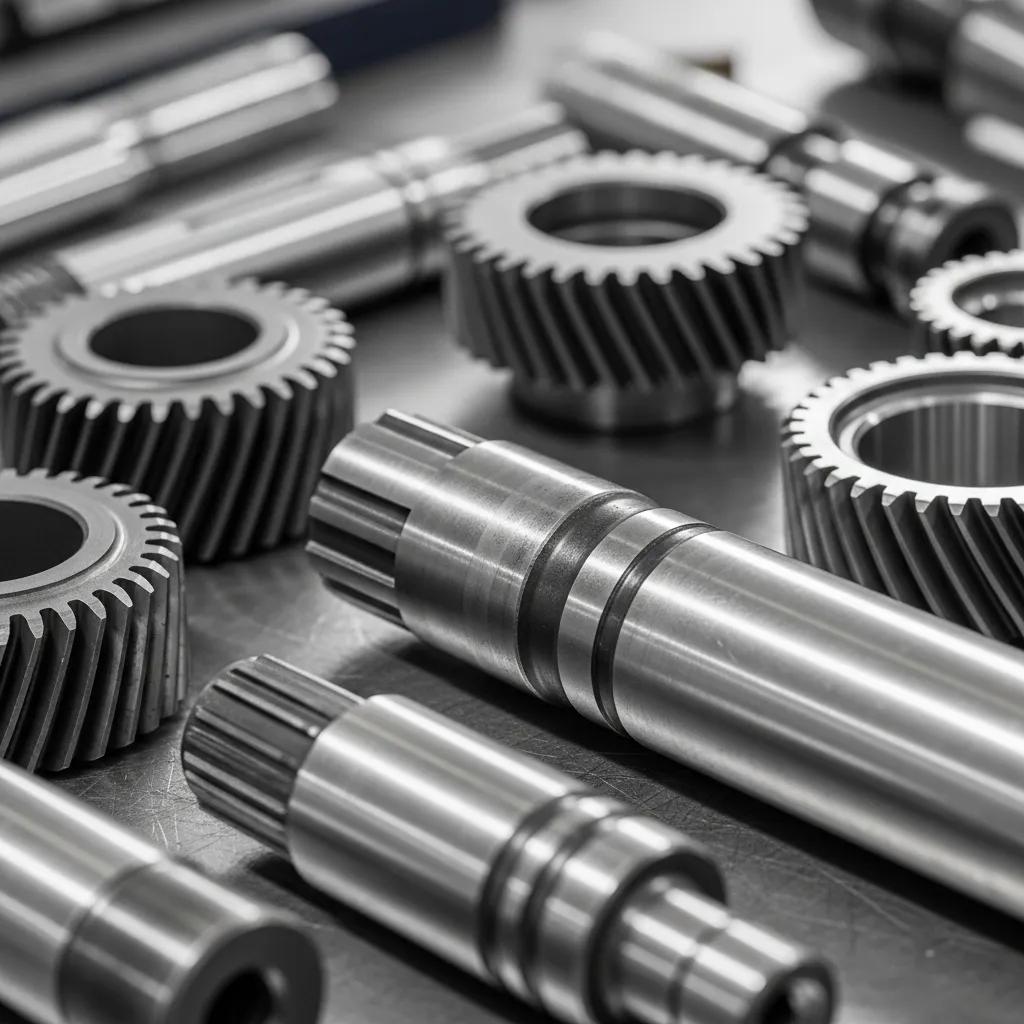
Best Steel Grades for Gears, Shafts & Automotive Components — An Engineer’s Guide to Selection and Performance
Selecting the right steel grade for gears, shafts and other automotive parts directly affects durability, safety and total lifecycle cost. In this guide we explain why grade choice matters, how surface and core metallurgy interact with heat-treatment, and which engineering steels work best for common load types in vehicles. You’ll get clear comparisons between carburizing grades, through‑hardening alloys and nitriding steels, an overview of standard heat‑treatment routes, and practical guidance for bending, contact and torsional applications. We map grades to typical failure modes—pitting, scuffing, tooth breakage and torsional fatigue—and provide procurement-ready tables comparing composition, heat treatment and applications. Finally, we outline bright-bar stock options suited to precision machining and note a relevant supplier offering these products. This structured, application-focused review helps design engineers, buyers and maintenance planners choose steels that balance wear resistance, core toughness and manufacturability.
Which Steel Grades Are Ideal for Automotive Gears?
Gears for automotive drivetrains are most often made from carburizing (case‑hardening) steels because they deliver a hard, wear‑resistant surface together with a ductile, tough core that resists tooth breakage. Carburizing grades allow shallow to moderate case depths that raise surface hardness for contact fatigue while preserving bending performance in the core. Grade selection depends on gear loading: high contact stress calls for deeper cases and higher surface hardness, while gears subject to high bending stress need a tougher core. Balancing case depth, hardenability and alloy content guides the choice between common carburizing steels and other options.
The table below summarizes common carburizing gear grades and selection guidance. It compares composition drivers, typical heat treatment, expected surface hardness and case depths, common automotive applications, and practical notes on processing and cost to support procurement decisions.
| Steel Grade | Composition / Key Alloying Elements | Typical Heat Treatment | Surface Hardness / Case Depth | Typical Applications | Notes on Cost/Processing |
|---|---|---|---|---|---|
| 20CrMnTi (carburizing) | Low C with Mn, Cr and Ti microalloying | Carburize → quench & temper | 58–62 HRC surface; 0.6–1.2 mm case | Transmission gears, spur/helical gears | Good hardenability for moderate case depths |
| AISI 8620 (carburizing) | Low‑C steel alloyed with Ni, Cr, Mn | Carburize → quench & temper | 56–60 HRC surface; 0.6–1.0 mm case | Differential gears, moderate‑load gears | Economical, widely available, reliable core toughness |
| 18CrNiMo7-6 (carburizing) | Ni, Mo and Cr for deeper case capability | Carburize → quench & temper | 60–64 HRC surface; 1.0–2.0 mm case | High‑contact‑stress gears, heavy‑duty applications | Higher cost but supports deeper case depths |
These comparisons show how carburizing grades produce the hardened surface and ductile core that extend gear life. The following section reviews the material properties that control gear performance under contact and bending loads.
What Properties Make Steel Suitable for Automotive Gears?
Suitability hinges on surface wear resistance, core toughness, fatigue strength and hardenability — properties that interact to determine service life. Surface hardness (HRC/HV) reduces adhesive wear and pitting by lowering local contact stresses, while sufficient case depth distributes contact loads to delay subsurface cracking. A tough core prevents catastrophic tooth breakage under bending by absorbing impact energy and stopping crack growth. Hardenability and alloying control achievable case depth and core strength after quench and temper, which also influence manufacturability and distortion control. Understanding these linked properties helps engineers specify appropriate HRC ranges and case depths for a given gear geometry and duty cycle.
Those material choices directly affect failure modes such as micropitting, scuffing and tooth fracture. Selecting a grade with the right case/core balance reduces maintenance frequency and total cost of ownership. The next subsection explains how carburizing creates that desirable case/core microstructure in common gear steels.
How Do Carburizing Steel Grades Like 20CrMnTi and AISI 8620 Enhance Gear Performance?
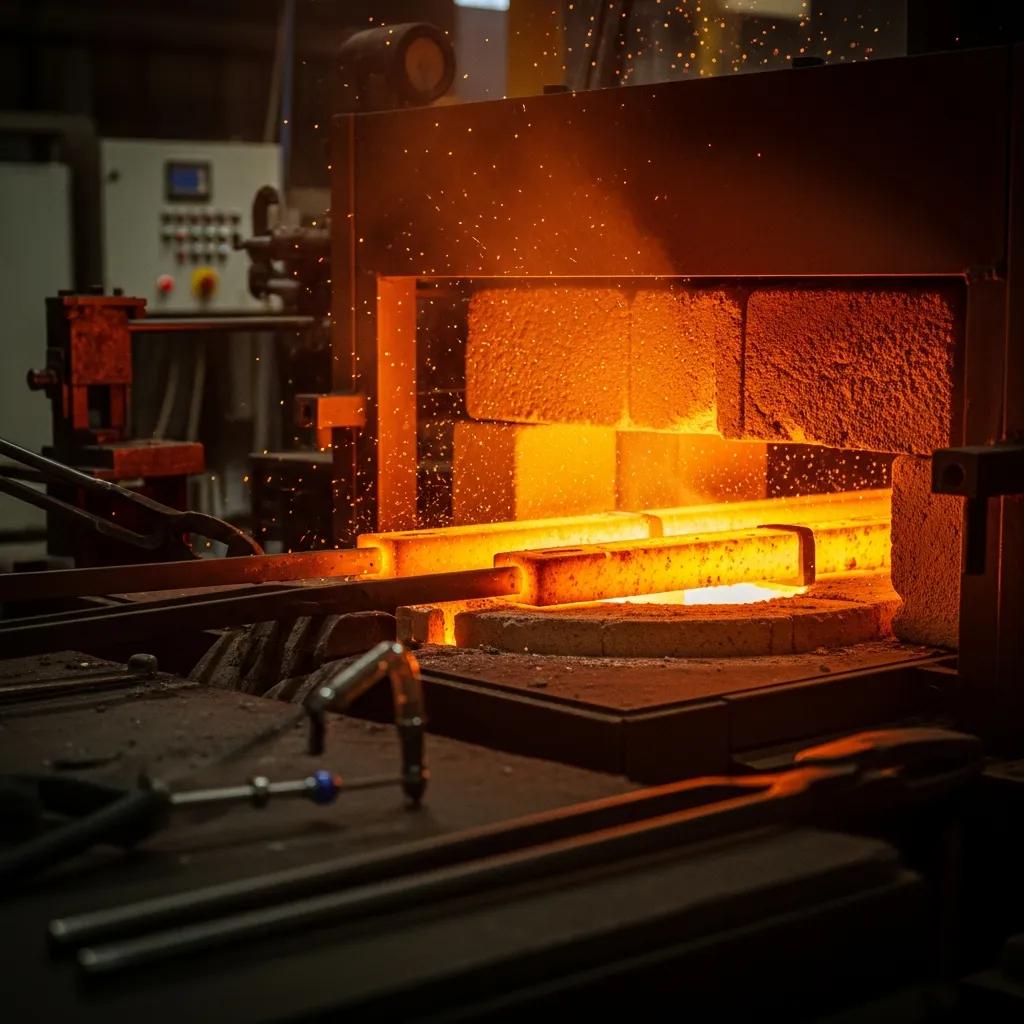
Carburizing increases surface carbon by diffusion at high temperature, producing a hardened case after quench and temper while leaving a lower‑carbon, tough core. For grades like 20CrMnTi and AISI 8620, carburizing yields a fine martensitic case with residual compressive stresses that improve contact fatigue resistance and delay crack initiation. Typical case depths range from around 0.6 mm for light duty to 1.5–2.0 mm for heavy contact applications; surface hardness commonly reaches 56–62 HRC depending on the cycle. 20CrMnTi is chosen when small alloy additions boost hardenability and fatigue resistance, while AISI 8620 is selected for economical core toughness and predictable carburizing response. Correct case depth and tempering produce gearsets that resist pitting and bending fatigue across highway and off‑road duty cycles.
Applied correctly, these process improvements raise mean time between failures and reduce life‑cycle costs — and they inform the choice of matching shaft steels for drivetrain use.
What Are the Best Steel Grades for Automotive Shafts and Axles?
Through‑hardening and nitriding steels are the usual choices for shafts and axles because they meet tensile and torsional strength requirements while allowing high‑quality bearing and seal finishes. Shaft selection focuses on tensile strength, torsional fatigue resistance and surface finish, balanced against machinability and heat‑treatment distortion. Through‑hardening alloys such as 42CrMo4 (SAE 4140) deliver strong cores after quench & temper and are preferred for heavily loaded axles, whereas low‑carbon nitriding steels allow a thin, wear‑resistant case with minimal distortion for precision shafts.
The table below compares typical shaft grades, target mechanicals, heat‑treatment routes and precision/finish notes to aid design and procurement choices.
| Steel Grade | Tensile Strength (typ.) | Toughness / Impact Resistance | Heat Treatment Route | Typical Shaft Applications | Precision/Finish Notes |
|---|---|---|---|---|---|
| 42CrMo4 / SAE 4140 | 900–1100 MPa (QT) | High toughness after temper | Quench & temper (air/oil) | Heavy axles, drive shafts, crankshafts | Good machinability; suitable for precision grinding |
| EN24 / AISI 4340 | 1000–1300 MPa (QT) | Excellent toughness and fatigue resistance | Quench & temper with higher alloy content | Gearshafts, high‑load axles | Well suited to induction hardening and grinding |
| SAE 1045 | 600–800 MPa (QT) | Moderate toughness | Normalize + quench & temper | Moderate‑load shafts, steering components | Economical; may need nitriding for wear resistance |
This concise comparison clarifies when to choose through‑hardening alloys versus nitriding‑capable steels for rotating parts. The following subsection reviews the mechanical properties most critical to shaft design.
Which Mechanical Properties Are Critical for Automotive Shafts?
Key properties are tensile and yield strength, torsional strength, fatigue limit and impact toughness — all of which affect resistance to steady torque, shock loads and cyclic fatigue. Torsional strength sets the shaft’s resistance to twist under torque and is tied to shear strength and polar moment of inertia for a given diameter and geometry. Fatigue strength governs life under alternating loads and at stress concentrators like keyways or shoulders; designers commonly reference S‑N curves and surface finish factors when specifying endurance limits. Impact toughness is essential where components see shocks, helping the shaft absorb transient loads without brittle failure. Surface finish, straightness and overall condition also influence bearing life and torsional vibration, so material choice must consider both mechanical metrics and achievable manufacturing tolerances.
Understanding common failure mechanisms — fatigue cracks at concentrators or torsional shear from overload — guides both metallurgy and geometry choices. The next subsection explains how through‑hardening steels satisfy these requirements in practice.
How Do Through-Hardening Steels Such as 42CrMo and SAE 4140 Meet Shaft Requirements?
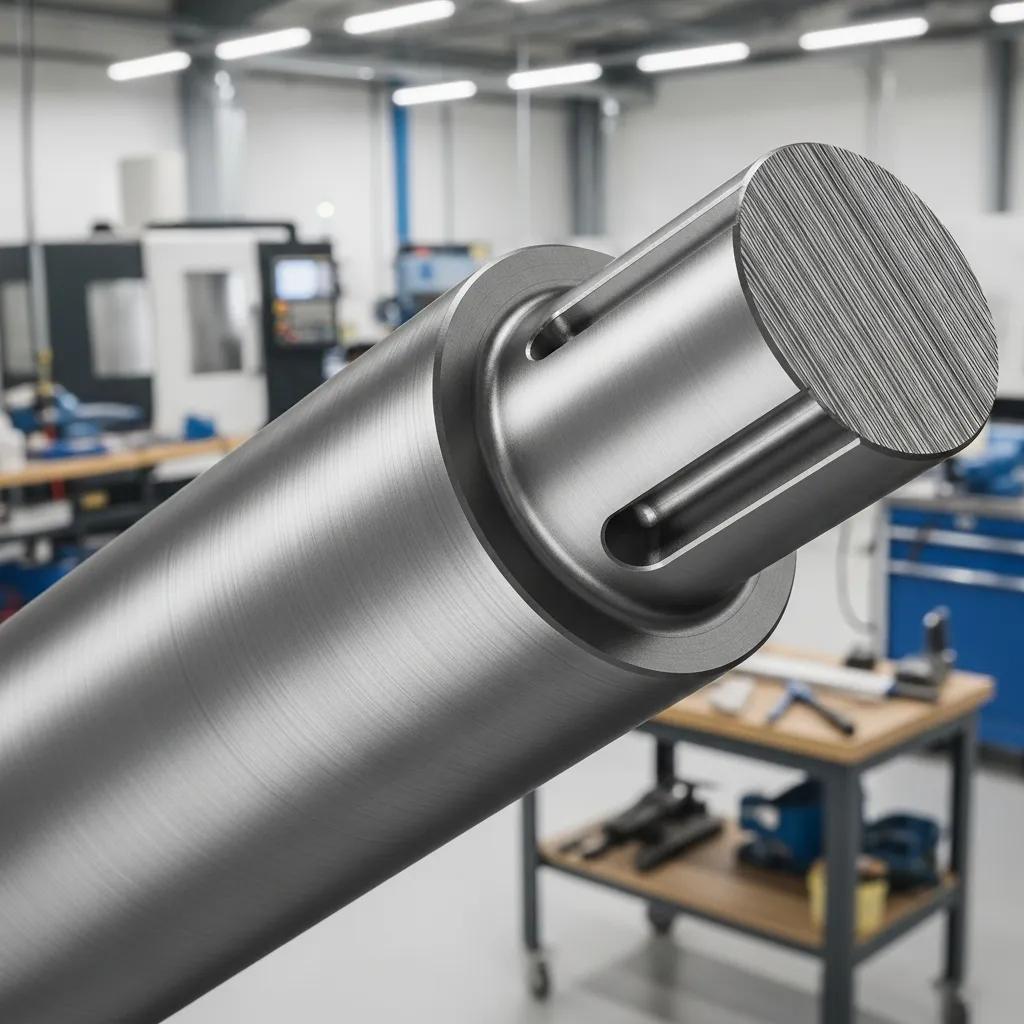
Through‑hardening steels such as 42CrMo4 (SAE 4140) produce a uniform microstructure after quench & temper, delivering high tensile strength and toughness through the section. Typical post‑treatment tensile strengths are 900–1100 MPa with hardness in the 28–40 HRC range depending on tempering, giving a resilient core to resist torsional and bending loads without a brittle surface. These steels machine well when normalized and can be ground to precision diameters for bearing fits and reduced vibration. For large diameter axles, alloying increases hardenability so the section attains consistent properties with minimal internal softness. The outcome is a practical balance of fatigue resistance, ductility and dimensional stability for drive shafts, stub axles and heavy transmission components.
Matching heat‑treatment parameters and tempering to service conditions ensures shafts made from through‑hardening alloys meet strength and durability targets.
How Do Heat Treatment Processes Improve Steel for Automotive Components?
Heat treatment lets you tailor surface and core properties to part function: carburizing and nitriding create hardened surfaces for wear resistance, while quench & temper develops core strength and toughness. These processes rely on diffusion, phase transformation or surface reactions to change microstructure and residual stress, producing benefits such as improved contact fatigue resistance, greater torsional capacity and controlled distortion. Selecting the correct process requires matching steel chemistry, desired case depth or core hardness, part geometry and allowable distortion. Practical choice also factors throughput, cost and post‑treatment finishing needs for assembly and mating parts.
| Process | Purpose | Compatible Steel Types | Typical Parameters | Performance Benefit |
|---|---|---|---|---|
| Carburizing | Increase surface carbon to form a hard case | Low‑C carburizing grades (20CrMnTi, 8620) | 900–940°C carburize; quench + temper; case 0.6–2.0 mm | High surface hardness, improved contact fatigue |
| Nitriding | Create a hard nitride case with low distortion | Nitriding steels (alloyed low‑C steels) | 500–580°C gas or plasma nitriding; case 0.1–0.6 mm | Wear resistance, improved fatigue life, minimal distortion |
| Quench & Temper | Increase core strength and toughness | Through‑hardening alloys (42CrMo4, 4140, EN24) | Austenitize 830–880°C; quench; temper to target HRC | High tensile strength, controlled toughness |
This mapping helps match material and process to deliver target surface hardness, core strength and dimensional stability. The sections that follow explain carburizing and nitriding in more practical terms for gears and shafts.
What Is Carburizing and Its Benefits for Gear Steel?
Carburizing is a high‑temperature surface enrichment process that diffuses carbon into low‑carbon steels to produce a hard, wear‑resistant case on parts such as gears. Typical cycles run at 900–950°C for times set to reach the required case depth, followed by quenching and tempering to form a martensitic case and a ductile core. Benefits include increased wear resistance, better contact fatigue life and retention of a tough core that resists bending fracture. Typical specs might call for 0.8–1.2 mm effective case depth with 58–62 HRC surface hardness for moderately loaded transmission gears — a balance between durability and manageable distortion.
Carburizing requires selecting base materials that support carbon diffusion and allowing for post‑process machining. Specifying correct case/core requirements ensures grade and cycle meet the in‑service load profile.
How Does Nitriding Enhance Fatigue Life and Surface Hardness of Shafts?
Nitriding introduces nitrogen into the steel surface at lower temperatures (typically 500–580°C), producing a hard nitride layer and a diffusion zone that increase wear resistance and fatigue life with minimal distortion. Nitriding is ideal for precision shafts and components where dimensional stability matters because it avoids the high‑temperature quench that can cause warping. Suitable steels include C45 and medium‑C grades designed for nitriding; the process forms a compound layer and an underlying diffusion zone that boost surface hardness without compromising core toughness. For rotating shafts, nitriding improves bearing life and fretting resistance while preserving ground finishes and tight tolerances.
Choosing nitriding over carburizing depends on required case depth, allowable distortion and the need for precision fits; nitriding excels when a thin, stable case will extend fatigue life without extra machining.
What Alloy Steel Bright Bars Does Dhand Steels Offer for Automotive Applications?
Alloy and round bright bars are commonly used stock forms for machining gears, shafts and engine components because their controlled surface finish and dimensional accuracy reduce machining time and finishing costs. Bright bars come straightened with superior surface quality, enabling precision grinding and consistent bearing fits that improve fatigue life and assembly repeatability. For automotive parts where geometry and finish are critical — transmission shafts, pinions and machined gear blanks — choosing the right bright‑bar grade shortens lead times and minimizes scrap from out‑of‑tolerance stock.
Which Steel Grades Are Available in Dhand Steels’ Alloy Bright Bar Range?
Dhand Steels supplies a broad range of alloy and carbon bright bars suitable for automotive machining, including SAE 1018, EN8D, C20, SAE 4140, EN24, EN19 and 42CrMo4. These grades cover light to heavy applications: low‑carbon grades like SAE 1018 and C20 are good for parts needing excellent machinability and later case‑hardening, while medium‑alloy grades such as SAE 4140, EN24 and 42CrMo4 address through‑hardening and high‑strength needs for shafts and axles. EN19 and EN24 are frequently chosen where fatigue resistance is critical. Each grade is offered in bright‑bar and round‑bar forms to support precision machining and consistent mechanical results.
That range lets engineers select stock that aligns with intended heat treatment and component function, reducing extra processing and ensuring consistent quality for high‑stress parts.
How Do Dhand Steels’ Bright Bars Ensure Quality and Precision for High-Stress Components?
Dhand Steels focuses on precision straightening and alignment of bright bars to reduce residual curvature and cut down on costly pre‑machining corrections. Quality checks on dimensional tolerances and surface finish help ensure bearing fits and sealing faces meet assembly requirements without excessive grinding. The supplier highlights energy‑efficient manufacturing practices to lower carbon intensity and offers flexibility on client specifications plus post‑sales support. Choosing straightened, premium bright bars from a supplier with strict quality checkpoints can shorten production cycles and improve component reliability for high‑stress automotive applications.
These manufacturing and quality attributes directly affect how quickly stock converts into finished shafts and gear blanks with predictable mechanical properties and minimal rework.
What Future Trends Affect Steel Selection for Automotive Gears and Shafts?
Steel selection for rotating automotive components is shaped by trends such as advanced high‑strength steels (AHSS), electrification‑driven load profiles, lightweighting and sustainability priorities like low‑carbon steel sourcing. While AHSS and UHSS change structural design and enable thinner sections, rotating and wear‑critical components still rely on proven alloy steels for fatigue and wear performance. Electrified drivetrains shift loading patterns — higher torque at low speeds and more frequent cycling — which alters case depth and core strength needs. Sustainability pressures also push buyers to consider recycled content and energy‑efficient processing when evaluating suppliers.
How Are Advanced High-Strength Steels Transforming Automotive Component Design?
Advanced high‑strength steels (AHSS) and ultra‑high‑strength steels (UHSS) enable weight reduction and better crash energy management, especially for body and chassis parts. They achieve high strength through complex microstructures and controlled processing, allowing reduced gauge without losing stiffness or safety. For rotating parts like gears and shafts, however, AHSS are not always the best choice because wear resistance, compatibility with case treatments and rolling/sliding fatigue behavior remain better addressed by traditional carburizing or through‑hardening alloys. As a result, AHSS usually complement rather than replace conventional steels, with designers mixing materials across the vehicle by function and loading.
This material partitioning preserves proven engineering steels for high‑wear components while using AHSS where structural mass reduction is most beneficial.
What Role Does Sustainable and Green Steel Play in Automotive Manufacturing?
Sustainable and green steel initiatives — lower‑carbon production routes and higher recycled content — are increasingly part of OEM and supplier procurement criteria as firms seek to cut lifecycle emissions. Choosing suppliers that prioritize energy‑efficient processes and traceable raw materials affects total cost of ownership and helps meet regulatory or fleet carbon targets. Buyers of bright bars and alloy stock should validate sustainability claims through supplier transparency and consistent quality outcomes. While green steel can carry a price premium, procurement decisions balance carbon goals against mechanical performance and cost, making supplier selection a strategic choice in sourcing.
As companies push to reduce emissions, material sourcing policies will play a growing role in which steel suppliers and grades are selected for automotive components.
For engineers and procurement specialists seeking reliable alloy bright bars and round bright bars for gears, shafts or engine components, look for suppliers that list grades such as SAE 1018, EN8D, C20, SAE 4140, EN24, EN19 and 42CrMo4 and that emphasize precision straightening and strict quality checks. Dhand Steels offers these grades in bright‑bar forms prepared for precision machining and reduced pre‑machining waste, and the company highlights energy‑efficient production and post‑sales support to help customers meet both performance and sustainability goals.
- Key selection steps for component designers: Identify the dominant load (contact vs bending vs torsion) and the required case depth. Pick a steel family (carburizing, through‑hardening or nitriding) based on load and allowable distortion. Specify achievable hardness, case depth and finish tolerances to match assembly requirements.
- Practical heat‑treatment checklist: Verify the base chemistry supports the intended case depth or nitriding response. Specify quench media and temper parameters to reach target core toughness. Include post‑treatment straightening and grinding allowances in drawings.
- Procurement considerations for bright bars: Require mill certificates that verify composition and mechanical properties. Specify straightness and surface finish tolerances for immediate machining. Assess supplier quality checkpoints and sustainability claims during vendor selection.
For help with material selection, specification mapping or a commercial quote for bright‑bar stock in the grades discussed, contact Dhand Steels. They can advise on grade‑to‑application matching, available bright‑bar forms and quality controls to turn material choice into dependable component performance.
Frequently Asked Questions
What factors should be considered when selecting steel grades for automotive components?
Selecting steel for automotive parts requires considering the dominant load type (bending, contact or torsional), required surface hardness and case depth, and the heat‑treatment processes you will apply. Also evaluate the part’s operating environment, manufacturability and cost. Balancing these factors helps ensure the chosen grade meets performance needs while controlling production efficiency and lifecycle cost.
How does the choice of heat treatment affect the performance of automotive steels?
Heat treatment has a major impact on mechanical properties — hardness, strength and toughness. Carburizing and nitriding raise surface hardness, while quench & temper strengthen and toughen the core. The process must match the steel’s chemistry and the application to achieve the desired characteristics. Correct heat treatment reduces wear, improves fatigue resistance and extends component life, making it essential to material selection.
What are the advantages of using nitriding steels for automotive shafts?
Nitriding steels are advantageous where high precision and minimal distortion are needed. The low‑temperature nitriding cycle forms a hard nitride layer and diffusion zone that boost wear resistance and fatigue life without degrading core toughness or requiring a high‑temperature quench. This preserves ground finishes and tight tolerances, improving bearing life and reducing fretting — ideal for precision shafts.
How do advanced high-strength steels (AHSS) impact the design of automotive components?
AHSS enable lighter, stronger structures and improved crash performance, making them valuable for body and chassis components. However, for rotating and wear‑critical parts like gears and shafts, traditional alloy steels often remain the better choice because of their proven wear resistance and compatibility with case treatments. In practice, AHSS complements rather than replaces conventional steels across the vehicle.
What role does sustainability play in the selection of steel for automotive applications?
Sustainability increasingly influences steel selection. OEMs and suppliers prioritize lower‑carbon production and recycled content to reduce lifecycle emissions. Buyers should evaluate supplier transparency and process efficiency when assessing claims. While green steel may cost more, its long‑term environmental benefits and alignment with regulatory targets are driving wider adoption.
What are the common failure modes associated with automotive gears and how can they be mitigated?
Common gear failures include pitting, scuffing, tooth breakage and torsional fatigue. Mitigation strategies involve selecting grades with the right surface hardness and core toughness, applying appropriate heat‑treatment processes, ensuring correct lubrication and following recommended maintenance. Understanding the loading conditions and failure mechanisms is essential for designing reliable gear systems.
Conclusion
Choosing the right steel grades for automotive gears, shafts and components is central to achieving durability, performance and cost efficiency. This guide highlights key material properties, heat‑treatment options and supplier quality considerations to help optimize design and manufacturing. Use these insights to make informed choices that improve reliability and reduce total cost of ownership. For tailored material selection support, reach out to Dhand Steels — we’ll help match grades, stock forms and quality controls to your application.


Comments
0 Comment On Post