
SAE 1018 Steel: Practical Guide to Properties, Composition and Industrial Applications
SAE 1018 is a low‑carbon, cold‑finished engineering steel commonly supplied as machinable bright bars. It strikes a dependable balance between ductility, formability and workable strength—making it a frequent choice for shafts, pins, fasteners and other general‑purpose components. This guide breaks down what 1018 is, the chemistry and mechanical benchmarks engineers use to specify parts, and the processing options that control surface hardness and finish. You’ll find the elemental ranges that define the grade, typical tensile and hardness figures, and practical notes on machining, welding and realistic heat treatments for improving wear without sacrificing core toughness. Throughout, we reference terms such as SAE 1018 tensile strength, SAE 1018 bright bars and 1018 steel machinability to help designers and procurement teams assess fit‑for‑purpose selection.
What is SAE 1018 Steel? Definition and Key Characteristics
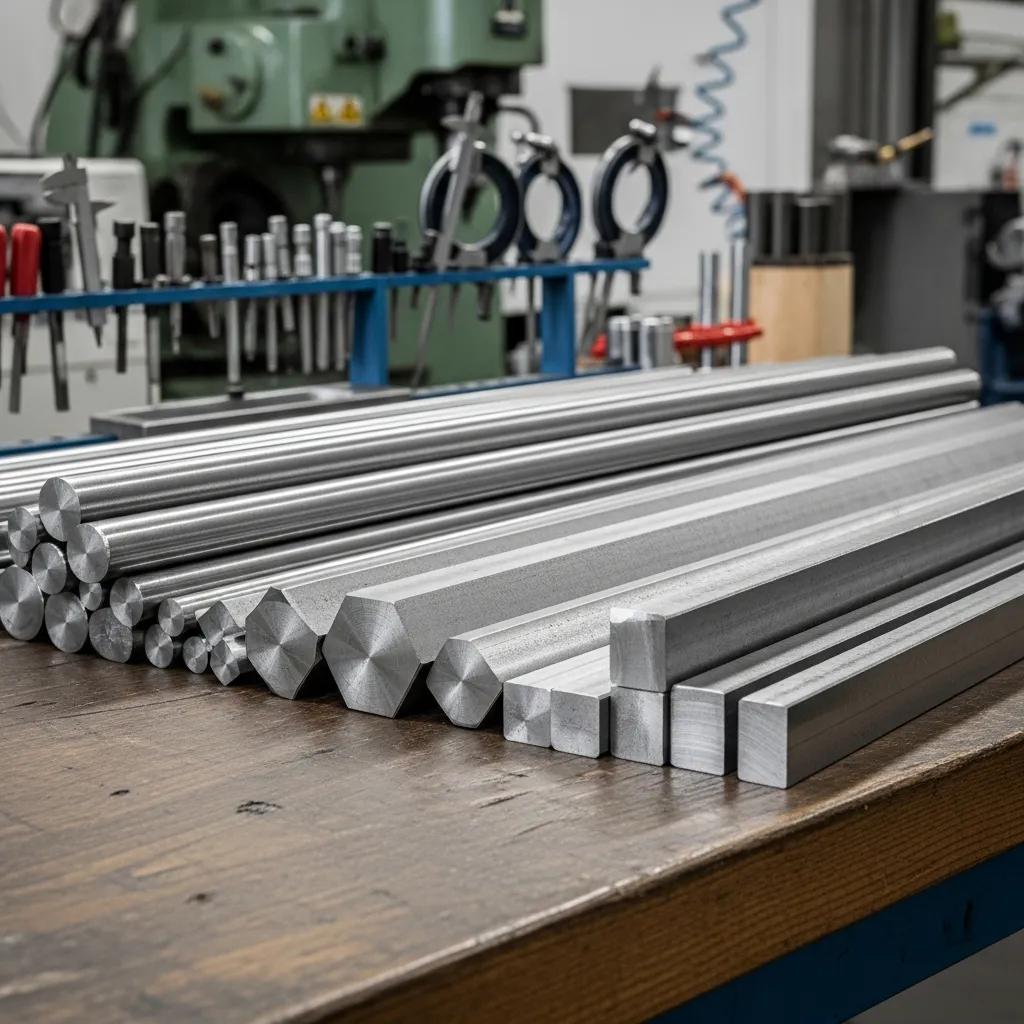
SAE 1018 is a plain low‑carbon steel with nominal carbon near 0.18%. It belongs to the family of grades commonly used for cold‑finished bright bars and light‑engineering components. In annealed or normalized condition the microstructure is largely ferrite and pearlite, which delivers good ductility and formability while keeping hardness low enough for efficient machining and forming. The grade is typically available as cold‑finished round, hex and square bright bars that offer a better surface finish and tighter dimensional tolerances than hot‑rolled stock. Engineers choose 1018 when they need parts that machine easily to close tolerances and when through‑hardening is not required. These traits make 1018 a pragmatic choice for many light‑ to medium‑duty mechanical parts where predictability, finish and machinability matter.
Because 1018 is a low‑carbon steel, designers accept trade‑offs between strength and hardenability that shape heat‑treatment and surface‑hardening decisions. The grade’s machinability and ready availability in bright-bar form shorten finishing cycles and reduce scrap on production lines. The list below summarizes the defining attributes engineers reference when specifying 1018.
Key characteristics of SAE 1018 steel:
- Low carbon content: Keeps the steel ductile and easy to cold form for general engineering parts.
- Excellent machinability: Supports fast material removal and good surface finish on CNC and manual lathes.
- Good weldability: Joins cleanly with common welding methods with minimal preheat.
- Available as bright bars: Supplied in round, hex and square forms for accurate dimensions and superior finishes.
How is SAE 1018 classified as a low carbon steel?
SAE 1018 is classed as a low‑carbon steel because its carbon content centers around 0.18%, below the roughly 0.25–0.30% threshold that defines medium‑carbon grades. That lower carbon content limits bulk hardenability and makes full section quench‑and‑temper hardening impractical without alloying or surface treatments. SAE/AISI and ASTM group 1018 with other plain carbon steels intended for forming, welding and machining rather than for through‑hardened, high‑strength parts. Compared with higher‑carbon grades such as SAE 1045, 1018 offers better ductility and lower cracking risk during cold working, but lower ultimate strength and wear resistance in bulk form.
Knowing this classification helps engineers decide when to use surface carburizing or hardening for wear resistance instead of attempting to harden the entire cross‑section. It sets realistic expectations for performance and informs downstream processing choices.
What are the main features that define SAE 1018 steel?
The defining features of 1018 come from its low carbon chemistry and common manufacturing routes. That combination yields easy machining, good formability and dependable weldability across many industries. The microstructure favors moderate strength with high elongation, supporting bending, stamping and light‑duty loading without brittle failure. Cold‑finished bright bars provide improved surface finish and dimensional accuracy, which reduces secondary finishing costs and improves assembly fit. Because 1018 machines predictably, it’s a frequent choice for parts that demand tight tolerances and fine surface requirements—shafts, spindles and pins, for example.
For manufacturers and designers, these features translate into lower machining time and reduced tool wear compared with higher‑carbon steels, while still delivering adequate strength for many routine components. The next section covers the chemical composition responsible for these behaviors.
What is the Chemical Composition of SAE 1018 Steel?

Understanding 1018’s chemistry explains why it behaves the way it does and provides the numeric ranges engineers cite in specifications. The grade is dominated by carbon and manganese, with controlled traces of phosphorus and sulfur; silicon may appear at low levels depending on mill practice. These element ranges determine hardenability, strength, machinability and weldability. Below is a concise, engineer‑friendly breakdown of the primary elements and their typical ranges.
Which elements make up SAE 1018 steel and their standard percentages?
| Element | Typical Percentage Range | Effect on Properties |
|---|---|---|
| Carbon (C) | 0.15–0.20% | Controls strength and hardness; low content preserves ductility and machinability. |
| Manganese (Mn) | 0.60–0.90% | Improves tensile strength, aids deoxidation and supports toughness. |
| Phosphorus (P) | ≤ 0.040% | Kept low to avoid embrittlement and protect impact properties. |
| Sulfur (S) | ≤ 0.050% | Controlled to balance machinability without excessive brittleness. |
| Silicon (Si) | ≤ 0.03–0.40% (trace) | Acts as a deoxidizer and can slightly raise strength. |
Which elements make up SAE 1018 steel and their standard percentages?
The headline number for 1018 is carbon near 0.18%, which limits hardenability and makes the grade well suited to cold finishing and machining. Manganese—typically 0.6–0.9%—is the key alloying element that raises strength and helps produce a uniform microstructure during steelmaking. Phosphorus and sulfur are kept low to protect toughness and control formability and machinability; limited sulfur can aid chip breakage in free‑machining variants but excessive sulfur reduces toughness. These ranges establish the material baseline and guide heat‑treatment expectations.
Clear chemistry ranges help procurement and engineering teams compare mill test certificates and ensure parts are manufactured to the intended mechanical baseline and processing behavior.
How does each chemical element affect SAE 1018 steel properties?
Each element plays a predictable role: carbon governs strength and hardness, manganese supports tensile strength and toughness, phosphorus and sulfur influence ductility and machinability, and silicon serves as a deoxidizer and slight strengthener. Small carbon increases raise tensile strength but lower elongation and weldability; higher manganese modestly improves strength without big sacrifices in ductility. Controlled sulfur can improve cutting behavior by encouraging chip breakage, but too much sulfur harms toughness. Recognizing these effects lets engineers specify precise limits for critical parts and balance machinability, strength and weldability for the finished component.
These relationships also inform choices such as cold‑finished bright bar versus hot‑rolled stock when surface finish and dimensional control are critical.
What are the Mechanical Properties of SAE 1018 Steel?
Engineering decisions depend on mechanical property benchmarks that translate composition into usable performance: tensile strength, yield strength, elongation and hardness in typical supply conditions (annealed or cold‑finished). Values vary with finish—cold‑finished bars commonly sit at the upper end of the ranges—so material calls should specify condition and test standards. The table below lists commonly cited values and test conditions to help write clear specifications.
What are the tensile strength, yield strength, and hardness values of SAE 1018?
| Property | Typical Value (Metric & Imperial) | Measurement Standard/Condition |
|---|---|---|
| Tensile strength (UTS) | 440–550 MPa (64–80 ksi) | Cold-finished condition, room temperature tensile test |
| Yield strength (0.2% offset) | 370–420 MPa (54–61 ksi) | Cold-finished condition, 0.2% offset yield |
| Elongation (in 50 mm) | 15–25% | Cold-finished or annealed, standard tensile specimen |
| Hardness (Brinell) | 120–180 HBW (~70–90 HRB) | Annealed to cold-finished variations; scale depends on supplier finish |
What are the tensile strength, yield strength, and hardness values of SAE 1018?
Those tensile and yield ranges place 1018 in a moderate‑strength bracket suited to steady loads rather than severe shock or heavy fatigue. Cold‑finished bars typically offer the higher end of the ranges plus improved surface finish—useful for shafts and pins that need tight runout and concentricity. Hardness readings vary with finish: annealed stock measures softer with greater ductility, while cold‑drawn bars show higher hardness and better dimensional control. When calling out 1018, specify finish and any post‑processing so measured properties meet expectations.
These numbers also affect downstream operations: higher hardness increases tool wear and reduces machinability, while greater elongation supports forming processes like bending or swaging.
How do these mechanical properties impact SAE 1018 steel’s performance?
Mechanical properties inform allowable load, fatigue expectations and finishing strategies. For light‑duty rotating shafts or fasteners, 1018’s tensile and yield strength provide adequate safety when parts are properly sized and not subject to severe wear. The grade’s elongation and toughness reduce brittle‑failure risk during assembly and service and support press fits and light forming. Because core hardenability is limited, parts that need high wear resistance usually receive surface treatments—carburizing or induction hardening—to create a hard surface while keeping a ductile core.
Balancing these trade‑offs helps teams decide between 1018 and higher‑carbon or alloy steels based on load type, wear requirements and production cost.
What are the Industrial Applications of SAE 1018 Bright Bars?

SAE 1018 bright bars are used across sectors that value machinability, finish and consistent dimensions. Common industries include automotive, general manufacturing, agriculture, rail and construction—places where light‑ to medium‑duty components are standard. Bright‑bar supply (round, hex, square) reduces machining allowance and waste, improving material yield and lowering part cost. The short list below explains where 1018 typically fits.
In which industries is SAE 1018 steel commonly used?
- Automotive: Light‑duty shafts, pins and brackets where machinability reduces production cost.
- General manufacturing: Spindles, studs and alignment pins for jigs, fixtures and assemblies.
- Agriculture: Linkage pins and light shafts that require formability and field serviceability.
- Rail and construction equipment: Non‑critical fasteners and fittings where dimensional accuracy matters more than wear resistance.
What specific components and products are made from SAE 1018 bright bars?
Typical parts made from 1018 bright bars include shafts, pins, studs, spindles and a range of fasteners and machine elements where tolerances and finish outweigh the need for heavy wear resistance. Manufacturers prefer 1018 for prototyping and production runs because it shortens machining cycles and makes a consistent base for plating, coating or light case hardening. For example, short‑run motor shafts or conveyor components often use cold‑finished 1018 to achieve concentricity and finish without grinding.
These application notes tie directly to supplier capabilities: vendors that deliver precision bright bars in round, hex and square forms simplify procurement and lower total part cost by minimizing machining allowance. Dhand Steels produces SAE 1018 bright bars in these common shapes with precision finishes suited to the applications described, helping customers source material aligned with production and quality goals.
This supplier mention complements the technical guidance above and connects real‑world use cases to available product forms.
How is SAE 1018 Steel Processed? Machinability, Weldability, and Heat Treatment
Processing 1018 requires an understanding of how chemistry affects machining, welding and heat treatment choices. The grade is prized for its excellent machinability thanks to low carbon and a predictable microstructure, which enables efficient material removal and good surface finish. Welding is straightforward with standard filler metals and common precautions. Heat treatment typically focuses on annealing, normalizing or surface carburizing rather than full‑section quench hardening. The following sections summarize why 1018 machines well and the practical heat‑treatment options available.
Why is SAE 1018 steel known for excellent machinability?
With carbon kept low, annealed 1018 has a soft ferrite‑pearlite structure that reduces cutting forces and tool wear during turning, milling and drilling. Controlled sulfur in some free‑machining variants helps chip breakage and surface finish, though excessive sulfur harms toughness and is unsuitable for structural parts. Shops generally see longer tool life and faster cycle times when machining 1018 versus higher‑carbon steels, and cold‑finished bright bars provide a better starting surface that cuts down finishing passes. For tight tolerances, specifying cold‑drawn 1018 bright bars yields improved roundness and diameter control, boosting first‑pass assembly yields.
Dhand Steels maintains manufacturing controls and quality checks when producing bright bars to ensure dimensional consistency and machinability meet customer expectations, reinforcing reliability without changing the technical guidance above.
What heat treatment methods are applicable to SAE 1018 steel?
Because 1018 has limited bulk hardenability, common treatments include annealing to soften, normalizing for grain refinement, and carburizing to build a hard case while retaining a ductile core. Annealing (controlled hold and slow cool) relieves stresses and improves formability for subsequent machining. Carburizing or carbonitriding followed by quench and temper produces a wear‑resistant case with a tough core—suitable for light shafts and pins. Induction hardening is an option for localized surface hardening when part geometry allows.
These approaches balance surface hardness needs against 1018’s low carbon content: use anneal/normalize for machinability and formability, and choose surface hardening when wear resistance is required without sacrificing core toughness.
Process | Typical Parameters | Effect on 1018 (microstructure/performance)
| Process | Typical Parameters | Effect on 1018 (microstructure/performance) |
|---|---|---|
| Annealing | 700–730°C hold, slow furnace cool | Produces soft ferrite‑pearlite, maximizes ductility and machinability |
| Normalizing | 840–900°C air cool | Refines grain, relieves stresses, modest strength increase |
| Carburizing (case) | 900–950°C with carbon potential, quench+tempering | Creates hard case with ductile core — improves wear resistance |
| Induction hardening | Localized heating and quench | Hardens surface selectively for high‑wear features |
Why Choose Dhand Steels for SAE 1018 Bright Bars? Supplier Advantages and Product Range
When sourcing SAE 1018 bright bars, procurement teams look for suppliers that combine tight quality control, consistent tolerances and a broad range of shapes to match production needs. Dhand Steels is a manufacturer and exporter of precision bright bars from Ludhiana, Punjab, offering SAE 1018 among our stocked grades. We focus on high‑quality bright bars, efficient manufacturing, and a product range that includes round, hex and square forms. Those capabilities reduce supply‑chain complexity by providing multiple forms from a single source and support production runs that demand repeatable dimensional quality.
What unique qualities does Dhand Steels offer in SAE 1018 bright bars?
We concentrate on producing machining‑ready bright bars with tight dimensional tolerances and consistent surface finishes to minimize secondary machining and scrap. Our export capabilities and product variety simplify procurement when assemblies require multiple grades or shapes. We also invest in energy‑efficient processing to lower operating costs and environmental impact—buyers should still verify specific certifications and inspection requirements during vendor qualification.
These supplier strengths translate to practical benefits: fewer purchase orders, more predictable machining yields and better alignment between material supply and production schedules.
How can customers buy SAE 1018 steel bars online from Dhand Steels?
To source SAE 1018 bright bars from Dhand Steels, start by specifying grade, shape (round, hex, square), diameter or cross section, finish (cold‑finished bright vs hot‑rolled), quantity and any testing or certification requirements. Include length, tolerance band, surface finish and any intended heat treatment or plating needs to speed up quotations. We respond to specification‑led requests with availability, manufacturing options and pricing tailored to your scope. For fastest turnaround, provide material grade, geometry, finish, quantity and delivery expectations in your request.
- Summary of supplier points: Dhand Steels supplies SAE 1018 in precision bright bar forms with emphasis on quality, shape range, manufacturing controls and customer service.
- What to include in a quote request: Material grade, shape and size, finish, quantity, testing needs and expected delivery window.
- Why supplier selection matters: A precision bright‑bar supplier can reduce machining time, scrap and total part cost while ensuring consistent material performance.
Frequently Asked Questions
What are the advantages of using SAE 1018 steel in manufacturing?
SAE 1018 offers excellent machinability and good ductility, which lowers tool wear and shortens production time. Its weldability makes it easy to join using common processes, and cold‑finished bright bars deliver tight tolerances and superior surface finish—important for precision components. These traits make 1018 a cost‑effective choice for many light‑ to medium‑duty applications.
How does the heat treatment process affect SAE 1018 steel?
Heat treatment changes 1018’s balance of hardness and ductility. Annealing softens and restores ductility, improving formability and machinability. Surface carburizing or carbonitriding produces a hard wear‑resistant case while keeping a tough core. Full section hardening is not practical due to low carbon, so treatments generally target softness for forming or a hardened surface for wear resistance.
Can SAE 1018 steel be used in high-stress applications?
1018 is not the best choice for high‑stress or heavy‑wear service because of its moderate strength and limited hardenability. It performs well for light‑ to medium‑duty parts like shafts and fasteners. For heavy loads or severe wear, specify higher‑carbon or alloy steels, or use surface hardening on 1018 to improve wear resistance without compromising the core.
What are the common machining methods for SAE 1018 steel?
Turning, milling, drilling and grinding are common machining methods for 1018. Its machinability permits efficient material removal with reduced tool wear, making it a good candidate for CNC work. Cold‑finished bright bars start with a superior surface that cuts down on secondary operations. Choose appropriate cutting tools and speeds to optimize finish and tolerance.
How does the chemical composition of SAE 1018 influence its properties?
Carbon and manganese are the primary contributors: low carbon (~0.18%) preserves ductility and machinability, while manganese (0.6–0.9%) increases tensile strength and supports toughness. Controlled phosphorus and sulfur levels help balance machinability and toughness. Understanding these contributions helps engineers choose 1018 for components that need a balance of strength, formability and ease of machining.
What are the environmental considerations when using SAE 1018 steel?
Environmental considerations include the energy efficiency of production and the recyclability of steel. Dhand Steels emphasizes energy‑efficient processing to reduce carbon footprint. Steel’s recyclability also supports circular‑economy goals—designers and buyers should consider lifecycle impacts and end‑of‑life recycling when specifying materials.
Conclusion
SAE 1018 steel is valued for its machinability, ductility and versatility across many industrial uses, making it a practical choice for light‑ to medium‑duty components. A clear understanding of its chemistry, mechanical properties and processing routes helps engineers and procurement teams match material selection to part function and production methods. Choosing quality SAE 1018 bright bars from a reliable supplier like Dhand Steels ensures predictable performance and precision in manufacture. Contact us to discuss the right 1018 bright‑bar solutions for your projects.


Comments
0 Comment On Post