

Things to Check Before Buying Carbon or Alloy Steel: A Practical Procurement Guide
Buying carbon or alloy steel isn’t just about the lowest price per kilogram. It’s about matching chemistry, mechanical performance, standards documentation and supplier capability to your manufacturing needs. This guide gives procurement teams and business owners a clear checklist: how carbon and alloy steels differ, which mechanical and chemical properties matter most, how to read mill test certificates (MTCs), and how to assess suppliers so purchases meet performance and budget goals. You’ll find practical tests, example grades (including common bright-bar options), relevant standards, and cost-to-value tips designed to reduce rework and warranty exposure. Read on for a structured procurement checklist, comparison guidance, supplier questions you can use in RFQs, and short examples of how a dependable manufacturer manages QA for bright bars and special sections.
What Are the Key Differences Between Carbon Steel and Alloy Steel?
In simple terms: carbon steel is iron with controlled carbon content that sets strength and ductility; alloy steel adds elements such as chromium, molybdenum or nickel to deliver hardness, toughness or heat-and-wear resistance. Carbon raises hardness and tensile strength; alloying elements enable properties that carbon alone cannot achieve without heavy heat treatment. For procurement this matters: carbon steels are cost-efficient for general fabrication and structural parts, while alloy steels are justified where higher performance or specific heat‑treatment response is required. The table below summarizes typical composition bands and use cases to help you choose by application and cost trade-off.
This quick comparison highlights the practical differences buyers need to consider for bright bars and engineering components.
| Steel Type | Typical Carbon % | Key Alloying Elements | Common Uses / Benefits |
|---|---|---|---|
| Carbon steel (low–medium) | 0.05–0.30% | Minimal (Mn, Si) | General fabrication and structural parts — economical and easy to weld |
| Carbon steel (medium–high) | 0.30–0.60% | Mn, traces of Cr | Higher-strength components; machinability varies with carbon content |
| Alloy steel | 0.25–0.50% (varies) | Cr, Mo, Ni, V, Mn | Heat-treatable parts where wear resistance or toughness is critical (shafts, gears) |
| High-alloy / specialty | Varies | Combinations of Ni, Cr, Mo | High-temperature, corrosion- or fatigue-resistant applications |
This table clarifies composition ranges and procurement implications, and leads into grade-level considerations and examples in the following sections.
What Defines Carbon Steel: Properties and Common Applications
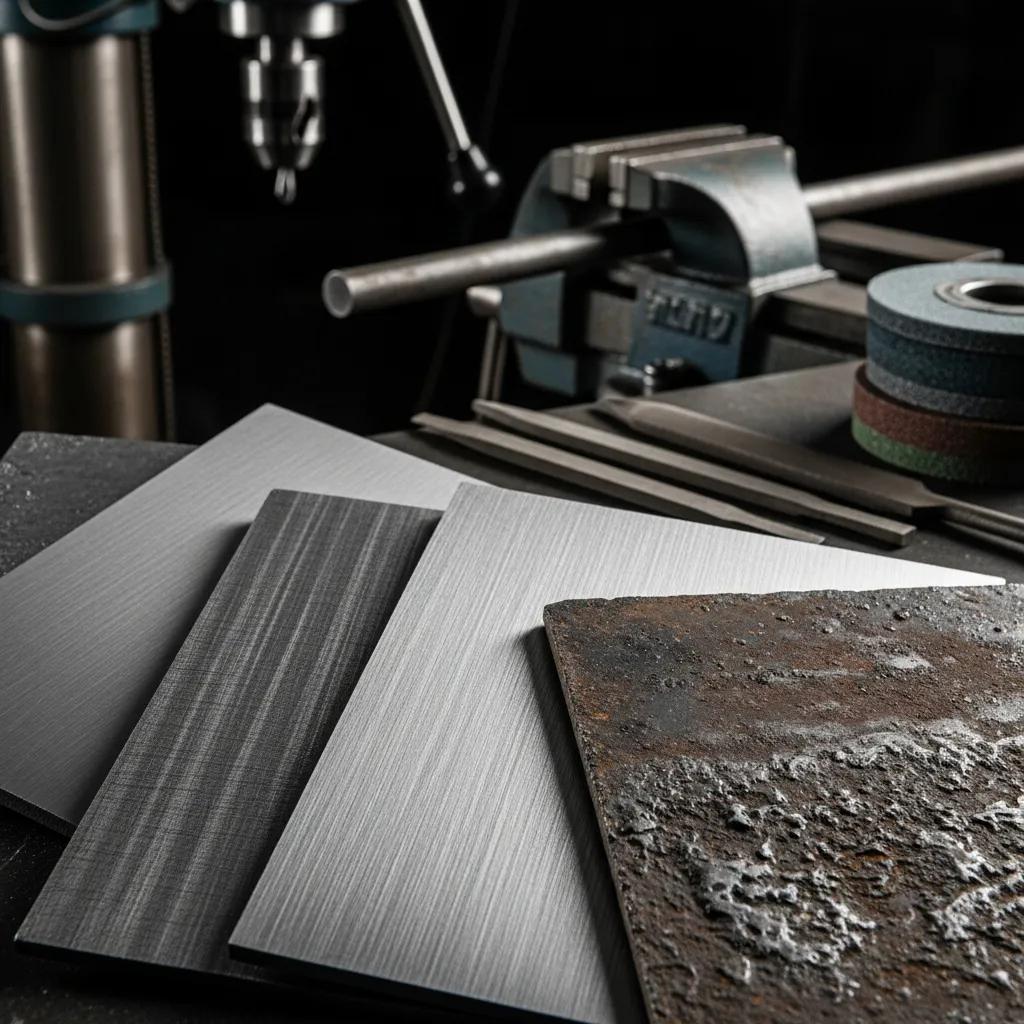
Carbon steel is defined by its carbon content and straightforward alloying, which together control hardness, yield strength and ductility through composition and heat treatment. Higher carbon increases strength and hardness but reduces weldability and formability — a critical trade-off for parts that will be welded or cold-formed. Common bright-bar grades include SAE 1018 and EN8, chosen to balance machinability and strength for shafts, pins and general engineering components. On purchase orders, specify the carbon range on the MTC, any required heat treatment, and the finish (for example, cold-drawn bright bars) so incoming material matches your machining and fabrication plan. That level of detail prevents underspecification and downstream rework.
Before ordering, confirm the intended forming, machining and weldability requirements so the selected grade minimizes fabrication problems and scrap.
How Does Alloy Steel Enhance Performance: Grades and Uses Explained
Alloy steels add elements that change hardenability, toughness and wear or heat resistance; their effect is realized through controlled heat treatment. SAE 4140 and EN24 are typical alloy grades when higher core strength and fatigue resistance are needed — they respond well to quenching and tempering. Chromium and molybdenum increase hardenability and wear resistance, while nickel improves toughness. Procurement must allow for higher material cost and potential extra processing. Use alloy steels for heavy‑duty shafts, rails and components subject to cyclic loads or elevated temperatures, and put specific heat‑treatment cycles and target hardness values on the PO so delivered material meets in‑service expectations.
Understanding alloy behavior naturally leads to the next essential procurement step: verifying mechanical and chemical properties before acceptance.
Which Mechanical and Chemical Properties Should You Verify Before Buying Steel?
Mechanical and chemical properties determine in‑service performance. Verify tensile strength, yield strength, hardness, elongation (ductility), impact toughness and the full chemical analysis. These values link material choice to product life: wrong tensile or hardness can cause failure, and incorrect chemistry affects heat‑treatment response and weldability. The checklist below prioritizes tests and acceptance criteria to request from suppliers and labs.
Requesting these measurements up front reduces inspection delays and ensures supplier testing matches engineering needs.
| Property | Typical Units | Why It Matters for Procurement | Test Method |
|---|---|---|---|
| Tensile strength | MPa or ksi | Maximum load before fracture — critical for load-bearing parts | Tensile test (machine) |
| Yield strength | MPa or ksi | Defines elastic limit and design safety margins | Tensile test |
| Hardness | HRC, HB, HBS | Affects wear resistance and machinability; indicates heat-treatment | Rockwell or Brinell test |
| Elongation / Ductility | % | Shows formability and resistance to cracking during forming/welding | Tensile elongation measurement |
| Impact toughness | J or ft·lb | Resistance to brittle fracture at service temperatures | Charpy V-notch test |
| Chemical composition | wt.% (C, Mn, Cr, Mo, Ni) | Governs hardenability, weldability and heat‑treatment response | Optical emission spectrometry (OES) |
Use this table to turn technical specs into procurement actions: list the test methods and acceptable ranges on RFQs so suppliers include the correct MTC data.
How to Assess Mechanical Properties: Tensile Strength, Hardness, and Ductility
Tensile strength is the maximum stress before failure; hardness affects wear and machining; ductility (elongation) shows how much a part can deform without cracking. For procurement, these numbers tell you if a batch is fit for purpose — for example, a shaft may require a minimum tensile strength and a maximum hardness to balance strength and machinability. Ask suppliers for sample test reports with units and standards, and require heat numbers and sample IDs for traceability. Set acceptance thresholds from your part design and downstream processes; bright bars for machining typically need controlled hardness ranges to protect tooling and finish quality.
These mechanical metrics are driven by chemistry — so next, verify composition carefully.
Why Chemical Composition Matters: Key Elements and Their Impact on Steel Quality
Chemical makeup is the root cause of steel behavior: carbon controls strength and hardness; manganese aids hardenability and deoxidation; chromium and molybdenum boost hardenability and wear resistance; nickel adds toughness. Procurement must balance these elements with trade-offs such as weldability and cost — for instance, higher carbon can increase welding risk. When reviewing a composition on an MTC, compare actual percentages to spec limits and watch elements with tight tolerances (sulfur and phosphorus affect ductility). Insist on spectrochemical analysis methods and include allowable variation bands on purchase orders to prevent surprises in service.
A clear chemical specification removes ambiguity and ensures delivered material responds predictably to forming and heat treatment.
What Industry Standards and Certifications Ensure Steel Quality and Compliance?
Standards such as ASTM/SAE, EN and IS set chemical and mechanical limits, test procedures and documentation formats buyers should reference on purchase orders to ensure conformity. These standards unify expectations so suppliers and labs report consistently. The Mill Test Certificate (MTC) is essential: it ties batch chemical analysis, mechanical tests, heat number and the governing standard to the shipment. Below is a short MTC decoding checklist and a table of core documents buyers commonly request.
Specifying standards and MTC fields in advance reduces ambiguity and speeds acceptance at receiving.
| Document / Certificate | What It Verifies | Buyer Checklist: What to Look For |
|---|---|---|
| Mill Test Certificate (MTC) | Batch chemical and mechanical test results | Heat number, grade/spec reference, chemical analysis, tensile/hardness results, authorized signatory |
| ASTM/SAE or EN/IS spec | Defines composition & test methods | Spec number on PO, revision year and required tests listed |
| Laboratory calibration / accreditation | Credibility of test results | Lab accreditation (national body) noted on test reports |
| Heat treatment report | Confirms quench/temper cycles and hardness | Process parameters, furnace charts and hardness locations |
This table shows which documents to request and the key evidence fields that confirm conformance and traceability.
How to Interpret Mill Test Certificates and Industry Standards
An MTC links a delivered heat to the tests performed. It should include the heat number, chemical analysis, mechanical test results, the applicable specification reference and an authorized signatory. Verify the MTC cites the correct ASTM/EN/IS standard, that chemical values fall within tolerances, and that required mechanical tests (tensile, hardness) are shown. Red flags include missing heat numbers, no reference standard or incomplete test coverage — these warrant a hold, clarification or independent testing. Require MTCs with every shipment and retain copies for quality records to preserve part traceability.
Once you can decode MTCs, evaluate supplier credentials and lab credibility before accepting results at face value.
Which Certifications Should You Expect from a Reliable Steel Supplier?
Supplier certifications show process control and testing reliability. Practical credentials include ISO quality-system registration and recognized lab accreditation for testing services. These indicate consistent quality management, calibrated equipment and traceable procedures — all of which lower inspection risk at receiving. For critical or regulated work, ask for third-party inspection reports or independent lab verification. Not every order needs third‑party testing, but knowing when to escalate protects you from warranty exposure and safety risks.
Verifying certifications and test credibility leads naturally into the supplier evaluation checklist used for pre-qualification.
At Dhand Steels, we build QA from raw material selection through controlled bright-bar processing and documented MTCs to preserve traceability. Our quality approach and client-focused post-sales service illustrate how a supplier can align documentation and material checks with buyer procurement needs.
How to Evaluate and Choose the Right Steel Supplier for Your Needs?

Choosing a steel supplier means balancing reputation, quality control, technical support, lead times and logistics against price. Supplier evaluation should be systematic: check references, request process flow descriptions, ask for sample MTCs and confirm packaging and shipment practices. The checklist below helps prioritize assessment criteria and questions to use in RFQs and site visits. Scoring suppliers on these items reduces procurement risk and supports long-term partnerships that lower total cost of ownership.
- Reputation and references: Request client references and case examples of similar supplies.
- Quality control: Review process flows, inspection points and sample MTCs for bright bars.
- Technical support: Verify availability of engineering help for grade selection and heat-treatment guidance.
- Lead times and logistics: Confirm realistic lead times, packing standards and inland transport arrangements.
- Post-sales services: Clarify warranty terms, claims handling and rework policies.
Use this checklist during supplier pre-qualification; scoring each item helps you pick the supplier that minimizes production interruption and warranty exposure.
What Supplier Qualities Matter: Reputation, Quality Control, and Technical Support
Reputation matters because consistent delivery and responsiveness reduce operational risk — verify it through references and evidence of repeat business. Quality control should include incoming material checks, in-process inspections and final testing with traceable MTCs; ask for sample inspection records and process descriptions. Technical support is crucial for custom or critical grades — a supplier that advises on heat treatment, tolerances and finish reduces your engineering workload and lowers the chance of mismatched specs. Manufacturers typically offer advantages over pure distributors because they control production parameters and can adapt process controls to tight tolerances.
Confirming these supplier qualities lowers the risk of nonconforming deliveries and production delays.
How Do Lead Times, Logistics, and Post-Sales Services Affect Your Procurement Decision?
Lead times and logistics shape inventory strategy and production continuity: long or variable lead times force safety stock or alternate sources, while proper packing and handling reduce damage and claims. Post-sales services — fast claim resolution, rework support and technical troubleshooting — directly affect total cost when issues occur. Ask suppliers for SLA commitments, average lead-time metrics and examples of urgent resupply or claim handling. Include packing and handling requirements on the PO to protect bright bars, HHB wires and special shapes in transit.
Understanding these operational factors completes supplier evaluation and feeds into cost and value trade-offs.
When you benchmark suppliers against these criteria, Dhand Steels aims to show a flexible, client-focused approach with documented QC checks from raw material selection through finished bright bars, plus technical collaboration and post-sales support to reduce procurement risk and improve part fit-up.
What Are the Cost Factors and Value Considerations When Purchasing Carbon or Alloy Steel?
Price is only one element of total cost. Procurement must account for direct material cost, heat treatment and finishing, inspection and testing, logistics, scrap and rework, and the financial impact of production downtime caused by material issues. A Total Cost of Ownership (TCO) approach helps compare a low-price supplier with a higher-quality one by quantifying rework rates, tool wear and warranty claims. Below are common cost drivers and an illustrative guide to deciding when paying more upfront lowers lifecycle cost.
Applying TCO clarifies procurement rules and improves negotiation outcomes.
- Direct price drivers: grade, cross-section, finish (cold-drawn bright bars vs hot-rolled) and required heat treatment.
- Hidden costs: scrap from incorrect composition, rework from wrong hardness, tool wear from excessive hardness, and delays from missing MTCs.
- Long-term supplier relationships: can reduce TCO through better consistency and shorter lead times.
How to Balance Price and Quality: Understanding Total Cost of Ownership
TCO breaks costs into acquisition, processing, quality assurance, logistics and failure-related expenses. A low unit price can be outweighed by higher machining scrap, faster tool wear or extra inspection costs. For example, inconsistent hardness from a low-cost supplier can raise scrap by 2–5%, easily erasing material savings. Practical decision rules: specify critical acceptance tests on the PO, require sample runs for new grades, and negotiate rework or penalty terms for nonconformance. Compare estimated TCO over expected production volumes, not just per-ton price.
A TCO mindset usually favors suppliers who deliver predictable material behavior and fewer downstream surprises.
Why Long-Term Supplier Partnerships Add Value Beyond Initial Costs
Long-term partnerships yield volume discounts, prioritized lead times and continuous process improvements that lower variability and lifecycle cost. When supplier and buyer collaborate on specifications, heat-treatment schedules and inspection plans, manufacturing becomes more predictable and cheaper. Contract elements that secure these benefits include agreed quality metrics, MTC requirements, penalty clauses for nonconformance and joint continuous‑improvement reviews. Investing time in supplier qualification pays off through less scrap, fewer urgent buys and shared problem-solving when new parts or grades are introduced.
Structured partnerships create incentives for quality and reliability and improve production efficiency over time.
For buyers seeking customizable bright bars, robust QC processes and responsive service, Dhand Steels positions itself as a manufacturer and exporter focused on precise raw material selection, engineering support and post-sales care — all intended to reduce procurement risk and lower your TCO.
For bespoke bright bar needs or grade-specific queries (for example, SAE 4140 or IS 2062 E350), contact our commercial or technical team to request sample MTCs and a formal quotation. We maintain traceability and quality controls from raw material selection to finished product.
Frequently Asked Questions
1. What are the common applications for carbon and alloy steel?
Carbon steel is a workhorse across construction, automotive and general manufacturing because it offers strength at a low cost. Typical uses include structural sections, pipes and basic automotive parts. Alloy steel is chosen where enhanced performance is required — gears, shafts and high‑stress components benefit from added hardenability and toughness, and alloy grades are used in heavy machinery and some aerospace or high‑temperature applications. Match the steel to the load, environment and fabrication process.
2. How can I ensure the steel I purchase meets my specifications?
Require detailed Mill Test Certificates (MTCs) that list chemical composition, mechanical properties and compliance with the referenced standard. State your requirements clearly on the PO, including acceptable ranges for tensile strength, hardness and other critical properties. For high‑risk orders, use independent testing or third‑party inspection to add assurance.
3. What should I look for in a supplier’s quality control process?
Look for written procedures covering incoming material checks, in‑process inspections and final testing. Ask to see sample MTCs, calibration records and examples of inspection reports. ISO registration and accredited lab test reports are good indicators of a reliable quality system.
4. How do I interpret the information on a Mill Test Certificate?
Check the heat number that ties the certificate to the batch, review the chemical analysis against spec limits, and confirm mechanical tests such as tensile strength and hardness. Verify the certificate references the correct standard — that confirms traceability and that tests followed accepted methods.
5. What are the implications of choosing a low-cost steel supplier?
Low initial price can hide costs: inconsistent chemistry or hardness increases scrap, tool wear and rework, which raises your TCO. Evaluate suppliers on quality control, track record and their ability to meet specs — short-term savings are rarely worth long-term headaches.
6. How can I assess the long-term value of a steel supplier?
Consider reputation, delivery reliability and history with similar customers. Look for consistent quality, timely deliveries and responsive service. A proactive supplier that collaborates on specifications and improvements can lower costs and boost production efficiency over time.
7. What role does heat treatment play in the performance of steel?
Heat treatment changes steel’s microstructure and therefore its hardness, strength and ductility. Quenching and tempering, for example, are common for alloy steels to achieve required core strength and toughness. Specify heat‑treatment targets and process records on the PO so delivered material matches your performance needs.
Conclusion
Clear procurement decisions start with the right questions: know the material properties you need, demand traceable documentation, and qualify suppliers on quality and service — not just price. Focusing on material chemistry, mechanical performance, supplier capability and TCO reduces risk and improves part performance. If you’d like tailored guidance for your application, our team is ready to help — from sample MTCs to grade selection and formal quotations. Use the resources in this guide to make steel procurement predictable and cost‑effective.



Comments
0 Comment On Post