

Choosing the Right Steel Supplier: A Practical Guide to Quality, Reliability and Long‑Term Value
Picking the right steel supplier is a strategic choice that shapes product performance, production rhythm, and total cost of ownership. This guide walks you through the selection criteria—quality certifications, product range and customization, supply‑chain reliability, pricing and TCO, technical support, and sustainability—so you can reduce risk and secure better value. A poor supplier choice costs you defects, rework, shipment delays and higher lifecycle bills; the right partner raises throughput, cuts scrap and supports scale. Read on for a compact, actionable checklist with verification steps, material‑application matching tips, logistics KPIs, pricing comparison tactics and sustainability checks you can use during prequalification and procurement.
What Quality Standards and Certifications Should You Look for in a Steel Supplier?
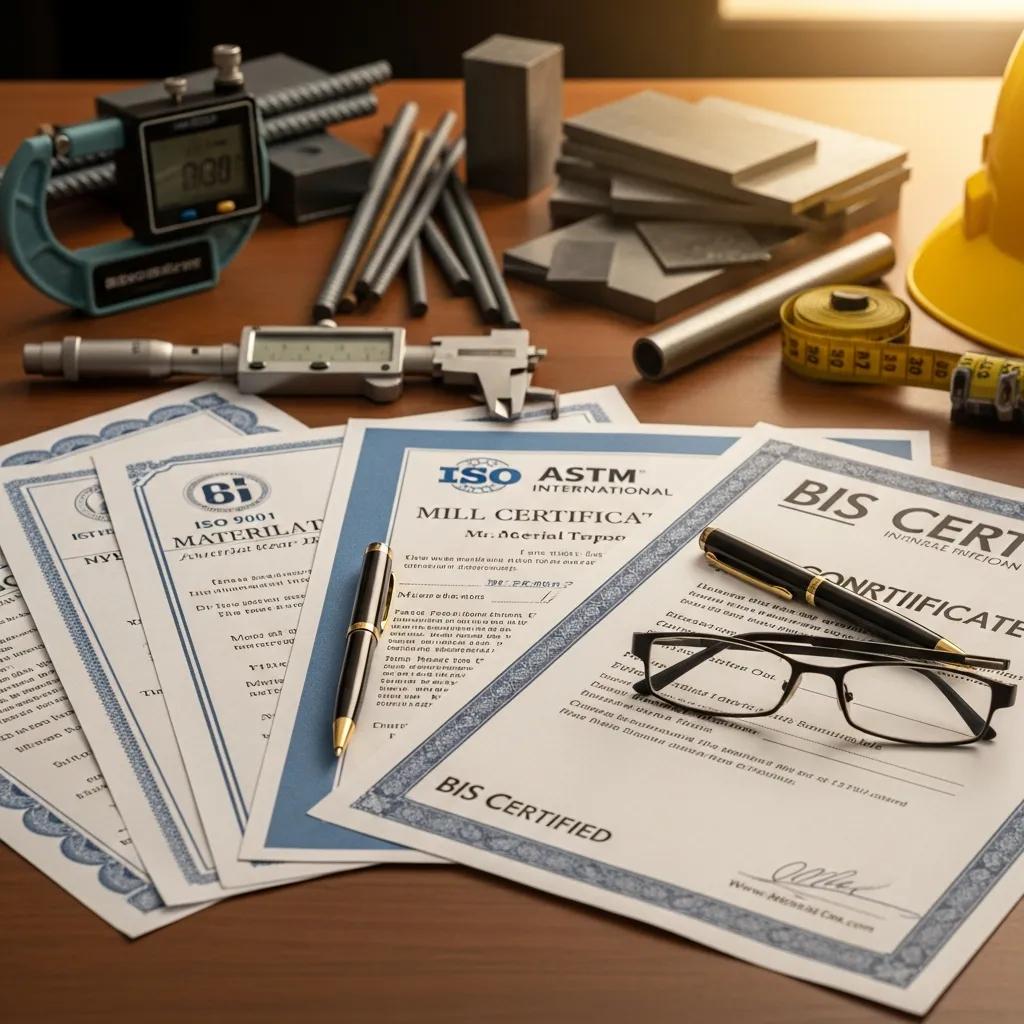
Certifications and quality standards are shorthand for a supplier’s documented controls, testing and traceability. A supplier aligned to recognized standards demonstrates routine quality management and testing regimes that reduce the risk of out‑of‑spec deliveries. When you evaluate vendors, request certificates, recent audit summaries and sample test results — and confirm those documents match the lots you plan to buy. Relying on verified evidence rather than claims prevents many downstream problems and makes supplier comparisons objective.
Use the brief reference below to compare common certifications and what they mean for bright bars and alloy products before you ask for documents.
This table summarizes key certification types and their practical implications for bright bar procurement.
| Certification | What it covers | Why it matters |
|---|---|---|
| ISO 9001:2015 | Quality management systems and documented QC processes | Shows the supplier follows standardized procedures and continual improvement |
| ASTM standards | Material composition and test methods for steel grades | Ensures mechanical and chemical tests meet industry norms |
| BIS standards | National specifications and conformity for Indian steel | Confirms compliance with domestic statutory and performance requirements |
Use this comparison to decide which documents to request during prequalification. Verifying certificate authenticity and matching batch numbers to documents is an essential step before placing an order.
How Do ISO, ASTM, and BIS Certifications Ensure Steel Quality?
ISO, ASTM and BIS play complementary roles in quality assurance. ISO 9001 confirms the supplier has documented quality management and audit processes that reduce variability; ASTM defines the technical acceptance criteria and test methods for specific grades; BIS shows conformity to national standards—important for India‑sourced material. Ask for certificate copies, scope details and recent audit summaries, and check that the cited standards match the grade and application you need. Cross‑checking documents against batch numbers helps confirm the declared tests were actually applied to your material.
That verification points directly to the next critical requirement: mill test reports and traceability at batch level.
Why Are Mill Test Reports and Traceability Critical for Supplier Evaluation?
Mill test reports (MTRs) and batch traceability are the single most important documents a buyer can request. MTRs record measured chemical composition, mechanical properties, heat‑treatment notes and batch identifiers for the exact material you receive. They link a finished product to its production record, enabling failure analysis, warranty support and regulatory compliance. When evaluating suppliers, insist on MTRs that reference shipment lot numbers and include chemical analyses plus tensile or hardness data where applicable. Validated traceability reduces liability, speeds resolution of issues and provides a defensible audit trail if parts fail or certifications are required.
Before you move to product fit and customization, treat certificate copies, validated MTRs and clear lot‑level traceability policies as prerequisites that materially lower procurement risk.
How Can Product Range and Customization Impact Your Steel Supplier Choice?
A supplier’s product breadth and ability to offer custom shapes or grades directly affect procurement flexibility, manufacturing efficiency and material yield. A vendor that stocks round, hex and square bright bars, alloy grades and special shaped bright bars shortens lead times and simplifies sourcing when designs change. Customization matters when tighter tolerances, specific finishes or near‑net shapes reduce downstream machining, assembly time and scrap. Evaluate suppliers not only by price per ton but by whether they can deliver the grade, shape and finish your application needs.
Use the compact table below to match common bright bar grades to typical applications and help choose the right material for your parts.
| Grade / Product Type | Key attribute | Typical application |
|---|---|---|
| SAE 1018 (Carbon steel) | Good machinability and weldability | General shafts and mild‑load components |
| EN8D / C20 | Balanced strength and toughness | Medium‑duty machined parts |
| SAE 4140 (Alloy steel) | High strength and fatigue resistance | High‑stress shafts and gears |
| Special shaped bright bars | Custom geometry with close tolerances | Parts requiring minimal secondary machining |
This mapping clarifies the minimum product range a dependable supplier should offer and highlights which grades to prioritise for different uses.
Practical product examples buyers should expect from a capable supplier include:
- Bright bars in round, hex and square sections for standard machining.
- Alloy bright bars such as SAE 4140 for high‑strength applications.
- Near‑net special shaped bright bars to minimise secondary processing and material waste.
Availability of multiple grades and shapes reduces procurement friction and supports design‑to‑production continuity. After confirming product breadth, check customization tolerances and minimum order quantities before committing to a production run.
Note on supplier practice: Dhand Steels conducts strict quality checks and supplies mill test reports and lot traceability for its bright bars—examples of the capabilities buyers should require during supplier selection.
What Types and Grades of Bright Bars Should a Reliable Supplier Offer?
A reliable supplier should offer a core set of bright bar grades and shapes that match common engineering needs and allow quick selection. Expect carbon steel bright bars for general machining, medium‑carbon grades like EN8D/C20 for structural parts, and alloy grades such as SAE 4140 for high‑strength components. A trustworthy vendor will supply round, hex and square sections and have capacity for special shaped bright bars to reduce machining waste. When a supplier lists these products and supports them with MTRs, it signals suitability across several manufacturing sectors.
Choosing the right grade for the application reduces rework and improves part reliability. The next section explains how custom shapes cut costs further.
How Do Custom Shapes and Sizes Meet Specific Business Needs?
Custom and near‑net shapes reduce machining cycles, scrap and assembly time by delivering material closer to final geometry—lowering total part cost. Suppliers that make special shaped bright bars can save raw material and shorten lead times for finished components. Ask about achievable tolerances, surface finish standards, minimum batch sizes and any tooling or setup lead times for custom shapes. Understanding the trade‑off between reduced per‑part machining and tooling/setup costs lets procurement negotiate realistic schedules and pricing that reflect genuine production savings.
Also probe turnaround times and quality‑control measures specific to special shapes, since customization capability ties directly to supplier reliability and logistics performance.
Why Is Supplier Reliability and Supply Chain Efficiency Essential for Steel Procurement?

Reliability and efficient logistics are central to operational continuity. Inconsistent deliveries or poor logistics raise inventory costs, force expedited freight and interrupt production. Reliable suppliers meet on‑time delivery targets, hold appropriate buffers and share transparent lead‑time forecasts. Track KPIs such as on‑time delivery rate, lead‑time variability and fill rate to compare vendors objectively. Good supply‑chain coordination also enables contingency plans—safety stock, backup suppliers and consignment options—that reduce the business cost of shortages.
Below is a short checklist of operational impacts and verification steps procurement teams should use when assessing supplier reliability.
- Missed deliveries cause production delays, overtime and expedited shipping expenses.
- Variable lead times increase inventory carrying costs as teams hold higher safety stock.
- Poor fill rates force multi‑supplier buys, complicating quality control and administration.
Use these operational checks during prequalification to select partners that support predictable manufacturing workflows.
Operational example: Dhand Steels highlights reliable delivery and customer satisfaction as core priorities—exactly the logistics performance buyers should validate during evaluation.
How Does On-Time Delivery Affect Your Business Operations?
On‑time delivery directly impacts production schedules, labour utilisation and customer commitments—making it a critical KPI. Missed deliveries can halt lines, trigger urgent freight and divert resources to firefighting, all of which raise effective unit costs. Procurement teams should set a target on‑time delivery rate (for example, above 90% depending on tolerance) and monitor lead‑time consistency across orders. Mitigations include safety‑stock policies, qualifying secondary suppliers and including delivery penalties or incentives in contracts to align supplier behaviour with operational needs.
Measuring delivery consistency over several months and linking results to financial impact clarifies the true cost of unreliable supply and whether a supplier meets your risk threshold.
What Role Does Inventory Management Play in Supplier Reliability?
Inventory strategies—consignment, just‑in‑time (JIT) and safety stock—balance carrying cost against supply risk. Consignment frees buyer working capital but needs strong supplier integration; JIT lowers inventory but requires highly reliable deliveries and real‑time communication; safety stock cushions variability at the expense of higher carrying costs. Evaluate suppliers for their ability to support your chosen model, including willingness to offer consignment, replenishment frequency and stock visibility. Ask for examples of how they handle replenishment, lead‑time variability and emergency orders to assess operational fit.
Aligning your inventory model to supplier capability helps reduce total supply‑chain cost while maintaining production resilience.
How Should You Evaluate Pricing and Long-Term Value When Selecting a Steel Supplier?
Compare suppliers on total cost of ownership (TCO), not just headline price per ton. TCO includes rework and scrap, delivery reliability, inventory carrying costs and warranty handling. A low unit price can be negated by higher scrap rates, frequent reorders or slower lead times that raise safety‑stock. Request fully specified quotes that list tolerances, surface finish, delivery terms, packaging and any testing or certification costs so comparisons are apples‑to‑apples. Negotiate payment terms, volume discounts and contractual protections like dispute resolution and warranty clauses to shape long‑term value.
Use the table below to compare common TCO drivers and how they influence procurement decisions.
| Cost Driver | What it represents | Impact on TCO |
|---|---|---|
| Price per ton | Base commodity cost | Immediate expense but not the full story |
| Quality rework | Costs to correct defects | Can outweigh initial savings from a low price |
| Delivery reliability | Lead‑time variability and consistency | Drives inventory and expedited freight costs |
| Payment terms | Cash‑flow and financing burden | Affects net cost and supplier stability |
What Factors Beyond Price Per Ton Influence Total Cost of Ownership?
Elements that change effective lifetime cost include scrap and rework rates, downtime from late deliveries, freight and handling, inspection and testing, and warranty or returns processing. For instance, a slightly higher per‑ton price with lower scrap and faster deliveries may deliver a lower TCO. Build a simple scenario comparing two suppliers across these metrics—sample scrap rates, average expedite costs and inventory assumptions—to make data‑driven decisions. Incorporate these factors into supplier scorecards so procurement chooses the option that optimises operational and financial outcomes.
Framing supplier selection around TCO rather than spot price aligns procurement with manufacturing goals and reduces downstream surprises.
How Do Competitive Pricing and Payment Terms Affect Supplier Selection?
Pricing and payment terms shape cash flow, buying flexibility and supplier risk profile—important for smaller manufacturers with tight working capital. Common terms include deposits, net 30/60/90, early‑payment discounts and staged payments tied to delivery milestones. Negotiate terms that suit your cash cycle: longer net terms improve cash flow, while early‑payment discounts can be useful if margins are tight. Also discuss volume discounts, price escalation linked to raw‑material indices and replacement policies to avoid hidden costs from quality failures.
Balancing favourable payment terms with price and service quality helps procurement support both cost control and supply continuity.
What Role Does Customer Service and Technical Expertise Play in Choosing a Steel Supplier?
Customer service and technical expertise are differentiators that reduce project risk and speed resolution, especially for engineered or high‑stress applications. Suppliers who offer responsive communication, application guidance and post‑sales support help you choose the right grade, set heat‑treatment, and handle field issues. Evaluate vendors for clear communication SLAs, access to technical staff or metallurgists, and documented post‑sales processes such as returns, warranty handling and failure analysis. These services lower the cost and time tied to material mistakes and drive continuous improvement.
How Can Responsive Communication Enhance Your Steel Procurement Experience?
Responsive communication removes uncertainty by giving timely order confirmations, production updates and early alerts about quality or delivery issues. Key procurement touchpoints include quote turnaround, order acknowledgement, production status and shipment notifications; set SLAs for each to reduce misunderstandings. Test responsiveness during prequalification by noting how quickly suppliers answer technical queries and provide sample documents. Reliable communication speeds corrective action and cuts administrative overhead.
Measuring response times during prequalification and pilot orders shows whether a supplier’s communication fits your operational tempo.
Why Is Technical Support Important for Steel Applications and Post-Sales Service?
Technical support—from material selection advice to heat‑treatment guidance and failure analysis—helps avoid costly application errors and extends component life. Suppliers who advise on grades for fatigue, wear or corrosion directly improve product performance and reduce lifecycle costs. Validate technical competence with case studies, references or examples of alloy recommendations and post‑sales interventions. When suppliers offer structured technical support, they become partners in reliability rather than just material vendors.
Technical capability is therefore a critical selection criterion for high‑value or safety‑critical components.
How Does Sustainability Influence the Selection of a Modern Steel Supplier?
Sustainability—recycled content, energy‑efficient production and reduced carbon footprint—is increasingly material to procurement, reporting and customer expectations. Ask suppliers for statements on recycled input, energy‑use improvements and any environmental product declarations (EPDs) that quantify embodied carbon. Vendors that provide documented evidence of lower‑carbon processes or recycled content help you meet sustainability goals and future‑proof your supply chain. Requesting this data also shows whether sustainability is strategic for the supplier or just marketing language.
Below is a short checklist of sustainability items to request during evaluation.
- Request documented recycled content figures for offered grades.
- Ask for EPDs, carbon reporting or third‑party sustainability certifications.
- Probe energy‑efficiency measures and process improvements the supplier has implemented.
These steps turn sustainability commitments into verifiable procurement criteria and lower regulatory or reputational risk in your supply chain.
What Are Green Steel Initiatives and Their Benefits?
Green steel initiatives include higher recycled‑scrap usage, more efficient furnaces and low‑carbon routes such as hydrogen reduction. Buyer benefits include lower embodied carbon, better regulatory alignment and potential lifecycle cost advantages as carbon reporting and pricing expand. Ask suppliers for specific measures and numeric targets (for example, percentage recycled content) and for supporting documentation. Verifiable initiatives reduce scope‑3 emissions for buyers and improve the sustainability profile of finished products.
Understanding these initiatives helps procurement prioritise suppliers that will remain compliant and competitive as standards tighten.
How Does Carbon Footprint Reduction Reflect a Supplier’s Environmental Commitment?
Use carbon accounting—scope 1 (direct), scope 2 (purchased energy) and scope 3 (supply chain)—when asking suppliers for emissions data. Request scope‑specific figures, EPDs or third‑party verification to show the supplier measures and manages emissions. Suppliers that demonstrate reductions across these scopes or offer lower‑carbon alternatives show a tangible commitment to sustainability and help buyers meet disclosure obligations. Include requested data types, reporting cadence and verification requirements in your supplier checklist to ensure comparability.
This approach lets procurement integrate environmental performance into scorecards and long‑term sourcing decisions.
Practical Lists and Next Steps
Use these compact operational lists during supplier prequalification, contracting and onboarding to put the guidance in this guide into practice.
- Prequalification checklist:
Request ISO/ASTM/BIS certificates and verify scope and dates.Ask for sample mill test reports and confirm lot‑level traceability.Evaluate product range, customization capability and minimum order quantities. - Contracting checklist:
Specify tolerances, surface finish and accepted test methods in the purchase order.Define on‑time delivery KPIs, penalty/incentive clauses and payment terms.Include warranty provisions and dispute‑resolution mechanisms. - Supplier monitoring checklist:
Track on‑time delivery rate, lead‑time variability and fill rate monthly.Review incoming inspection rejection rates and quality trends quarterly.Re‑evaluate technical support response times and escalation practices semi‑annually.
Applying these lists makes supplier selection measurable and repeatable, improving procurement outcomes and aligning partners with your operational goals.
| Evaluation Area | Key question | Actionable evidence |
|---|---|---|
| Quality | Are test methods and MTRs available for batches? | Verified MTRs and cross‑checked certificates |
| Logistics | Can the supplier meet your on‑time delivery KPI? | Historical delivery data and client references |
| Sustainability | Does the supplier report carbon or recycled content? | Emissions data, EPDs or documented policies |
Use these practical tools and verification steps to choose a steel supplier that balances quality, delivery performance, long‑term value and environmental responsibility.
If you source bright bars, alloy bright bars or special shaped bright bars for manufacturing, agriculture, automotive, rail, construction or heavy engineering, following these checklists and verification steps will lower procurement risk. Use scorecards and comparison forms to evaluate suppliers objectively and build partnerships that deliver predictable quality, timely deliveries and better lifecycle value.
Frequently Asked Questions
What should I consider when assessing a steel supplier’s sustainability practices?
Focus on recycled content, energy‑efficiency measures and carbon reduction initiatives. Request documented recycled‑content figures, EPDs and any third‑party sustainability certifications. Ask about long‑term targets and how the supplier plans to meet evolving regulations. A supplier that provides verifiable data helps you meet your own sustainability commitments and strengthens your market position.
How can I verify the authenticity of a supplier’s certifications?
Request copies of certificates and cross‑check them against the issuing body’s registry or website. Check certificate scope, issue and expiry dates. Ask for recent audit reports or sample test results tied to the material you plan to buy. This due diligence reduces the risk of receiving substandard material.
What are the implications of poor supplier communication on procurement?
Poor communication causes misunderstandings, delays and extra costs. If suppliers don’t provide timely updates on orders, production or quality issues, you may face schedule disruptions and urgent sourcing costs. Set clear communication SLAs and test response times during prequalification to avoid these problems.
How do I assess a supplier’s technical support capabilities?
Evaluate responsiveness, access to technical staff such as metallurgists, and documented post‑sales processes. Ask for case studies or references that demonstrate material selection advice, heat‑treatment guidance or failure analysis. A supplier with strong technical support helps avoid costly mistakes and improves product reliability.
What role does supplier reliability play in cost management?
Reliability directly affects production schedules and inventory costs. Unreliable suppliers increase safety stock, trigger expedited shipping and cause production delays—all of which inflate TCO. Choose suppliers with proven on‑time performance and consistent quality to keep operations smooth and costs predictable.
How can I ensure that a supplier meets my customization needs?
Discuss your exact requirements for shapes, sizes and tolerances up front. Ask for examples of past custom projects, confirm minimum order quantities and lead times, and request tolerance and finish specifications. A supplier that demonstrates flexibility and a track record in customization will better support your manufacturing needs.
What are the benefits of establishing long-term relationships with steel suppliers?
Long‑term partnerships often yield better pricing, improved service and closer collaboration on product development. They can secure favourable payment terms, priority access during shortages and faster issue resolution. Strong relationships create stability, reduce administrative overhead and lower total cost over time.
Conclusion
Selecting the right steel supplier matters. By prioritising certifications, product fit, delivery reliability, technical support and measurable sustainability, you can reduce risk and improve operational performance. Use the checklists and scorecards here to make supplier selection repeatable and aligned with your business goals. If you need help applying these steps, our team at Dhand Steels can walk you through prequalification and sample verification to set up a reliable supply relationship.


Comments
0 Comment On Post