
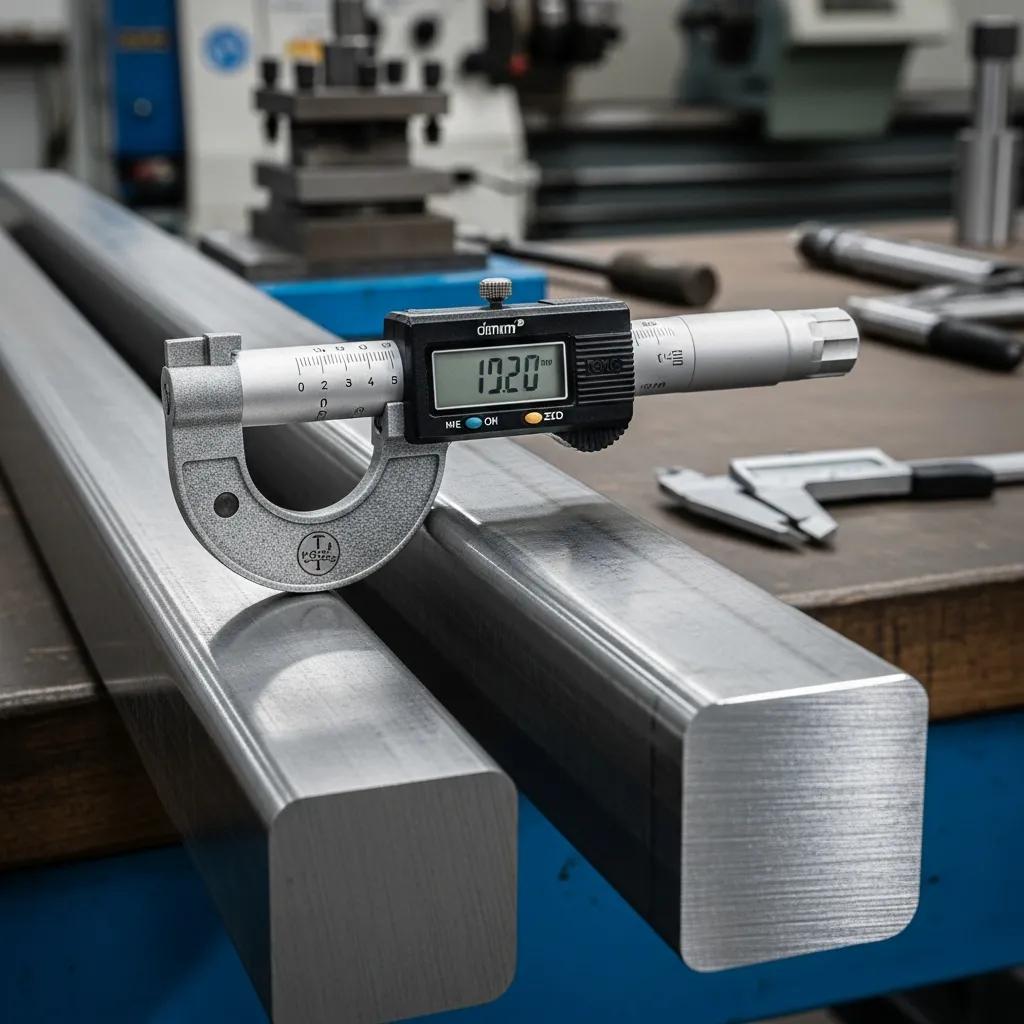
C20 Steel — Complete Guide to Composition, Strength and Common Uses
C20 is a low‑carbon engineering steel with roughly 0.20% carbon, chosen where a reliable balance of strength, ductility and machinability matters. This guide explains what C20 is, why its chemistry matters, and how those elements translate into tensile strength, hardness and real‑world performance for parts like shafts, bolts and bright bars. Engineers, procurement teams and manufacturers will find clear composition and mechanical tables, practical heat‑treatment notes, and cross‑references to international equivalents to support specs and sourcing. We also outline common industry applications and supplier considerations so you can quickly match material choice to production needs. Continue for composition breakdowns, quick comparison tables, machining and welding tips, and guidance on selecting equivalents for specific requirements.
What is C20 Steel — Key Characteristics
C20 is a plain low‑carbon engineering steel, typically containing about 0.17–0.23% carbon. That low carbon level delivers a useful mix of machinability and ductility while keeping adequate tensile strength for many non‑structural parts. C20 forms and welds readily and accepts finishing operations such as turning and grinding, which is why it’s commonly supplied as bright and round bars for precision components. Choose C20 when manufacturability and cost efficiency are priorities and extreme wear resistance or heavy loading are not required.
Main characteristics at a glance:
- Moderate strength with good ductility—well suited to general engineering components.
- High machinability and straightforward weldability compared with higher‑carbon steels.
- Regularly available as bright bars and round bars for precision work.
With these traits in mind, the next section explains how C20 maps across different grade systems and what those codes mean for buying and certifying material.
How is C20 Steel Classified in the Steel Grade System?
C20 appears under several national and international codes that describe very similar low‑carbon steels. In Europe you’ll see C20 (and related EN grades), while JIS uses S20C and SAE/AISI commonly lists 1020. These labels reflect small differences in tolerances and naming conventions rather than dramatic metallurgical changes. For procurement, always specify the relevant standard (EN, JIS, SAE, etc.) and request mill test certificates that confirm chemistry and mechanical test results rather than relying on the grade name alone.
Clear cross‑referencing avoids specification errors and helps ensure the material fits your machining and heat‑treatment plans. Next, we cover the material features that make C20 a good choice for many engineering tasks.
What Are the Primary Features of C20 Steel?
C20’s behaviour is largely set by its low carbon and modest alloy content. Around 0.20% carbon preserves ductility and cold‑formability while controlled manganese and silicon add modest strength without hurting machinability. In practice, C20 is ideal for turned parts, small shafts and fasteners that need dimensional accuracy but not high hardness. When greater surface hardness or wear resistance is required, designers typically move to higher‑carbon or alloyed steels; for many cost‑sensitive parts, C20 hits the best trade‑off between performance and manufacturability.
Next, we look at the chemical elements that define C20 and how each affects mechanical behaviour.
What is the Chemical Composition of C20 Steel?

C20’s performance comes from a short list of principal elements—carbon, manganese, silicon, sulfur and phosphorus—kept within defined ranges to meet standards. The table below summarizes typical percentages and explains how each element affects strength, ductility and machinability. Presenting composition in a concise table helps procurement and engineering quickly assess how small chemistry changes will alter part behaviour. After the table we note tolerances and testing points to watch when accepting material.
| Element | Typical Percentage Range | Effect on Properties |
|---|---|---|
| Carbon (C) | 0.17–0.23% | Primary hardening element; higher carbon raises tensile strength and hardness but lowers ductility and weldability. |
| Manganese (Mn) | 0.30–0.60% | Adds modest strength and hardenability, counteracts sulfur effects and helps refine grain structure for toughness. |
| Silicon (Si) | 0.10–0.30% | Used as a deoxidizer; slightly increases strength without significantly reducing ductility. |
| Sulfur (S) | ≤0.05% | Usually an impurity; controlled sulfur can improve machinability but may reduce toughness and weld quality. |
| Phosphorus (P) | ≤0.04% | Impurity that can marginally increase strength but lowers toughness; kept low to preserve ductility. |
This composition explains why C20 balances machinability with adequate mechanical performance for general engineering parts. The following subsection outlines the standards that define these ranges and how they apply in purchasing.
Which Elements Constitute C20 Steel and Their Typical Percentages?
C20’s controlled mix of elements keeps processing and mechanical results predictable. Carbon near 0.20% sets baseline tensile behaviour while manganese and silicon tune strength and forgeability. Sulfur and phosphorus are limited to protect toughness and weldability, though in some free‑machining variants sulfur may be higher for improved chip formation. Quality control typically uses optical emission spectroscopy and mill test certificates to verify chemistry before shipment.
Specifying each element clearly in procurement prevents surprises during machining or service and supports consistent production. Next we summarise which standards formally specify these composition windows.
What International Standards Define C20 Steel Composition?
Several standards define C20 and its near equivalents—EN, JIS and SAE/AISI are the most common references used in international procurement. European standards list C20 and related EN grades with specific chemical and mechanical requirements, while JIS (S20C) and SAE/AISI (1020) are common in Asia and North America. When ordering, name the standard you require so suppliers can supply mill test reports and inspection data that match that standard.
Calling out the standard also clarifies required acceptance tests—chemical analysis, tensile and hardness—and reduces the risk of mismatch when sourcing across borders. Next up: the mechanical properties those compositions produce.
What Are the Mechanical Properties and Strength Parameters of C20 Steel?
C20 offers moderate tensile and yield strength with good elongation and formability, suitable for parts that see moderate loading and need finishing. The table below summarises typical mechanical ranges and the common test standards or units used. After the table we explain how as‑rolled, normalized or drawn conditions affect these numbers for design calculations.
| Property | Typical Value / Range | Testing Standard / Unit |
|---|---|---|
| Tensile strength (Rm) | 410–560 MPa | ISO / EN tensile test, MPa |
| Yield strength (Re) | 250–350 MPa | 0.2% proof stress, MPa |
| Elongation (A%) | 20–25% | Tensile test, percent elongation |
| Brinell Hardness (HB) | 120–180 HB | Brinell hardness scale |
These ranges show C20 is strong enough for many turned and machined parts while keeping ductility for forming and welding. Be sure to account for the supplied condition—hot‑rolled, cold‑drawn or normalized—because heat treatment and finishing shift these values and affect design safety factors.
What Are the Typical Tensile and Yield Strength Values of C20 Steel?
Typical tensile strength for C20 is broadly 410–560 MPa and yield strength commonly falls between 250–350 MPa (0.2% offset), depending on finish and heat treatment. Cold‑worked or drawn bright bars can show higher values from strain hardening. For design use, rely on the supplier’s mill test report for exact numbers and apply the appropriate safety factors for your application.
Knowing how finishing and supply condition change strength helps select the right material state for the part—next we cover hardness and elongation implications.
How Do Hardness and Elongation Affect C20 Steel Performance?
With Brinell hardness around 120–180 HB, C20 is soft enough for efficient machining but not intended for heavy abrasive wear. Elongation of 20–25% gives good ductility for bending, forming and moderate impacts. If you need higher surface hardness, consider surface hardening or a higher‑carbon/alloy grade; for extensive forming, C20’s elongation reduces cracking risk. Assess hardness and elongation together to decide between heat treatment, surface treatment or material substitution for your design.
These mechanical considerations point directly to the industries and components where C20 is most commonly used, covered next.
What Are the Common Applications of C20 Steel Across Industries?

C20’s mix of machinability, weldability and moderate strength makes it a frequent choice for non‑critical and precision components in several sectors. The list below groups typical components by industry and explains why C20 suits each use. This helps engineers and procurement match material capability with part function and cost targets.
- Automotive & manufacturing: shafts, studs and spacer components that require turning accuracy and moderate strength.
- Agriculture & construction: brackets, linkages and support fittings where cost and formability are key.
- Railways & heavy engineering: non‑structural pins, jigs and assembly fixtures that prioritise machinability.
Across these industries, C20 is often chosen when surface finish, dimensional control and easy machining matter more than high hardness or extreme tensile performance. That understanding helps decide when to use C20 or opt for higher‑carbon or alloyed steels.
How is C20 Steel Used in Automotive and Manufacturing Components?
In automotive and manufacturing, C20 is commonly used for small shafts, hubs, spacers, dowel pins and fixtures machined to close tolerances. Its machinability shortens cycle times on lathes and mills, and its weldability supports simple fabrication where needed. For light‑duty axles or steering link components where high fatigue strength isn’t critical, C20 delivers an economical balance of production efficiency and in‑service performance.
Specifying the correct supply condition—bright‑drawn versus as‑rolled—ensures the dimensional accuracy and surface finish required for assembly processes, which we cover for other sectors below.
What Roles Does C20 Steel Play in Agriculture, Construction, and Heavy Engineering?
In agriculture and construction, C20 is suited to brackets, couplings and linkage parts that see intermittent loads and are easy to replace. Heavy engineering uses C20 for jigs, fixtures and non‑critical pins where machinability and cost control outweigh the need for maximum load capacity. These sectors often pair C20 with corrosion protection (painting, plating or galvanizing) to extend service life. When higher toughness or wear resistance is required, designers either select a different grade or apply surface treatments.
Procurement teams typically seek suppliers who can deliver precision bright bars and round bars in C20—information useful during sourcing and tendering.
Dhand Steels supplies C20 as precision bright bars and round bars tailored to the component types above. Our range emphasises straightened, precision‑finished bars and practical industrial solutions for manufacturing, automotive, agriculture, railways, construction and heavy engineering. Procurement teams can request specification sheets, mill test reports and delivery options directly to confirm dimensions, tolerances and lead times.
With supplier considerations covered, we now explain processing routes and how they influence final properties.
How is C20 Steel Processed and What Are Its Heat Treatment and Machinability Characteristics?
C20 is made by standard steelmaking routes and supplied as hot‑rolled, cold‑drawn or bright‑finished bars—each route changes final properties and suitability for downstream work. Common production steps include rolling to size, straightening and precision finishing for bright bars, and optional heat treatments to adjust ductility or relieve stresses. Knowing these routes helps you pick the right supply condition for machining, welding and surface finishing, and sets realistic expectations for tolerances and surface quality.
Typical processing and finishing steps include:
- Hot rolling to near‑net diameter followed by straightening and turning to final tolerance.
- Cold drawing to improve surface finish, tighten dimensions and slightly raise strength through strain hardening.
- Precision finishing and straightening for bright bars to meet tight tolerances for shafts and turned components.
These choices directly affect heat‑treatment recommendations and machining parameters discussed next.
What Heat Treatment Methods Are Suitable for C20 Steel?
C20 responds well to mild heat treatments that tune ductility and relieve residual stress without changing its low‑carbon nature. Common options include full annealing to soften and ease machining, normalizing to refine the grain structure and homogenize properties, and stress‑relieving after welding or machining to reduce distortion. Quench and temper are not typically used to reach high hardness because low carbon limits hardenability; for hardness needs, surface treatments or higher‑carbon grades are preferred. Select the heat‑treatment schedule based on part function, dimensional stability and downstream processes.
Correct heat treatment reduces scrap and improves yield, and it also affects weldability and final performance as described below.
How Do Weldability and Machinability Influence C20 Steel Usage?
C20 welds well because of its low carbon equivalent, lowering the risk of hydrogen cracking when standard welding practices are used. For thicker sections or high residual stresses, preheating and controlled cooling are recommended. Machining is a strength: C20 machines easily with standard tooling, moderate speeds and proper coolant, producing fine finishes on bright bars and turned parts. Best practices include sharp carbide tools, moderate feeds to preserve surface finish, and chip control attention on free‑machining variants with elevated sulfur.
These manufacturing traits help decide whether C20 is the right material or if a different grade or surface treatment is required. Next we show how C20 compares to international equivalents for procurement clarity.
What Are the Equivalent Grades and How Does C20 Steel Compare to Other Steel Grades?
C20 has several close international equivalents commonly cited in procurement and engineering documents. The table below provides a concise cross‑reference and highlights differences buyers should check—especially composition tolerances and mill certificates—before accepting material. Use it as a quick checklist when comparing supplier documentation to a specified grade.
| Grade | Equivalent Standard | Key Property Differences |
|---|---|---|
| C20 | EN / European designation | Carbon around 0.20%; good machinability and weldability. |
| SAE 1020 | SAE/AISI 1020 | Highly similar composition; usually interchangeable after verifying mill certificates. |
| JIS S20C | JIS S20C | Japanese equivalent with comparable carbon range; confirm local tolerances and finish options. |
This mapping eases international sourcing but remember that exact matches require certificate verification of chemistry and mechanical tests. Below we expand on common equivalents and substitution guidance.
Which International Steel Grades Are Equivalent to C20 Steel?
Common equivalents include SAE/AISI 1020 and JIS S20C—low‑carbon plain steels with closely aligned compositions and mechanical expectations. While functionally similar, small differences in impurity limits or mill practice can affect machining or finish. Always request the specific standard code and a mill test report to confirm chemical composition, tensile/yield values and hardness before acceptance. Doing so ensures the delivered grade meets the application’s functional needs rather than relying on a name alone.
Verifying equivalence with certificates prevents mismatches and supports reliable part performance in production and service.
How Does C20 Steel Differ from Similar Grades in Properties and Applications?
Compared with higher‑carbon grades like C35 or C40, C20 provides lower tensile strength and hardness but better ductility and easier machining—making it preferable for turned parts and fixtures. Higher‑carbon steels are chosen when wear resistance, higher tensile strength or deeper hardening are necessary; C20 is the cost‑effective choice for parts where dimensional accuracy and surface finish matter more than extreme mechanical properties. If you consider substitution, validate with supplier test certificates and, if needed, run trial machining or hardness checks to confirm suitability.
Dhand Steels can supply C20 and equivalent bright bars and round bars that meet cross‑referenced standards. Procurement teams may request grade‑comparison documentation and enquiry routes to receive spec sheets and delivery options for cross‑border sourcing where equivalence is required.
Frequently Asked Questions
What are the advantages of using C20 steel over higher-carbon steels?
C20 combines excellent machinability, good ductility and low cost, making it ideal for parts where extreme strength isn’t needed. Unlike higher‑carbon steels, C20 is easier to machine and less prone to brittleness, which helps production speed and surface finish for precision components in automotive and manufacturing applications.
Can C20 steel be used in outdoor applications?
C20 can be used outdoors but is not inherently corrosion‑resistant. To protect service life, apply surface treatments such as galvanizing, painting or plating. With appropriate protection, C20 is a practical, economical choice for exposed components.
How does the heat treatment process affect C20 steel’s properties?
Mild heat treatments like annealing, normalizing and stress‑relieving adjust ductility, grain structure and residual stress without changing C20’s low‑carbon character. Quench and temper won’t produce high hardness due to limited hardenability; for hardness, use surface treatments or a higher‑carbon grade. Choose the treatment based on part function and downstream processing.
What are the best practices for machining C20 steel?
Use sharp carbide tooling, moderate cutting speeds and suitable coolant for best surface finish and tool life. Control feed rates to protect surface integrity and manage chip formation—especially on free‑machining variants with higher sulfur. These steps deliver consistent, accurate parts and efficient cycle times.
What are the implications of C20 steel’s elongation and hardness for design?
Elongation of 20–25% gives C20 good ductility for bending and forming, reducing the risk of cracking during fabrication. Hardness around 120–180 HB means it isn’t ideal for heavy wear—consider surface hardening or a different grade where abrasion resistance is critical. Balance these properties against part loads and service conditions when selecting material.
How does C20 steel perform in welding applications?
C20 welds well due to its low carbon equivalent, lowering hydrogen‑cracking risk with standard welding practice. For thicker sections or high residual stresses, preheat and controlled cooling are advisable. With proper welding technique, C20 supports reliable joins for fabricated assemblies.
Conclusion
C20 steel offers a practical blend of machinability, ductility and cost‑effectiveness, making it a solid choice for many engineering applications where extreme hardness isn’t required. Its low carbon content simplifies processing while delivering sufficient strength for non‑critical components across industries. By understanding its chemistry, properties and typical uses, procurement and design teams can pick the right supply condition and treatment for their needs. Explore Dhand Steels’ range of C20 bright and round bars to find options that match your specifications and production timelines.


Comments
0 Comment On Post