
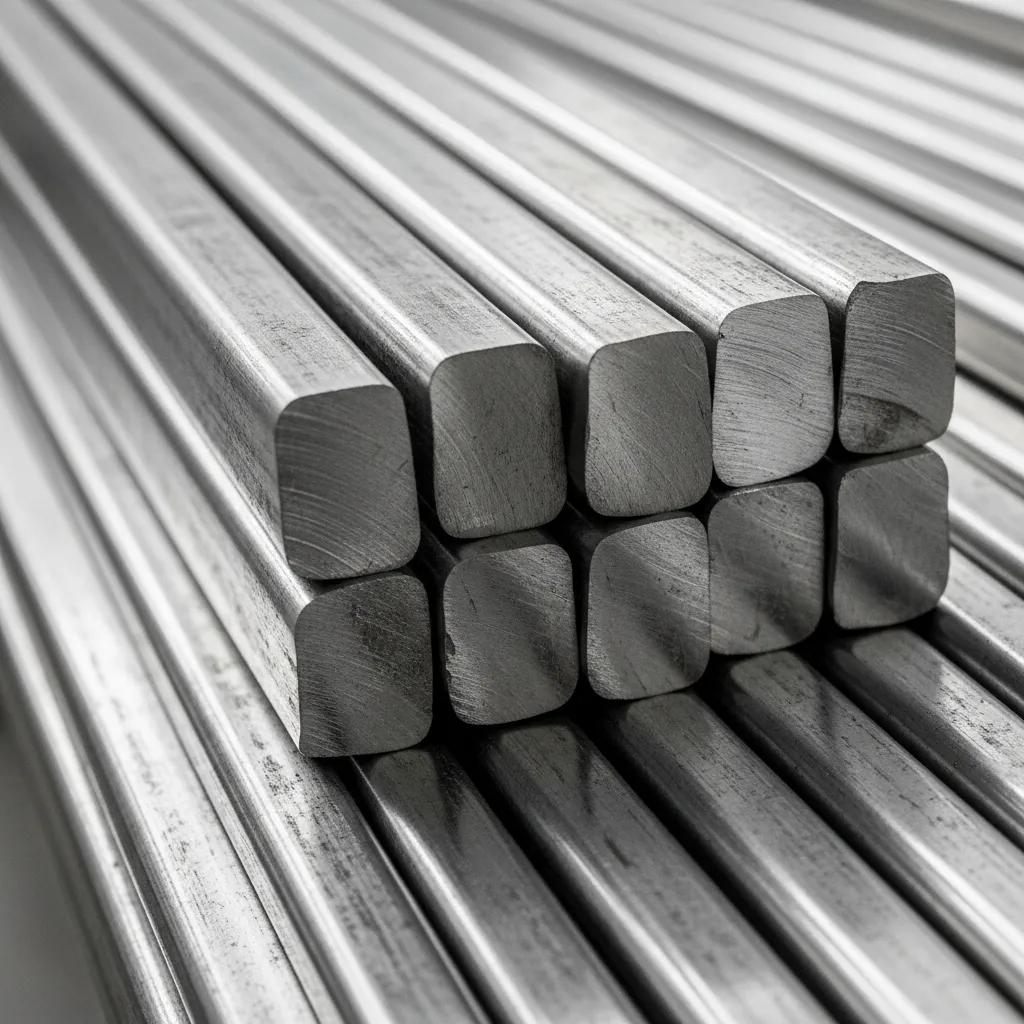
EN16 Steel — Mechanical Properties and Practical Uses for Shafts & Gears
EN16 is a medium‑carbon, manganese‑molybdenum alloy steel commonly specified for engineering parts that need a dependable mix of tensile strength, toughness and machinability. Manufacturers select it for shafts and gears because it is available as precision bright bars and responds predictably to heat treatment, letting you target hardness and fatigue resistance while keeping close dimensional control. This guide covers EN16’s key mechanical properties, chemical composition, recommended heat‑treatment routes, typical engineering applications and international equivalents to support material selection. We include practical examples showing how tensile and yield figures translate to shaft torque capacity and how hardness–toughness trade‑offs influence gear wear and core resilience, plus clear sourcing advice for EN16 bright bars used in precision shafts and gears.
Key mechanical properties of EN16 steel
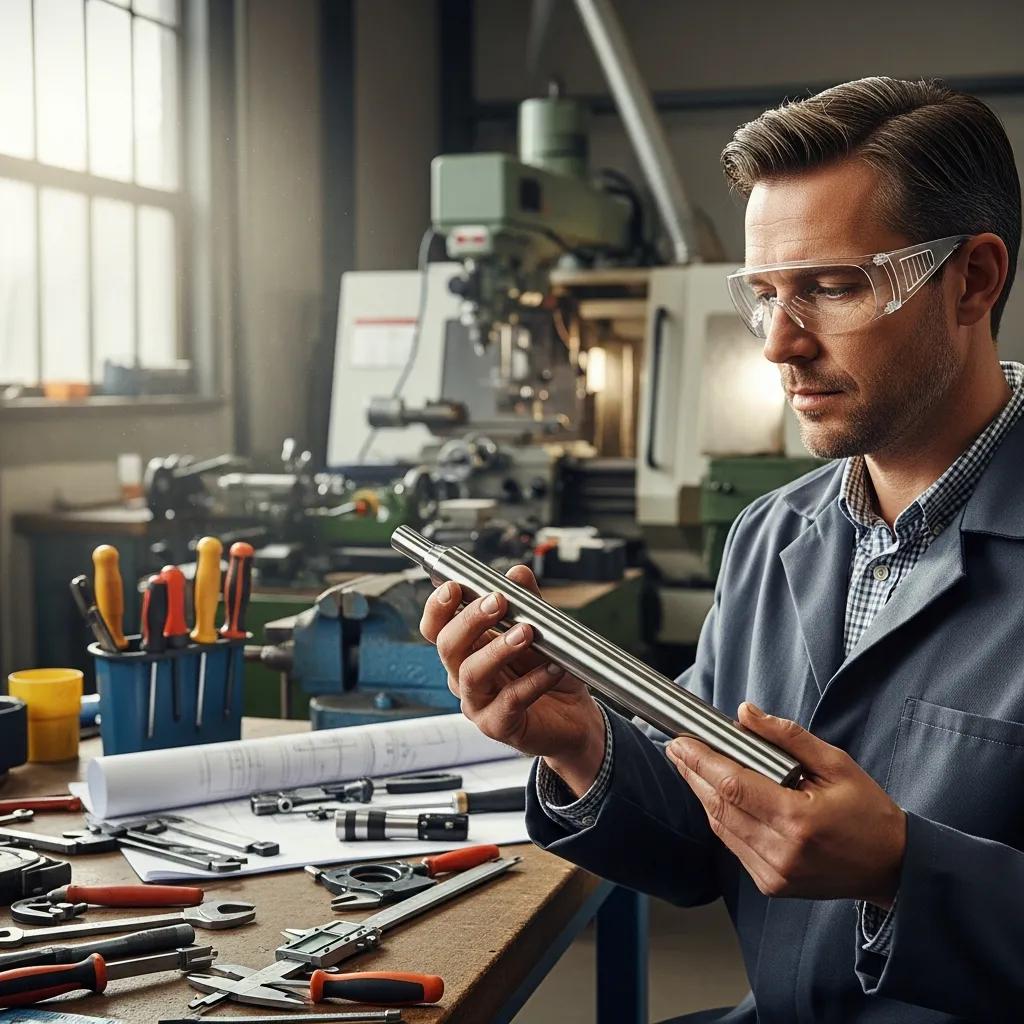
EN16 combines strength, ductility and impact resistance in a way that suits load‑bearing rotating parts. Supplied as normalized or precision bright bars, it delivers moderate tensile and yield strength with a Brinell hardness that can be raised by quench‑and‑temper treatments. These traits let designers balance surface wear resistance against a tough core. Knowing the typical mechanical values helps engineers specify heat treatments and surface processes so shafts and gears meet fatigue and wear requirements. The table below summarizes representative properties by common supply condition to set realistic expectations for design and inspection.
Different supply and heat‑treatment conditions produce measurable changes in mechanical performance:
| Property | Test Condition/State | Typical Value / Range |
|---|---|---|
| Tensile strength (Rm) | Normalized / bright bar | 650–850 N/mm² |
| Yield strength (Rp0.2) | Normalized / bright bar | 350–550 N/mm² |
| Brinell hardness (HB) | Normalized | 170–220 HB |
| Elongation (A%) | Normalized | 10–18% |
This profile illustrates EN16’s versatility: normalized material offers good machinability and toughness, while hardened‑and‑tempered conditions increase wear resistance. Next, we quantify tensile and yield ranges and explain what they mean for shaft design.
Tensile and yield strength — what to expect
Tensile and yield strengths set the limits for axial and torsional loads before a shaft or gear core yields or fractures. In normalized or bright‑bar condition, EN16’s tensile strength typically ranges from 650 to 850 N/mm² and yield strength from roughly 350 to 550 N/mm², depending on heat treatment and section size. Quench‑and‑temper cycles raise both values but require careful control to preserve toughness. For rotating shafts, yield strength defines the safety margin against plastic deformation under peak torque; designers convert these figures into allowable shear and bending stresses when sizing keyways, shoulders and fillets. Knowing these numbers helps specify factors of safety and decide whether surface hardening or higher‑alloy steels are needed for severe applications.
Hardness, ductility and shock resistance — trade‑offs that matter
Hardness, elongation and impact resistance are interconnected and together determine wear behavior, fatigue life and resistance to sudden loads. Normalized EN16 normally measures 170–220 HB — a hardness range that supports machining while offering moderate wear resistance for gears and shafts. Increasing hardness improves wear life but can reduce ductility and impact toughness. Typical elongation values (10–18%) indicate enough ductility to absorb cyclic stresses, helping to delay fatigue crack initiation in rotating parts. Shock resistance depends strongly on tempering practice: the right temper balances surface hardness and core toughness for components such as axles and small crankshafts that face occasional overloads. Choose hardness targets based on whether wear resistance (higher HB) or core toughness and fatigue endurance (lower HB with higher temper) are the priority.
EN16’s balanced mechanical properties make it straightforward to machine to tight tolerances and then fine‑tune via post‑machining heat treatments for final performance.
Chemical composition of EN16 alloy steel
EN16’s mid carbon level with manganese and molybdenum additions gives it practical hardenability and strength. Chemistry controls achievable strength, hardenability, machinability and weldability, so specifying correct element ranges is essential for predictable processing and performance. The table below lists typical element ranges and the functional impact of each on mechanical behaviour and manufacturing.
| Element | Typical Range (%) | Functional Impact |
|---|---|---|
| Carbon (C) | 0.36–0.44 | Increases strength and hardness; higher values reduce weldability and raise cracking risk |
| Manganese (Mn) | 0.60–0.90 | Improves tensile strength and hardenability; aids deoxidation and toughness |
| Molybdenum (Mo) | 0.15–0.30 | Boosts hardenability and high‑temperature strength; refines grain structure |
| Silicon (Si) | 0.10–0.35 | Acts as a deoxidizer and slightly increases strength; can influence surface finish when machining |
| Sulfur (S) / Phosphorus (P) | ≤0.04 each | Impurities that reduce toughness and fatigue life if excessive; controlled to improve machinability |
This composition explains why EN16 sits in the engineering‑steel category: carbon gives baseline strength, manganese and molybdenum improve hardenability, and controlled silicon plus low impurities protect toughness and surface quality. Next we look at which elements most strongly define EN16’s behaviour.
Which elements shape EN16’s behaviour?
Carbon is the principal strength‑control element in EN16: its mid‑range concentration lets the steel harden effectively while remaining machinable. Manganese supports tensile strength and ductility and, together with molybdenum, improves hardenability in thicker sections. Even modest molybdenum levels enhance through‑thickness hardening and resist temper softening at elevated temperatures. Silicon serves mainly as a deoxidizer and minor strengthener, while low sulfur and phosphorus are specified to protect impact toughness and fatigue life. Each element therefore informs processing choices: carbon and Mo set heat‑treatment windows, Mn and Si affect forging and machining, and tight impurity limits guard dynamic performance.
With these roles clear, we turn to how composition influences machining and welding during manufacturing.
How composition affects machinability and weldability
EN16’s medium carbon content plus molybdenum makes it reasonably machinable but less forgiving for welding than low‑carbon steels. Bright‑bar or normalized supply conditions improve machinability by providing a consistent microstructure and surface finish for turning and gear cutting. For welding, the higher carbon equivalent from C and Mo means preheating and controlled interpass temperatures are recommended to reduce hydrogen‑induced cracking and to manage hardness in the heat‑affected zone. For extensive welding, post‑weld tempering or a lower‑carbon substitute may be preferable to preserve toughness. Communicate intended fabrication steps to your supplier so delivered EN16 bright bars match downstream processing needs.
Heat treatment for optimal EN16 performance
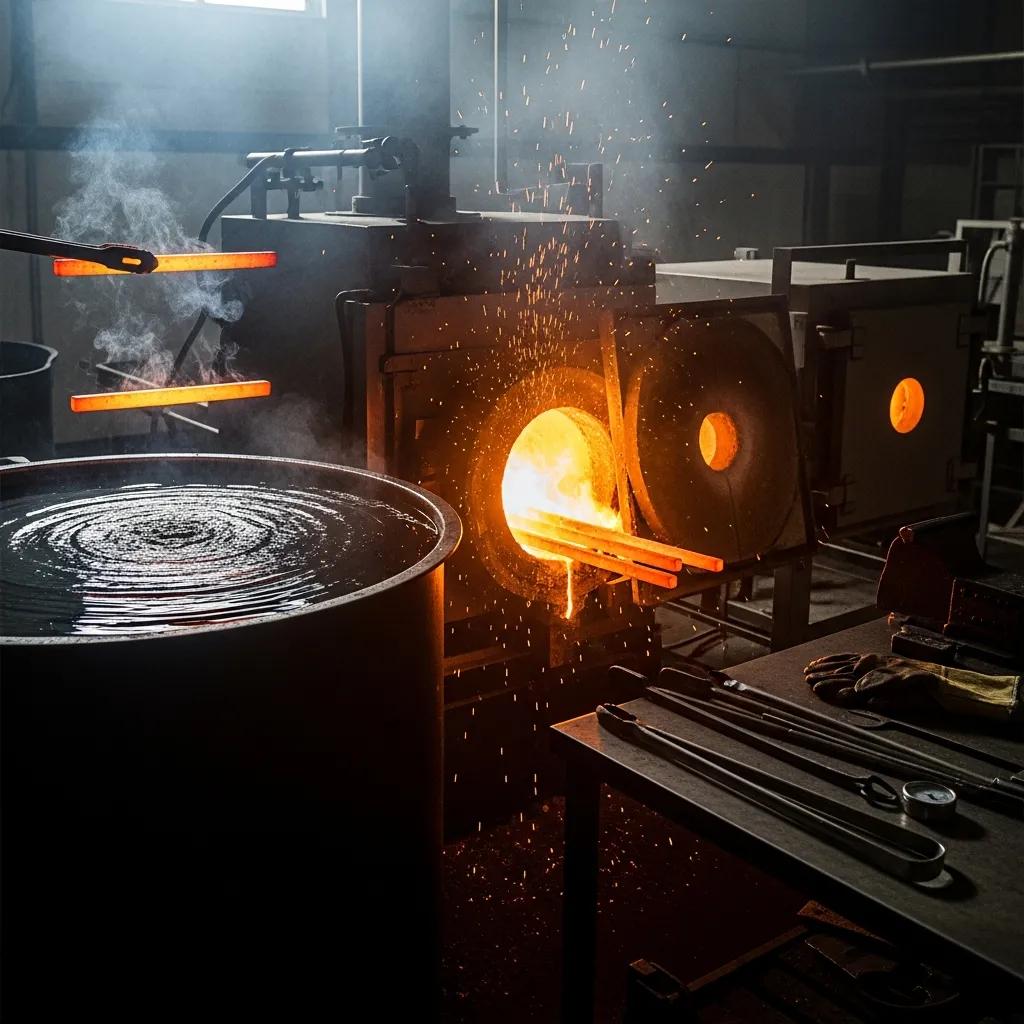
Heat treatment is the main tool for tuning EN16’s balance of hardness, toughness and fatigue resistance for shafts and gears. Common processes—annealing, normalizing, quench‑and‑temper and stress relieving—alter microstructure in predictable ways to favour machinability, dimensional stability or wear performance. The practical, step‑by‑step summary below lists recommended heat‑treatment routes with temperature windows and cooling media so production teams can specify the correct regimen for component function and service conditions. After procedural guidance we map those choices to likely component outcomes for shafts and gears.
Recommended heat‑treatment procedures
- Annealing: Heat to 680–720°C and cool slowly in the furnace to soften material and improve machinability; results in a fine pearlitic‑ferritic structure for easier cutting.
- Normalizing: Heat to 840–870°C and cool in still air to refine grain size and homogenize properties across sections, improving toughness and dimensional stability.
- Hardening (Quench) + Tempering: Austenitize at 840–880°C then quench in oil or water to form martensite; temper at 450–650°C depending on the target hardness to restore toughness and set final hardness.
- Stress Relieving: Heat to 550–650°C with slow cooling to remove residual stresses after machining or welding without significant microstructural change.
Each step requires controlled heating and cooling to achieve consistent mechanical results: annealing favours machining, normalizing refines structure, and quench‑and‑temper delivers the highest strength and wear resistance.
How heat treatment changes suitability for shafts and gears
Heat treatment determines the trade‑off between surface wear resistance and core toughness. For high‑fatigue shafts, a normalized or tempered lower‑hardness core (around 180–240 HB) combined with localized surface hardening improves fatigue life by keeping a ductile core and wear‑resistant contact surfaces. For gears, quench‑and‑temper produces higher core strength and—when combined with surface grinding or shot peening—gives teeth that resist deformation and pitting. Tempering temperature selection is crucial: higher temper raises toughness but lowers hardness, while lower temper preserves hardness at the expense of some impact strength. Surface processes such as induction hardening or case carburizing are often used with bulk heat treatments to create a hard, wear‑resistant tooth surface over a tough, ductile core.
Mapping heat‑treatment choices to component outcomes helps engineers choose EN16 for applications such as automotive shafts and gearsets.
Primary engineering applications for EN16 steel
EN16 is a common choice for rotating and load‑bearing parts where a balance of strength, toughness and machinability is needed. Typical uses include shafts, gears, axles, crankshafts and certain fasteners across automotive, heavy engineering and agricultural machinery. The grade’s availability as precision bright bars in round and hex forms supports manufacture to tight tolerances, especially where turning and subsequent heat treatment are standard steps. The list below highlights primary uses and why EN16 is suitable for each.
- Shafts: The balance of fatigue resistance and machinability makes EN16 well suited to drive and transmission shafts.
- Gears: Good core toughness and the ability to take surface hardening support gear applications under moderate loads.
- Axles and crankshafts: Adequate strength and toughness for medium‑duty axles and smaller crankshafts when properly heat treated.
These examples explain why procurement often specifies EN16 in bright‑bar form for precision turning and grinding. Dhand Steels manufactures and exports high‑precision EN16 bright bars — round and hex forms and HB wire — with premium straightening and alignment suited to shaft and gear production.
If you need material in a particular supply condition or with specific tolerances, Dhand Steels can advise on the best delivery state to match your heat treatment and machining plan.
Why EN16 is a good choice for automotive shafts
Automotive shafts require fatigue resistance, dimensional stability and efficient machinability for high‑volume production and reliable service. EN16’s chemistry and heat‑treat response let manufacturers produce bright‑bar shafts that machine to close tolerances, then be tempered or surface‑hardened to meet fatigue and wear targets. Its tensile and yield ranges provide necessary margins for torque transmission, while elongation and impact properties let parts absorb transient loads without brittle failure. Bright‑bar supply also gives consistent straightness and surface finish, reducing finishing work. With the right quench‑and‑temper cycle or surface treatment, EN16 delivers shafts that meet automotive durability needs without the cost of higher‑alloy steels.
EN16 performance in gear manufacture
For gears, EN16 offers good machinability for gear cutting and accepts treatments that improve tooth‑surface durability. Cut gears that are hardened and tempered, then ground, achieve accurate tooth profiles and adequate wear resistance for many industrial uses. If higher surface hardness is required, induction hardening or case carburizing can harden the teeth while preserving a tough core from tempering. Typical target hardness for cut gears is 220–300 HB after processing; higher‑load, ground gears may need localized hardening and precision grinding. EN16’s property mix supports both basic transmission gears and more demanding gearsets when combined with targeted surface engineering.
If you’re sourcing EN16 for shafts or gears, request samples and technical data sheets and discuss supply states and tolerance control with suppliers to ensure parts perform in service.
International equivalents to EN16
EN16 maps to several international standards and commercial equivalents that help buyers identify alternatives or confirm cross‑references. Common equivalents include AISI/SAE 41xx family members and DIN grades; differences in chemistry and recommended heat treatment affect substitutability, so always verify mechanical properties. The table below lists common equivalents and highlights key differences to guide selection and substitution.
| Standard / Grade | Equivalent Name | Key Differences (mechanical / chemistry) |
|---|---|---|
| BS EN / BS970 | EN16 | Medium‑C, Mn–Mo alloy intended for engineering bright bars |
| AISI/SAE | 4140 (commonly cited) | Similar Mn–Cr–Mo family; composition and hardenability may vary — verify C and Mo levels |
| DIN | 42CrMo4 (approx.) | Comparable hardenability and tensile ranges; heat‑treatment schedules may differ |
| National IS / other | 605M36T (listed equivalent) | Comparable mechanical intent; check specific element percentages and test certificates |
Which international standards correspond to EN16?
EN16 is defined within the British engineering‑steel framework and is commonly cross‑referenced to AISI/SAE and DIN designations for international procurement. Historically it appears in contexts such as BS970, and practical equivalents include members of the AISI 4140 family and DIN 42CrMo4. Small differences in chemical ranges and permissible impurities affect hardenability and final properties; when sourcing internationally, confirm certificate data showing exact element percentages and mechanical test results to ensure the material meets your design expectations. Verifying these details prevents mismatches in heat‑treatment response and service performance between nominally equivalent grades.
How do equivalents compare in properties and use?
Comparing EN16 with equivalents like 4140 or 42CrMo4, focus on carbon content and Mo/Cr levels and the resulting hardenability and temper response. Equivalent grades may reach similar tensile and yield ranges after comparable heat treatments, but slight alloy differences can require adjusted austenitizing or tempering temperatures to match hardness and toughness. Machinability and weldability also vary modestly, so factor fabrication methods and inspection needs into selection. Practical advice: always request mechanical test reports and, if substituting, run sample heat‑treatment trials to validate component‑level performance before full production.
- Key substitution checklist for buyers:
Verify chemical certificate: Confirm C, Mn, Mo and Cr ranges match your requirements.
Compare required heat treatments: Ensure process windows yield the target hardness and toughness.
Request mechanical tests: Ask for tensile, yield, hardness and impact test results for critical parts.
Following this checklist reduces risk when switching between equivalent grades and helps ensure reliable component performance in service.
- Material selection: Confirm exact composition and certificates before substituting equivalents.
- Process validation: Run trial heat treatments to reproduce target mechanical properties.
- Supplier communication: Specify the desired supply condition (bright bar, normalized, etc.) and tolerances.
These steps close the loop between grade mapping and real‑world manufacturing decisions. If you need EN16 bright bars with precise straightness and premium quality for shafts and gears, suppliers such as Dhand Steels list EN16 among their offered grades and can supply round and hex bright bars tailored to industrial needs. Procurement teams should request a quote and product specification sheet to align material delivery with production requirements.
- Request a technical data sheet: Confirm chemical and mechanical ranges.
- Ask for supply‑state options: Bright bar, normalized or pre‑heat‑treated conditions.
- Obtain a quote: Clarify tolerances and available bar forms (round, hex, HB wire).
These actions help ensure you receive EN16 material suited for machining, heat treatment and final component performance.
Frequently asked questions
What advantages does EN16 offer in automotive applications?
EN16 combines strength, toughness and machinability in a way that suits common automotive parts. Its medium carbon content allows effective hardening while keeping enough ductility for dynamic loads, making it suitable for shafts and gears. Heat treatment improves fatigue resistance for high‑volume production, and precision bright‑bar supply gives consistent dimensional accuracy, reducing finishing effort.
Can EN16 be welded, and what precautions are needed?
EN16 can be welded, but its medium carbon equivalent requires care. Preheat and controlled interpass temperatures reduce the risk of hydrogen‑induced cracking; post‑weld tempering may be needed to restore toughness in the heat‑affected zone. For extensive welding, evaluate a lower‑carbon alternative to improve weldability.
How does heat treatment affect EN16’s wear resistance?
Heat treatment controls wear resistance by changing the steel’s microstructure. Quenching and tempering raise hardness and improve wear resistance, but the temper temperature must be chosen carefully: higher temp increases toughness and lowers hardness, while lower temp preserves hardness but reduces impact strength. Select heat‑treatment parameters to balance wear resistance with core toughness for the intended duty.
Which surface treatments are commonly used with EN16?
Common surface treatments include induction hardening and case carburizing. Induction hardening produces a hard surface layer while keeping a ductile core; case carburizing increases surface carbon for better wear resistance. These are often combined with bulk heat treatments to optimise performance for gears and shafts under heavy loads.
What should buyers consider when sourcing EN16?
When sourcing EN16, verify chemical composition and mechanical properties from certificates, choose the appropriate supply condition (bright bar, normalized, etc.), and confirm tolerances and available forms (round, hex, HB wire). Discuss intended heat treatment and fabrication with the supplier so delivered material matches downstream processes.
How does EN16 compare to other alloy steels?
EN16 offers a balanced property set, comparable in many ways to AISI 4140. While both provide good strength and toughness, EN16’s manganese content can enhance hardenability and ductility in some cases. Performance depends on heat treatment and application, so evaluate grades against your specific service and manufacturing requirements.
Conclusion
EN16 is a practical engineering steel where strength, toughness and machinability must coexist — making it well suited to shafts, gears and similar rotating parts. Its mechanical properties can be tuned through controlled heat treatment and surface engineering to meet demanding service needs. For tailored EN16 bright bars and expert advice on supply state, tolerances and heat‑treat strategy, contact our team at Dhand Steels.


Comments
0 Comment On Post