
Unlocking the secrets exploring the chemical composition of en 19 steel
IS 2062 E250 vs E350 — A Practical Comparison and Selection Guide for Structural Work
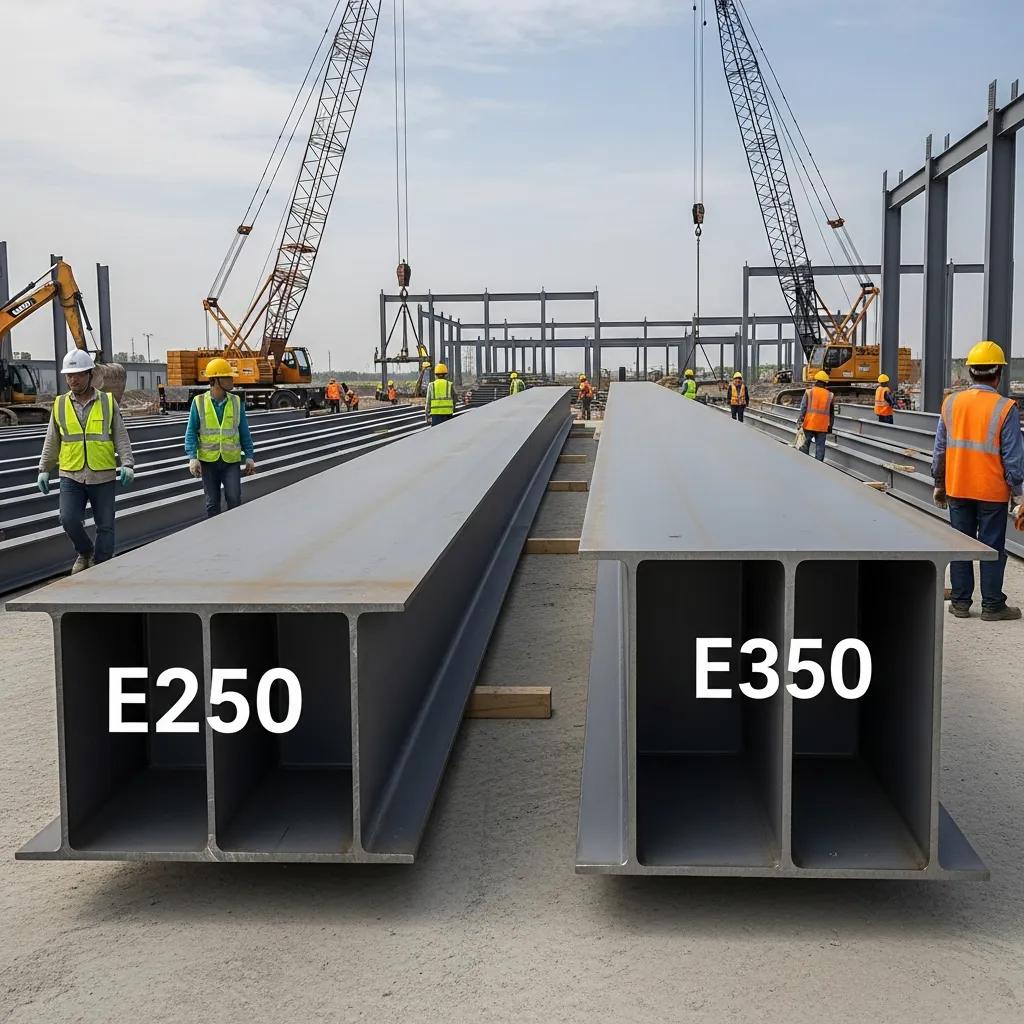
IS 2062 sets the Indian standard for hot‑rolled structural steel. At a glance the difference between E250 and E350 is simple: E250 is a medium‑strength, cost‑effective grade made for routine fabrication, while E350 is a higher‑strength option intended for heavier loads and more demanding structures. This guide breaks down mechanical and chemical distinctions, welding and fabrication considerations, suitable applications, and procurement factors so engineers and buyers can choose the right grade for safety, cost and service life. You’ll find clear numeric references for yield, tensile and elongation; side‑by‑side comparisons; a practical decision checklist; and supplier notes explaining how a bright‑bar manufacturer supports specification compliance. Use this to compare yield, tensile, composition, weldability and lifecycle tradeoffs between E250 and E350 and make a technically defensible, cost‑effective choice for structural steel procurement.
What Are the Key Mechanical Properties of IS 2062 E250 Steel?
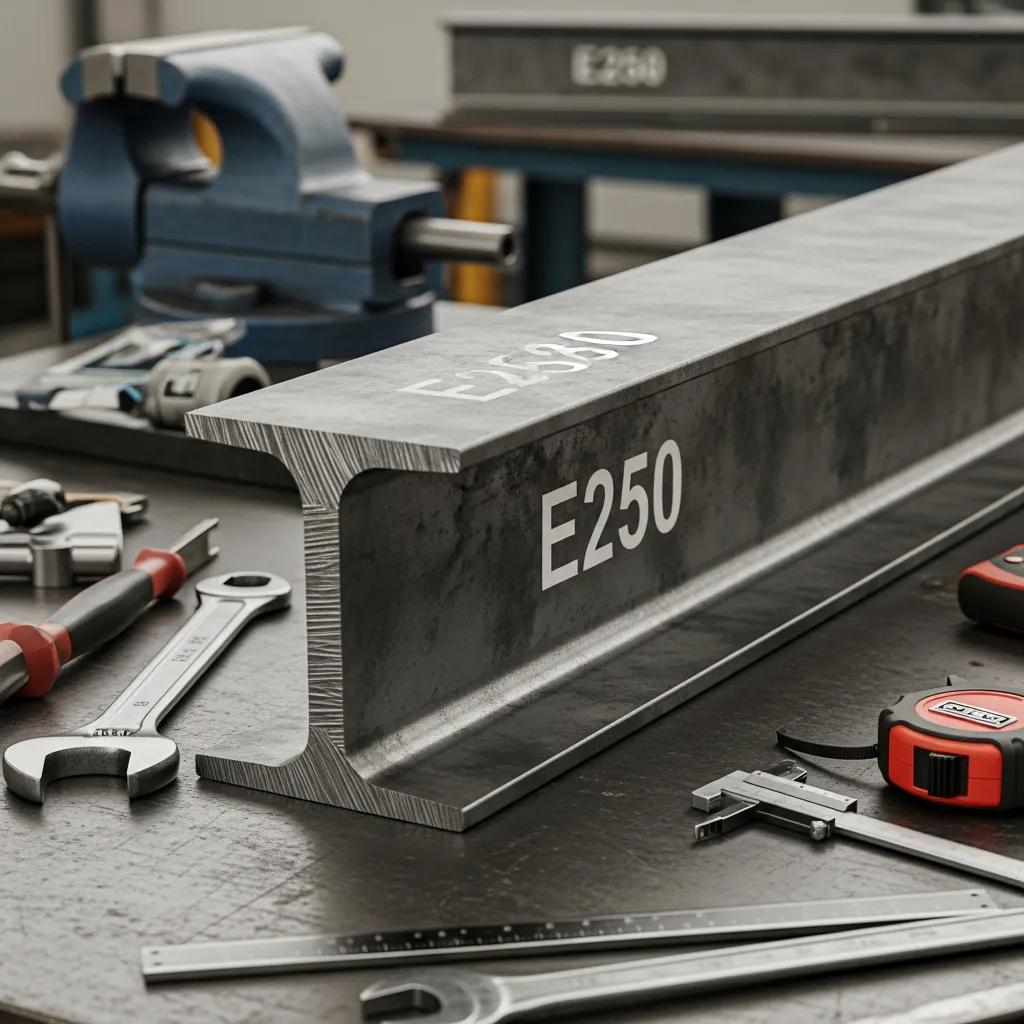
IS 2062 E250 guarantees a minimum yield of 250 MPa and delivers tensile and elongation values that keep it ductile and easy to form or weld. It strikes a balance between strength and ductility: yield strength drives section sizing while tensile and elongation control how the material behaves under overload. Engineers commonly specify E250 when loads and safety margins are moderate and when straightforward fabrication and welding are priorities.
The table below highlights the primary mechanical attributes, typical ranges and a short fabrication note for each item.
E250 mechanical attributes and fabrication notes:
| Property | Typical Range / Value | Fabrication Note |
|---|---|---|
| Minimum Yield Strength (ReH) | 250 MPa (min) | Suitable for light to moderate load members; lets you use simpler section designs. |
| Tensile Strength (Rm) | 410–560 MPa | Offers good ductility for bolted and welded joints; design connections accordingly. |
| Elongation (A%) | 20% (min) | Good formability and energy absorption under cyclic or impact loading. |
What Is the Chemical Composition of IS 2062 E250 Steel?
E250 keeps carbon and manganese under control and limits phosphorus and sulfur to retain weldability and toughness. Carbon raises strength but reduces weldability, so E250 stays at moderate carbon levels to favor fabrication. Manganese improves tensile properties while silicon acts as a deoxidizer; low P and S help avoid brittleness. The summary below links typical compositional bounds to practical effects on mechanical behaviour and welding.
Chemical composition and role of elements:
| Element | Typical Limit (%) | Role and Practical Impact |
|---|---|---|
| Carbon (C) | 0.12–0.20 | Increases strength; kept moderate to preserve weldability and toughness. |
| Manganese (Mn) | 0.30–0.70 | Boosts tensile strength and hardenability; excessive Mn can raise cracking risk. |
| Silicon (Si) | 0.03–0.35 | Used as a deoxidizer; small amounts help strength without harming welds. |
| Phosphorus (P) & Sulfur (S) | ≤ 0.05 each | Kept low to reduce embrittlement and cracking susceptibility. |
Which Applications Suit IS 2062 E250 Steel Best?
E250 is the go‑to grade for general structural work that prioritises economy and easy fabrication rather than the smallest possible section. Typical uses include light building frames, secondary members, purlins, smaller columns and fabricated parts such as base plates and brackets. Its ductility supports cold forming and common welding practices, which speeds shop work and reduces rework. Below are common applications and why E250 fits them.
Common applications where E250 is appropriate:
- Light structural frames and roofing purlins — where loads are moderate and quick fabrication matters.
- Secondary members such as bracing, light columns and support brackets — chosen for economy.
- Fabricated items (base plates, gussets) — where weldability and dimensional accuracy are important.
Specifying E250 for these uses lowers material cost and simplifies fabrication while meeting expected service requirements for typical load scenarios.
How Do IS 2062 E350 Steel Properties and Applications Differ?
IS 2062 E350 raises the minimum yield to 350 MPa, improving strength‑to‑weight so you can use smaller sections for the same load. That reduction in section size benefits projects where dead load or live load is high. E350’s chemistry and processing are adjusted to increase strength while aiming to retain acceptable weldability; however, this often requires tighter fabrication controls and can increase costs. The table below summarises E350’s key mechanical properties and practical implications for heavy‑duty structures.
E350 mechanical attributes and implications:
| Property | Typical Range / Value | Practical Implication |
|---|---|---|
| Minimum Yield Strength (ReH) | 350 MPa (min) | Enables slimmer sections, lower weight and better material efficiency for heavy loads. |
| Tensile Strength (Rm) | 490–640 MPa | Higher ultimate strength supports demanding load cases but can reduce ductility margin. |
| Elongation (A%) | 17% (min) | Slightly lower than E250; adequate but needs attention in brittle or low‑temperature conditions. |
What Is the Chemical Composition of IS 2062 E350 Steel?
E350 typically allows modestly higher carbon and manganese and may include microalloying to lift yield and tensile values. These changes increase hardenability and strength; at the same time, careful impurity control and thermal processing are needed to preserve toughness. The compact table below ties elemental limits to their effects on strength and fabrication.
E350 compositional highlights:
| Element | Typical Limit (%) | Effect on Strength and Fabrication |
|---|---|---|
| Carbon (C) | 0.18–0.25 | A small rise boosts strength but may require stricter preheat or welding control. |
| Manganese (Mn) | 0.60–1.20 | Higher Mn supports greater tensile and yield but increases hardenability and crack risk. |
| Silicon (Si) | 0.03–0.35 | Continues as a deoxidizer; important for consistent properties. |
| P & S | ≤ 0.05 each | Kept low to protect toughness and avoid brittle failure modes. |
What Are the Typical Applications of IS 2062 E350 Steel?
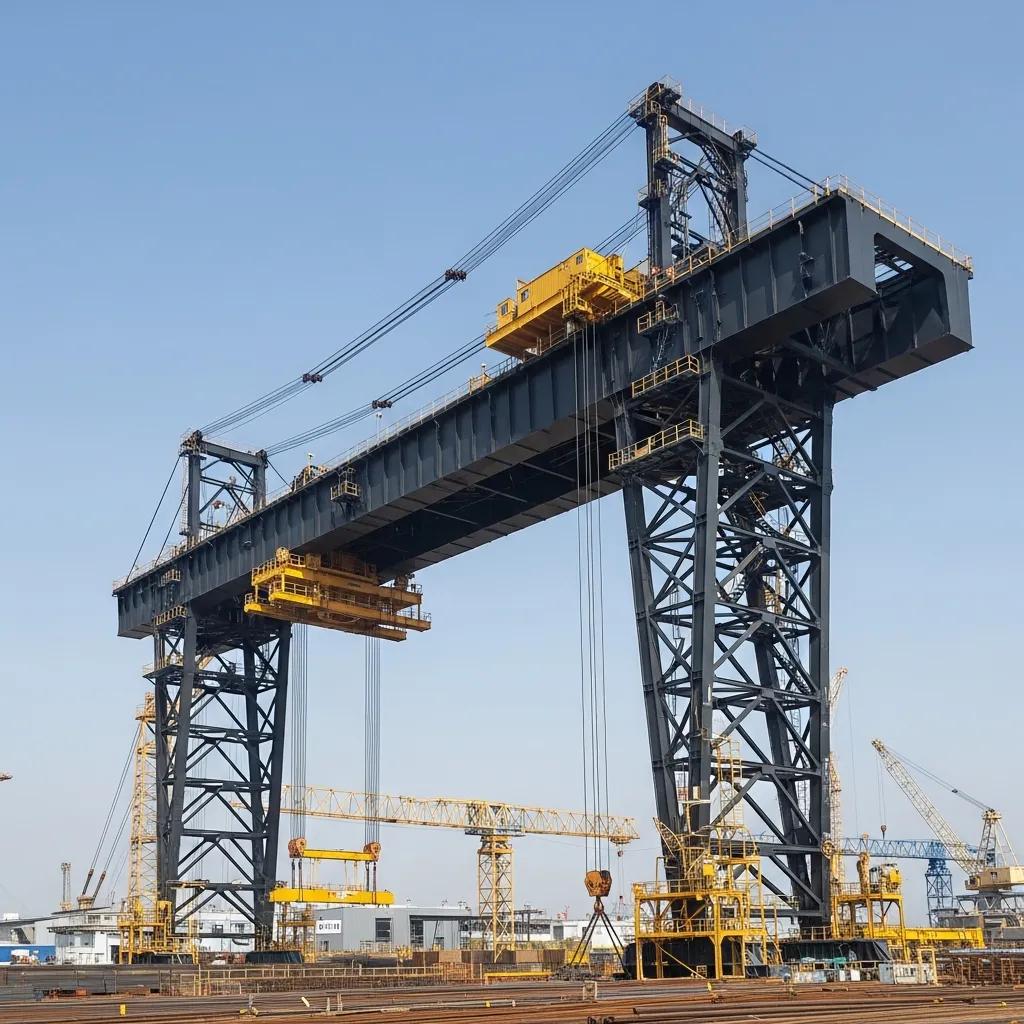
Engineers select E350 when higher yield strength is needed for safety, compact sections or lower self‑weight. Common heavy applications include bridge components, crane runways and booms, large columns, long‑span girders and industrial load‑bearing frames where concentrated loads and fatigue are concerns. While E350 reduces material quantities and can lower lifecycle cost, it demands controlled welding procedures and QA in the workshop. The list below captures typical E350 uses and why the grade is chosen.
Typical E350 applications and rationale:
- Bridge members and girders — improved span performance and reduced dead weight.
- Crane structures and heavy lifting frames — superior load capacity and fatigue resistance.
- Large industrial columns and frameworks — section efficiency and lower lifecycle maintenance.
Using E350 in these cases can cut material volume and long‑term costs despite higher per‑ton or processing expenses — a common trade‑off in grade selection.
What Are the Direct Comparisons Between IS 2062 E250 and E350 Steel Grades?
The clearest difference is yield strength: 250 MPa for E250 versus 350 MPa for E350. Tensile ranges and elongation also differ — E350 gives higher tensile strength but slightly lower elongation. Those mechanical differences change design and fabrication behaviour: E350 lets you use lighter sections but usually requires stricter welding controls, while E250 is easier to fabricate and typically costs less per tonne. The table below gives a quick side‑by‑side reference with practical implications.
Side-by-side chemical and mechanical comparison:
| Attribute | E250 (Value) | E350 (Value) | Practical Implication |
|---|---|---|---|
| Minimum Yield Strength | 250 MPa | 350 MPa | E350 reduces section size and weight for same loads. |
| Tensile Strength | 410–560 MPa | 490–640 MPa | E350 tolerates higher ultimate loads; design margins adjust accordingly. |
| Elongation | 20% min | 17% min | E250 offers slightly better ductility for forming and impact resilience. |
| Weldability | Easier | Requires stricter control | E350 needs careful filler selection and possible preheat. |
| Typical Use | Light-to-moderate structures | Heavy/load-critical structures | Choose by load, fabrication capability and lifecycle cost. |
How Do Yield Strength and Tensile Strength Compare Between E250 and E350?
E350’s minimum yield is 40% higher than E250 (350 MPa vs 250 MPa), and tensile ranges increase by roughly 15–25%. That change directly affects section modulus and member sizes: switching to E350 can let you reduce beam depth or flange area for the same bending moment. For yield‑limited design, moving from 250 MPa to 350 MPa can cut section area by about 29% under identical stress demands, improving material efficiency — useful for long spans and high‑capacity columns.
Higher strength also means re‑checking bolt and weld capacities and ensuring connections remain ductile; increased yield alone doesn’t permit thinner plates without reviewing local buckling, connection detailing and fatigue. The next section outlines how higher strengths influence shop welding practices.
What Are the Differences in Weldability and Fabrication for E250 vs E350?
Weldability differs because higher strength often comes with greater hardenability and a narrower welding window. E250 is generally forgiving and rarely needs special preheat or fillers for common thicknesses, making it well suited to routine fabrication. E350 may require qualified welding procedures, controlled preheat/interpass temperatures and suitable consumables to avoid cold cracking and retain toughness, especially on thicker sections. The practical do/don’t list below and filler guidance help fabricators adopt safe practices.
Welding and fabrication guidance:
- Do use qualified welding procedures and recommended filler metals for E350 to meet toughness requirements.
- Do monitor interpass temperatures and apply preheat when thickness or carbon equivalent requires it.
- Don’t assume E350 will weld the same as E250 in all joint types—test and document procedures.
- Don’t over‑weld or use incorrect consumables that create brittle microstructures.
Following these steps reduces risks such as hydrogen‑induced cracking and helps ensure E350 structures meet intended performance without unexpected brittle behaviour.
How to Choose the Right IS 2062 Steel Grade for Your Project?
Picking between E250 and E350 comes down to loads, structure type, fabrication capability, budget and lifecycle needs. The short decision framework below ranks criteria and maps project types to recommended grades so engineers and procurement teams can make repeatable choices. Start by assessing whether section efficiency or fabrication simplicity is more important, then review welding capacity and long‑term maintenance. The checklist that follows turns those factors into actionable steps.
Decision checklist for grade selection:
- Load Intensity: If design is yield‑critical or needs compact sections, prefer E350; for moderate loads, E250 is suitable.
- Fabrication Capability: If the workshop can qualify weld procedures and control preheat, E350 is viable; otherwise pick E250.
- Budget & Lifecycle: Compare material and processing cost with expected savings from lighter sections over the structure’s life.
The checklist feeds into a decision matrix mapping common project types to recommended grades and procurement QA tips to confirm specification compliance.
How Dhand Steels can help: When you need bright bars in IS 2062 grades, Dhand Steels manufactures and supplies precision straightened bright bars in E250 and E350. We provide certified test reports and focus on dimensional accuracy and consistent mechanical properties to support specification compliance. Request a quote or contact sales for grade‑specific product data and certification documents.
What Factors Should Influence Your Structural Steel Grade Selection?
Key factors include applied loads and safety margins, environmental exposure, fabrication and welding capability, and total lifecycle cost. Load‑driven choices favour higher yield where strength‑to‑weight matters; aggressive environments or fatigue concerns may require grades with proven toughness. If your supply chain cannot reliably control welding procedures or preheat, E250 is often the safer commercial choice. Procurement should always ask for material test reports and dimensional checks to confirm IS 2062 conformance.
Rank these factors when tendering: first, structural load and section efficiency; second, fabrication capability; third, cost and sustainability. This order produces a defensible specification that aligns engineering intent with shop realities.
How Does Cost-Effectiveness and Sustainability Impact Grade Choice?
Initial material and fabrication cost must be weighed against lifecycle savings from reduced weight, simpler installation and lower maintenance. E350 can raise upfront material or processing costs but may save money over time by enabling lighter sections and lowering transport and erection expenses. From a sustainability perspective, higher‑strength grades can reduce total steel mass and associated embodied carbon when used efficiently.
For example, if E350 reduces member area by 25%, material and transport emissions may fall proportionally despite a higher per‑ton price, improving lifecycle economics. Include sustainability and lifecycle metrics in procurement and request test documentation to verify mechanical and environmental claims.
What Makes Dhand Steels a Trusted Supplier of IS 2062 E250 and E350 Bright Bars?
Dhand Steels is a Ludhiana‑based manufacturer, supplier and exporter of bright bars, offering precision straightened products in IS 2062 E250 and E350 grades. Market reports highlight our focus on dimensional accuracy, reliable mechanical properties and certified test reports. We supply precision bright bars that meet structural specifications and back shipments with documentation to support procurement and QA processes.
Key supplier strengths (factual, per market report):
- Manufacturer and exporter of bright bars in IS 2062 E250 and E350 grades.
- Emphasis on dimensional accuracy and straightening/alignment for precise fit‑up.
- Provision of certified test reports to support specification compliance and QA.
This supplier information helps procurement teams who need traceable mechanical and dimensional evidence when specifying IS 2062 bright bars for structural projects; the following sections outline Dhand Steels’ quality controls and sustainability focus as reported.
How Does Dhand Steels Ensure Quality and Precision in Bright Bars?
Supplier information indicates quality control through precision straightening and alignment, dimensional inspection and issuing certified test reports to validate mechanical properties. These steps ensure bright bars meet tolerances and mechanical requirements, reduce fabrication rework and help control long‑term maintenance costs. Typical QA measures include systematic straightening, dimensional checks and documentation that accompanies each shipment for traceability.
Those practices give fabricators and engineers confidence that yield, tensile and elongation match IS 2062 grade limits, and they enable procurement teams to verify conformance at incoming inspection before welding or erection.
What Sustainability Initiatives Does Dhand Steels Implement in Steel Production?
Dhand Steels promotes “smarter steels” and sustainability in market descriptions, indicating efforts to cut environmental impact through material efficiency and process improvements. For buyers, this suggests potential benefits like lower embodied carbon per delivered structure when material efficiency improves and a supplier focus on responsible production. While specific emissions figures are not provided, the sustainability stance signals that procurement can factor lifecycle impact alongside mechanical and cost criteria when choosing a supplier.
Knowing a supplier’s sustainability approach helps owners meet greener procurement policies and supports broader lifecycle optimisation that pairs higher‑strength grades with reduced material use.
Frequently Asked Questions
What are the main differences in weldability between IS 2062 E250 and E350 steel?
E250 is generally more forgiving to weld and rarely needs extensive preheat or special fillers for typical thicknesses. E350, because of higher strength and hardenability, calls for stricter welding control—qualified procedures, suitable consumables and attention to interpass/preheat to avoid cold cracking. Fabricators should validate and document welding procedures when working with E350.
How do environmental factors influence the choice between E250 and E350 steel?
Environmental exposure matters. In aggressive or corrosive environments, designers may favour higher‑strength sections (E350) for reduced section size and better durability under load, provided toughness and corrosion protection are addressed. In milder conditions, E250 often meets performance needs with lower cost and simpler fabrication. Assess both environment and protective measures before selecting a grade.
What are the lifecycle cost considerations when choosing between E250 and E350?
E350 can mean higher upfront material and processing costs but lower lifecycle expense from reduced material mass, transport and installation costs, and potentially less maintenance. E250 is cheaper initially but may increase long‑term costs if heavier sections add maintenance or operational inefficiencies. A lifecycle cost analysis that includes embodied carbon, transport and maintenance gives the clearest picture.
How does the choice of steel grade affect structural design efficiency?
Grade affects section sizes: E350’s higher yield allows smaller, lighter sections and better material efficiency, beneficial where load capacity or span is critical. E250 is easier to work with in the shop but may require larger sections for the same loads. Balance strength needs with fabrication capability and connection design to optimise efficiency.
What role does chemical composition play in the performance of E250 and E350 steels?
Chemistry underpins strength, weldability and toughness. E250’s lower carbon and manganese improve weldability and ductility. E350’s higher carbon and manganese raise yield and tensile strength but tighten welding requirements and raise crack risk if not properly managed. Understanding composition helps predict fabrication challenges and in‑service behaviour.
What are the implications of using E350 in high-load applications?
E350 offers clear benefits for high‑load applications: smaller cross sections, lower dead weight and more efficient designs. However, it requires careful attention to welding, connection design and fatigue detail to avoid brittle failure. Ensure the design, shop capability and QA processes match the material’s demands for a successful outcome.
Conclusion
Choosing between IS 2062 E250 and E350 comes down to balancing strength, fabrication and cost for your project. E250 is a reliable, economical choice for moderate loads and routine shop work; E350 delivers higher performance for heavy or yield‑critical structures but needs tighter fabrication controls. Understand the mechanical and chemical differences, verify workshop capability, and require test documentation from suppliers to make a confident, cost‑effective selection. Explore our IS 2062 product range and contact Dhand Steels for grade‑specific data and certified bright‑bar supply.


Comments
0 Comment On Post