

C35 Steel: Mechanical Properties & Industrial Applications Explained
C35 is a medium‑carbon engineering steel commonly used for bright bars, shafts, gears and other machined parts that need a practical balance of strength and machinability. This page outlines C35’s mechanical behavior, typical chemistry, how it responds to heat treatment and where manufacturers choose C35 bright bars in industry. Designers and buyers will find the key figures—tensile and yield strength, hardness and ductility—plus guidance on how processing (cold drawing, quenching, tempering) changes those properties so you can cut scrap, avoid failures and control cost. We also list international equivalents and suggest pragmatic heat‑treatment options for common components, followed by how a bright‑bar mill positions C35 for precision work. Scroll for quick tables, processing comparisons and application guidance for shafts, gears and fasteners made from C35 carbon steel.
What Are the Key Mechanical Properties of C35 Steel?
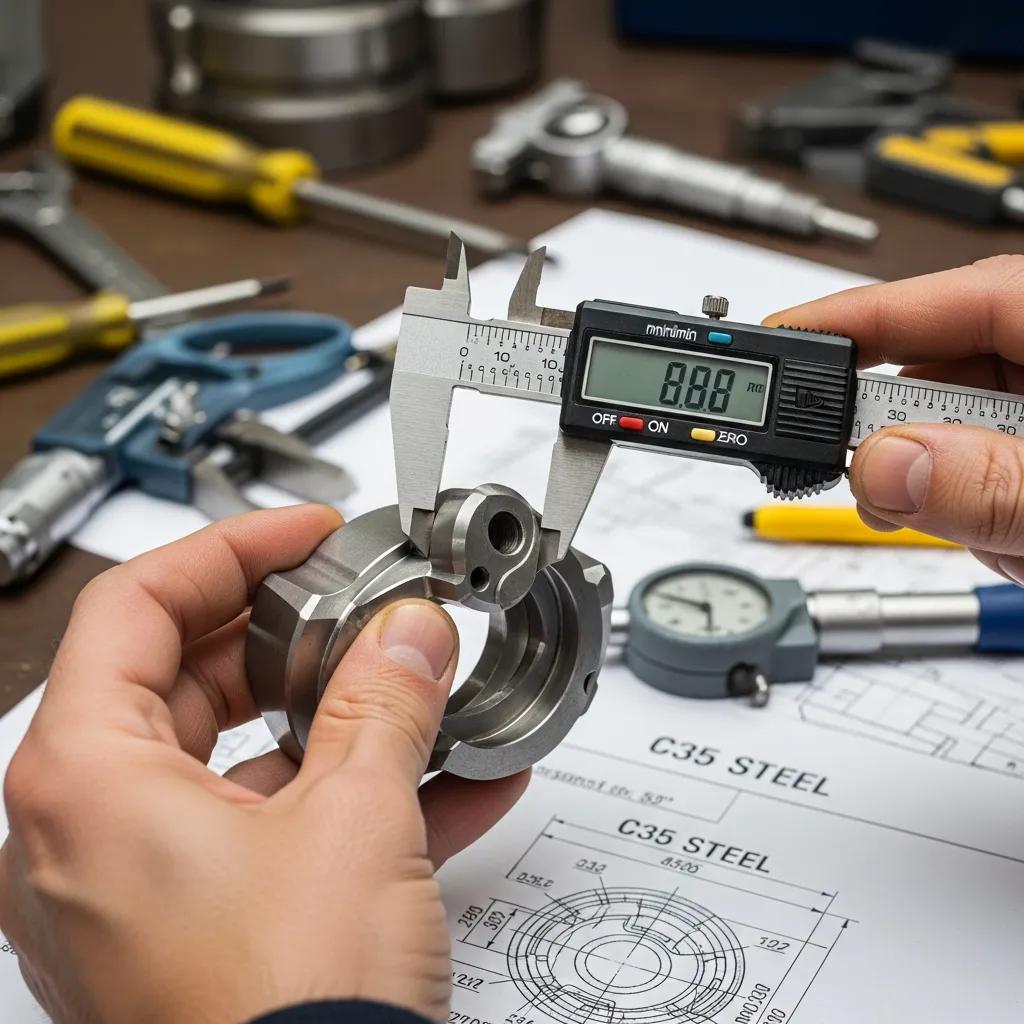
In typical supply conditions C35 shows moderate tensile and yield strength with a machinable hardness and useful ductility. Those properties can be shifted by cold drawing (better finish and higher strength) or by heat treatment (higher hardness and wear resistance). Choosing the right supply condition—bright‑drawn, annealed, normalized or quenched & tempered—depends on the part’s function and finishing plan. Use the table below as a practical reference when specifying or comparing material during procurement and design.
This table summarizes typical mechanical test results for C35 in commonly supplied conditions.
| Property | Test / Condition | Typical Range / Value |
|---|---|---|
| Tensile strength (Rm) | Tensile test, room temp | 560–700 MPa |
| Yield strength (Re) | 0.2% offset, room temp | 310–540 MPa |
| Hardness | Brinell (HB) / Rockwell (HRC) | 120–210 HB (~15–50 HRC) |
| Elongation (A) | % in 50 mm | 12–18% |
Those figures give a quick design snapshot, but expect variation with processing: cold drawing raises tensile and yield at the expense of elongation, while quench‑and‑temper raises hardness and strength. Knowing how each property maps to service needs leads into the trade‑offs between tensile/yield behavior and hardness/ductility covered next.
Practical selection rules from C35’s mechanical profile:
- Use C35 for moderate‑load rotating parts — it meets many shaft and axle requirements without moving to alloy steels.
- Call out the supply finish — cold‑drawn bright bars offer improved surface finish and higher strength than annealed bars.
- Specify heat treatment when wear resistance is required — quench & temper or induction hardening can add surface hardness for gears and camshafts.
What Is the Tensile Strength and Yield Strength of C35 Steel?
Tensile strength (Rm) defines the stress at fracture and yield strength (Re 0.2%) the onset of permanent deformation. Typical ranges for common supply conditions are about 560–700 MPa (Rm) and 310–540 MPa (Re). Fully annealed material sits near the lower end; cold‑worked or tempered material moves toward the upper end. For critical parts, account for section size, heat‑treatment history and residual stresses from straightening or cold drawing.
Processing affects these numbers: cold drawing work‑hardens the bar, increasing both tensile and yield while lowering elongation; controlled tempering after quenching raises strength and recovers some toughness. For safety‑critical designs, use conservative values from your supplier’s datasheet or request batch test certificates before finalizing calculations.
How Do Hardness and Elongation Affect C35 Steel Performance?
Hardness measures resistance to indentation and wear; elongation measures ductility. In annealed or normalized supply, C35 hardness typically falls around 120–180 HB and elongation about 12–18% — a combination that supports good machinability and forming. Increasing hardness via quenching or work hardening improves wear resistance and strength but reduces elongation and can raise the risk of brittle behavior under impact unless tempered appropriately.
For machining and forming, lower hardness and higher elongation ease cutting, threading and cold forming. Higher hardness helps contact surfaces such as gear teeth. Designers must balance surface‑hardness requirements with necessary core ductility and consider tempering or selective surface hardening to achieve the right hardness–toughness combination for service.
What Is the Chemical Composition of C35 Steel and Its Impact?
C35 is primarily defined by its carbon content with controlled manganese and silicon and low phosphorus and sulfur. Typical ranges drive strength, hardenability, machinability and weldability: carbon (~0.32–0.40%) is the main hardenability and strength driver; manganese (~0.50–0.90%) boosts tensile properties and hardenability; silicon (~0.10–0.40%) adds strength and aids deoxidation; phosphorus and sulfur are kept low to protect toughness and forming behavior. The table below shows the usual ranges and the practical effects each element has on properties.
The following table outlines typical elemental ranges for C35 and their principal effects on properties.
| Element | Typical Percentage Range | Effect on Properties |
|---|---|---|
| Carbon (C) | 0.32–0.40% | Increases strength and hardness; reduces weldability and ductility |
| Manganese (Mn) | 0.50–0.90% | Improves strength, ductility and hardenability; counteracts sulfur effects |
| Silicon (Si) | 0.10–0.40% | Contributes to strength and deoxidation during steelmaking |
| Phosphorus (P) | ≤0.035% | High levels reduce toughness; kept low to avoid embrittlement |
| Sulfur (S) | ≤0.035% | Improves machinability in controlled amounts but can reduce toughness |
This mapping explains why C35 behaves as a medium‑carbon engineering steel: carbon and manganese enable useful strength after heat treatment while silicon and low impurities preserve machinability and toughness. Small shifts within these ranges change quench response, so tighten chemistry when you need predictable hardenability.
Practical chemistry considerations for part specification:
- Higher carbon toward the top of the range raises as‑quenched hardness but may require preheat and special welding practices.
- More manganese increases hardenability, helping thicker sections attain deeper hardening under rapid cooling.
- Keep phosphorus and sulfur low on impact‑loaded parts to protect toughness.
These points feed directly into heat‑treatment and processing choices, discussed next.
Which Elements Constitute C35 Steel and Their Percentages?
C35’s main constituents are carbon, manganese and silicon, with phosphorus and sulfur controlled to trace levels. Typical chemistry is about 0.32–0.40% C, 0.50–0.90% Mn and 0.10–0.40% Si, with P and S usually ≤0.035% each. Mills control these tolerances through raw‑material selection and deoxidation practice; for critical parts request mill certificates to confirm the delivered analysis and specify tighter limits when deep‑section hardenability is required.
Purchasing engineers should request certificate copies for critical components and set chemistry limits that match the intended heat‑treatment and service demands.
How Does Chemical Composition Influence Mechanical Properties?
Each alloying element affects mechanical behavior through established metallurgical mechanisms. Carbon increases the potential martensite/pearlite fraction after cooling, raising strength and hardness while lowering ductility and weldability. Manganese strengthens the steel and boosts hardenability, allowing deeper hardness in thicker sections. Silicon helps strength and acts as a deoxidizer. Elevated phosphorus or sulfur can embrittle and promote cracking during forming, so their control is important where toughness matters.
Slight increases in carbon or manganese can allow lighter parts by raising strength, but they may require altered welding procedures and post‑weld heat treatment. Match composition to the intended processing route — cold drawing, annealing or quench‑and‑temper — to ensure reliable service performance.
How Are Heat Treatment Processes Applied to C35 Steel?
Heat treatment alters C35’s microstructure and mechanical properties to suit different applications. Common routes are annealing, normalizing, quenching and tempering. Annealing softens and relieves stress for better machining, normalizing refines grain size and evens properties, and quench‑plus‑temper produces higher strength with controlled toughness. The table below summarizes typical parameters and expected outcomes to help select the right process for C35 components.
This table compares heat-treatment processes, parameters and expected outcomes for C35.
| Process | Typical Parameters | Expected Property Change |
|---|---|---|
| Annealing | 680–720°C slow cool | Softens, improves ductility and machining |
| Normalizing | 850–900°C air cool | Refines grains, higher strength than annealed |
| Quenching | 820–860°C rapid oil/water cool | Increases hardness and strength (requires tempering) |
| Tempering | 150–650°C (after quench) | Reduces brittleness, restores toughness, adjusts hardness |
Pick the process based on target hardness, section thickness and service conditions — for example, thin shafts can be induction‑hardened for a hard wear surface while keeping a tough core via tempering. Heat treatment affects dimensional control and residual stresses, so align it with straightening and finishing steps to meet tight tolerances.
Mills that offer integrated processing can move parts from heat treatment to final finishing with fewer handoffs. Dhand Steels, based in Ludhiana, lists C35 among its bright‑bar grades and supplies precision straightening and finishing; buyers often request process confirmations and heat‑treatment support so bars arrive ready for final machining. That integration helps preserve the specified microstructure and surface condition through delivery.
What Are the Effects of Annealing, Normalizing, Quenching, and Tempering?
Each heat‑treatment step produces predictable microstructural changes. Annealing (≈680–720°C, slow cool) yields coarse ferrite and pearlite, lowering hardness and improving ductility for forming and machining. Normalizing (≈850–900°C, air cool) refines the pearlite/ferrite structure for improved strength and toughness. Quenching (≈820–860°C, rapid oil/water cool) forms martensite and high hardness but requires tempering to reduce brittleness. Tempering then relieves stresses and lets carbides precipitate, tuning the hardness–toughness balance for the intended function.
Select processes by part geometry and service demands: heavy sections may need controlled cool or interrupted quench to avoid cracking; surface hardening can limit hardening to contact zones without embrittling the core. Knowing these outcomes helps specify both heat treatment and downstream machining operations.
How Do Heat Treatments Enhance C35 Steel’s Mechanical Properties?
Heat treatments change C35 by altering phases and dislocation structure. Annealing reduces dislocations and softens the steel. Normalizing refines grains and improves toughness. Quench‑and‑temper produces martensite to raise strength; tempering then reduces brittleness while restoring some toughness. The process sequence—heat into austenite, control cooling to form pearlite/bainite/martensite, and temper to adjust properties—lets engineers target the required combination of strength, hardness and fatigue resistance.
In practice, quench‑and‑temper is common for shafts and gears that need higher yield and surface hardness. Proper tempering control is essential to avoid over‑softening while achieving fatigue and impact resistance. These mechanistic points guide the selection of heat‑treatment profiles for expected life‑cycle demands.
What Are the Industrial Applications of C35 Steel Bright Bars?
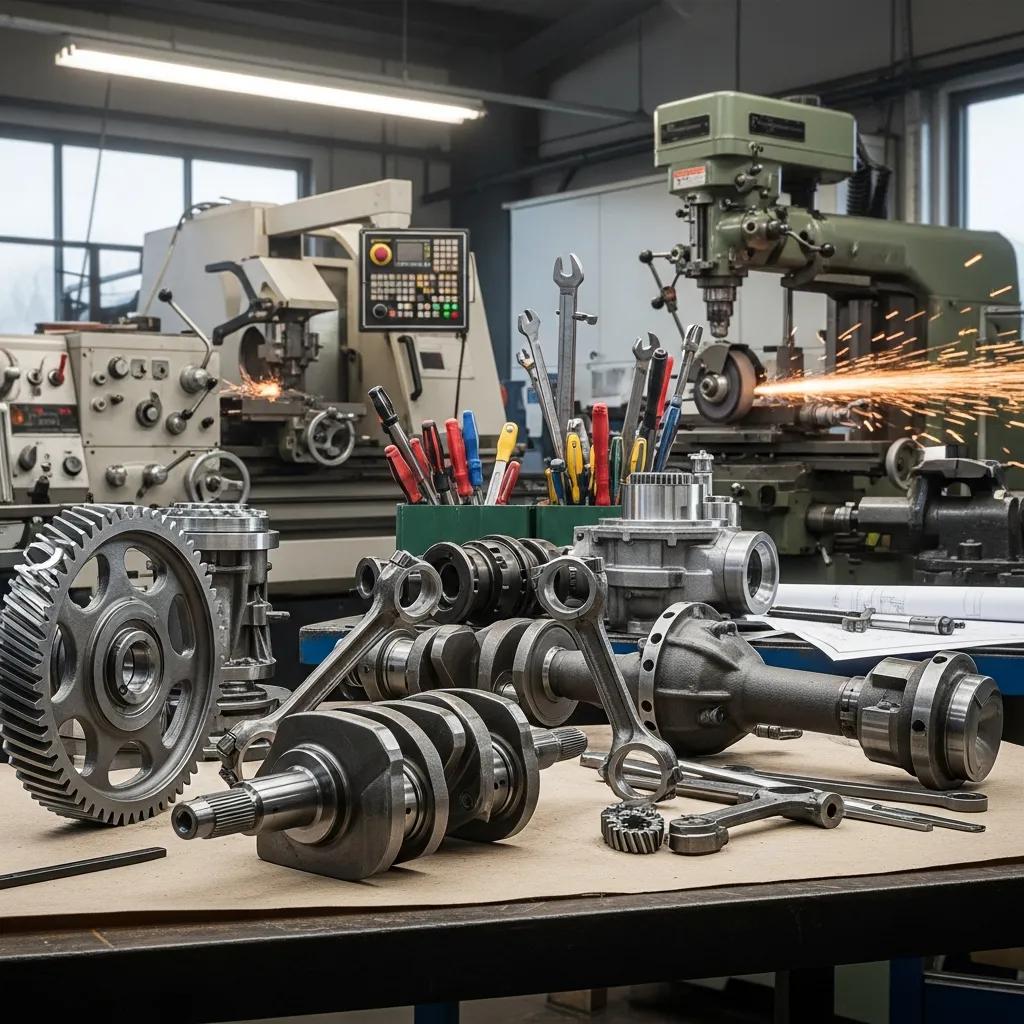
C35 bright bars are used where moderate strength, good machinability and tight dimensions matter. Typical sectors include automotive, agriculture, manufacturing equipment, rail components and light construction. Because bright bars arrive straightened and finished to close tolerances, they reduce machining time and improve final part quality — a major reason fabricators prefer bright bars for precision turned or ground components.
Below is a short industry list with why C35 is chosen and example components to guide material selection at design and procurement stages.
- Automotive: Shafts, pins and linkages needing a balance of strength and easy machining.
- Agriculture: Drive shafts and couplings where durability and cost efficiency matter.
- Manufacturing machinery: Spindles and rollers that demand dimensional accuracy.
- Rail and transport: Light axles and couplers requiring moderate hardness and toughness.
These use cases show why C35 is cost‑effective: it delivers useful mechanical performance while remaining simple to machine and heat‑treat. Below we break down common component types in more detail.
Which Industries Commonly Use C35 Steel Bright Bars?
Manufacturers across several sectors specify C35 bright bars because the grade’s balanced properties meet common part requirements while keeping material and processing costs competitive. Automotive makers use it for shafts and pins under moderate impact loads; agricultural equipment builders choose it for driveline parts needing toughness and wear resistance; general manufacturers use bright bars for drilled and turned elements because of consistent surface finish and dimensional control. Each sector values machinability, local heat‑treatment capability and steady supply.
Knowing typical industry use helps you specify the right supply condition — annealed for heavy forming or cold‑drawn bright bars for precision machining — so parts arrive in the optimal state for the next shop operation.
What Specific Components Are Made from C35 Steel?
Common C35 parts include drive shafts, axles, gears, studs, pins and medium‑duty fasteners. These parts benefit from good machinability in annealed or normalized conditions and from localized or through‑hardening by quench‑and‑temper where wear resistance is needed. Typical manufacturing steps include turning, milling, induction surface hardening and precision grinding to achieve running fits and rotating‑assembly tolerances.
When specifying C35, define target surface hardness, core toughness and dimensional tolerances so heat‑treatment and finishing can be matched to the component’s duty cycle.
What Are the Equivalent Grades and Standards for C35 Steel?
C35 is referenced under several international designations. Common equivalents include DIN 1.0501 and approximate mappings to AISI/SAE 1035 or JIS S35C. Because standards differ in allowable element ranges and test definitions, always reference the exact standard code on purchase orders and mill certificates to ensure consistent chemistry and testing practices. The table below lists commonly cited equivalents and regional notes to help with international sourcing.
| Designation | Standard Body | Notes |
|---|---|---|
| C35 | EN/UK designation | Medium carbon engineering steel grade |
| 1.0501 | DIN | German standard equivalent commonly cited for C35 |
| 1035 | AISI/SAE | Approximate US-equivalent in the 10xx series (check chemistry) |
| S35C | JIS | Japanese designation with similar composition ranges |
Specifying the correct standard avoids ambiguity between buyer and mill and reduces the risk of unexpected chemistry or mechanical test differences at delivery.
Which International Standards Correspond to C35 Steel?
C35 most closely aligns with DIN 1.0501 and is often compared with AISI/SAE 1035 and JIS S35C. However, allowable element limits and mechanical thresholds can differ, so confirm any substitution by comparing the exact chemical and mechanical limits. Request the precise standard reference on mill certificates to verify compliance and ensure test methods match your inspection needs.
For international procurement, include the specific standard code in the purchase order to remove ambiguity and ensure the delivered material meets the design intent.
How Do Equivalent Grades Compare in Mechanical and Chemical Properties?
Equivalent grades share mid‑range carbon and similar manganese levels, but small differences in silicon limits, impurity allowances and declared mechanical values can change hardenability and heat‑treatment response. For example, a DIN 1.0501 batch might allow different manganese or silicon minima than a JIS S35C batch, affecting quench behavior in thicker sections. Compare declared chemistry and typical tensile ranges before accepting substitutes for critical components.
For procurement, require mill test certificates showing actual chemical analyses and mechanical test results, and specify any post‑delivery processing or certification needed for safety‑critical parts.
Why Choose Dhand Steels for High-Quality C35 Bright Bars?
Dhand Steels, based in Ludhiana, Punjab, manufactures and supplies bright bars including C35 with an emphasis on precision straightening, consistent surface finish and improved machinability—features that reduce downstream work and improve final part quality. As an integrated supplier and exporter, we list C35 among our offered grades and provide finishing and alignment services that support dimensional accuracy for turned and ground components. Buyers can request technical datasheets and process confirmations to ensure delivered C35 bright bars meet the specified chemistry and mechanical properties.
For engineers who prefer a single supplier handling production, finishing and export logistics, Dhand Steels’ integrated workflow helps preserve the intended microstructure and surface condition through to delivery.
What Unique Advantages Do Dhand Steels Offer for C35 Steel Products?
Dhand Steels highlights practical advantages that translate to shop‑floor value: precision straightening reduces residual bend and setup time; a superior surface finish cuts grinding and polishing effort; and supplied machinability shortens cycle times on lathes and mills. These benefits drive cost savings and lower scrap rates for tight‑tolerance manufacturing. Buyers should request tolerance tables and supply‑condition certificates to validate these claims for their orders.
Ask suppliers for process documentation and typical tolerance data to make sure delivered bars meet your shop requirements.
How Does Dhand Steels Ensure Dimensional Accuracy and Surface Finish?
We deliver straightened, aligned and finished bright bars ready for precision machining. Straightening removes residual curvature from hot‑rolled or cold‑drawn stock; finishing produces a smooth surface that reduces vibration and the need for heavy grinding. To confirm performance, buyers commonly request dimensional tolerance tables, surface‑roughness figures and mill certificates as part of the acceptance criteria.
Including inspection records and explicit acceptance limits in the purchase order ensures delivered C35 bright bars meet the dimensional and surface requirements for precision engineering applications.
Key buyer actions when sourcing C35 bright bars:
- Request mill certificates that confirm chemical composition and mechanical tests.
- Specify supply condition (annealed, normalized, cold‑drawn) to match downstream manufacturing.
- Define dimensional tolerances and surface‑roughness limits to remove ambiguity at delivery.
These procurement steps close the loop between specification and delivered performance so components made from C35 meet their intended service requirements.
Frequently Asked Questions
What are the advantages of using C35 steel in manufacturing?
C35 delivers a practical mix of strength, machinability and cost effectiveness. Its mid‑range carbon content lets you obtain higher hardness through heat treatment when needed, while cold drawing improves surface finish and strength for precision parts such as shafts and gears. That versatility makes C35 a common choice in automotive, agriculture and general machinery applications.
How does the heat treatment process affect the properties of C35 steel?
Heat treatment changes C35’s microstructure and properties. Annealing softens the steel for machining and forming, normalizing refines grain size and improves toughness, and quenching increases hardness but must be followed by tempering to restore toughness. Selecting the right cycle lets you tailor hardness, strength and ductility to the component’s service profile.
Can C35 steel be welded, and what precautions should be taken?
Yes—C35 is weldable, but its carbon level increases the risk of hardening and cracking in the heat‑affected zone. Where welding is required, preheat and, if necessary, post‑weld heat treatment reduce cracking risk. Use compatible filler materials and established welding procedures for safer joints on critical parts.
What are the common applications of C35 steel in the automotive industry?
C35 is used for shafts, axles, gears and pins in automotive assemblies where moderate strength and good machinability are required. The grade can be heat‑treated for improved wear resistance and strength, and its machinability makes it cost‑effective for precision components.
How does C35 steel compare to other carbon steels in terms of performance?
As a medium‑carbon steel, C35 strikes a balance between low‑carbon grades (easier to form and weld but weaker) and higher‑carbon grades (stronger but less ductile and harder to weld). C35 offers moderate strength, acceptable ductility and good machinability, making it suitable where that balance is needed without stepping up to alloy steels.
What factors should be considered when selecting C35 steel for a specific application?
Consider required mechanical properties (tensile, yield, hardness, ductility), planned manufacturing steps (machining, welding, heat treatment) and service conditions (loads, temperature, environment). Also define surface finish and dimensional tolerances up front and work with your supplier to confirm material certificates and processing capabilities.
Conclusion
C35 steel is a practical, cost‑effective choice when you need a reliable mix of strength, machinability and heat‑treatability for components such as shafts, gears and fasteners. Understanding its mechanical properties, chemistry and common heat‑treatment routes lets engineers optimise performance and production cost. Working with a dependable bright‑bar supplier like Dhand Steels ensures bars arrive straightened, finished and documented to your requirements. Contact us to review datasheets and get a quote for C35 bright bars matched to your application.
**


Comments
0 Comment On Post