
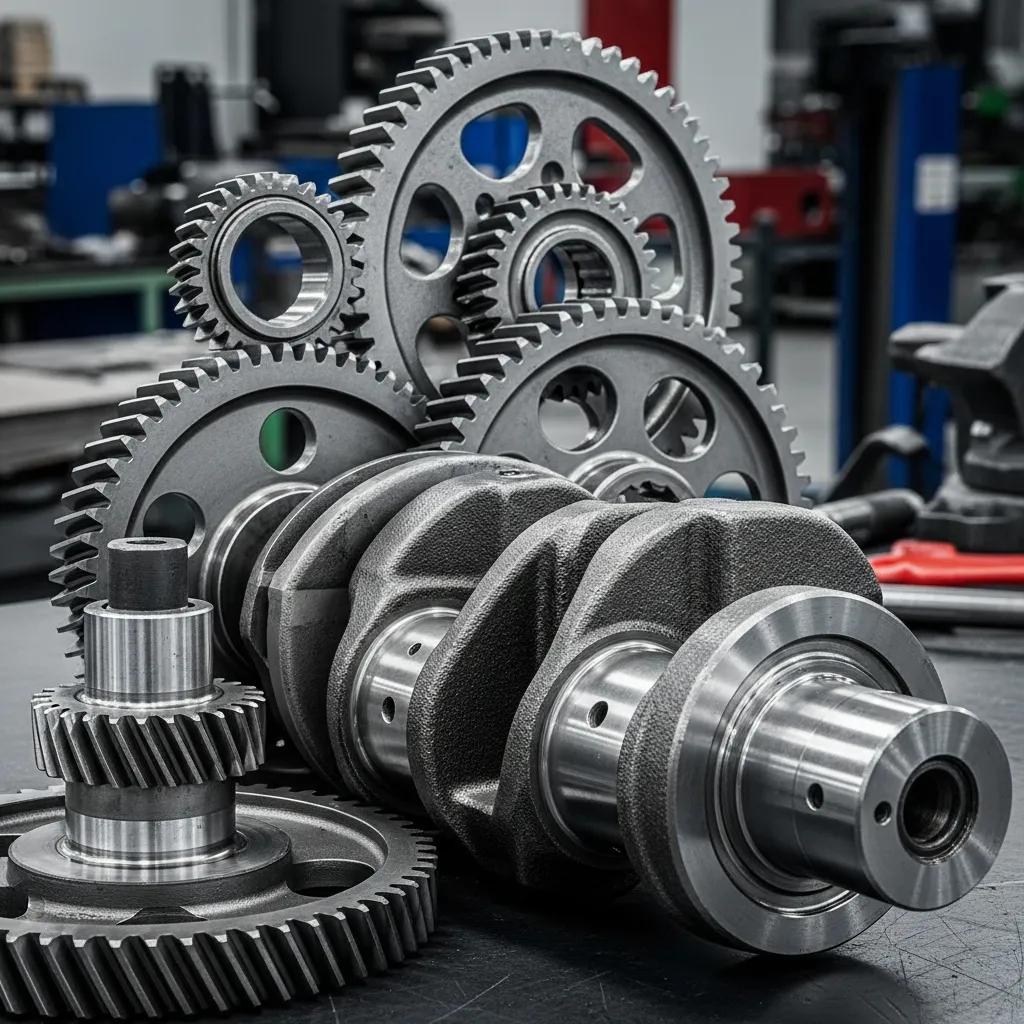
EN18 Steel: The Practical Choice for Automotive Components
EN18 is a medium‑carbon chromium alloy designed to balance strength, toughness and machinability for many automotive parts. This piece explains EN18’s chemistry and performance, and shows how composition and heat treatment deliver the tensile strength, hardness and fatigue resistance needed for rotating and load‑bearing components. Engineers and procurement teams will find practical guidance on typical EN18 uses, the roles of carbon, chromium and manganese, recommended heat‑treat routes, and when EN18 outperforms—or is outmatched by—nearby grades such as EN19, EN24 or AHSS. We also cover component-specific benefits, processing levers to improve wear and fatigue life, supplier considerations and current trends in lightweighting and EV applications—so OEMs and tier suppliers can make informed, actionable choices.
What Are the Chemical Composition and Core Properties of EN18 Steel?
EN18 is a medium‑carbon chromium alloy whose baseline behavior is set by carbon (strength), chromium (hardenability and wear resistance) and manganese (deoxidation and toughness). Put simply: the right chemistry plus controlled heat treatment produces a martensitic or tempered martensitic microstructure that delivers the tensile and fatigue properties automotive parts need. The compact table below shows typical element ranges and their practical roles—handy for quick alloy comparisons before we review baseline mechanical values.
Notes on composition:
| Element | Typical % Range | Functional Role |
|---|---|---|
| Carbon (C) | 0.34–0.44% | Primary hardening element; raises strength and hardness but reduces toughness and can affect machinability |
| Chromium (Cr) | 0.90–1.40% | Improves hardenability and wear resistance; supports stable tempering response |
| Manganese (Mn) | 0.60–1.10% | Acts as a deoxidizer and strengthener; helps hardenability and maintains impact toughness when controlled |
| Silicon (Si) | 0.10–0.40% | Deoxidizer that adds strength with minimal toughness penalty |
This table clarifies each element’s role before we examine how those chemistries translate into mechanical baselines.
How Do Carbon, Chromium, and Manganese Affect EN18 Steel Performance?
Carbon controls the achievable hardness and tensile strength after quench and temper; more carbon raises strength but can harm core toughness and make machining harder. Chromium boosts hardenability and surface wear resistance by encouraging martensite formation through thicker sections and it stabilizes hardness during tempering. Manganese supports deoxidation, raises tensile strength and assists hardenability, while helping impact toughness when kept within the recommended range. Designers use these trade‑offs—adjusting chemistry and heat treatment—to meet component size and fatigue‑life targets.
What Mechanical Properties Make EN18 Steel Suitable for Vehicles?
After proper heat treatment, EN18 achieves tensile and hardness levels suited for rotating and load‑bearing parts, delivering wear resistance without sacrificing core toughness. Those properties translate into dependable fatigue performance for crankshafts, axles and similar components; elongation and impact characteristics ensure parts survive dynamic loading and occasional overloads. In practice, engineers define required fatigue life, operating temperature and surface finish to set final hardness and tempering targets for each part.
How Does Heat Treatment Enhance EN18 Steel for Automotive Use?
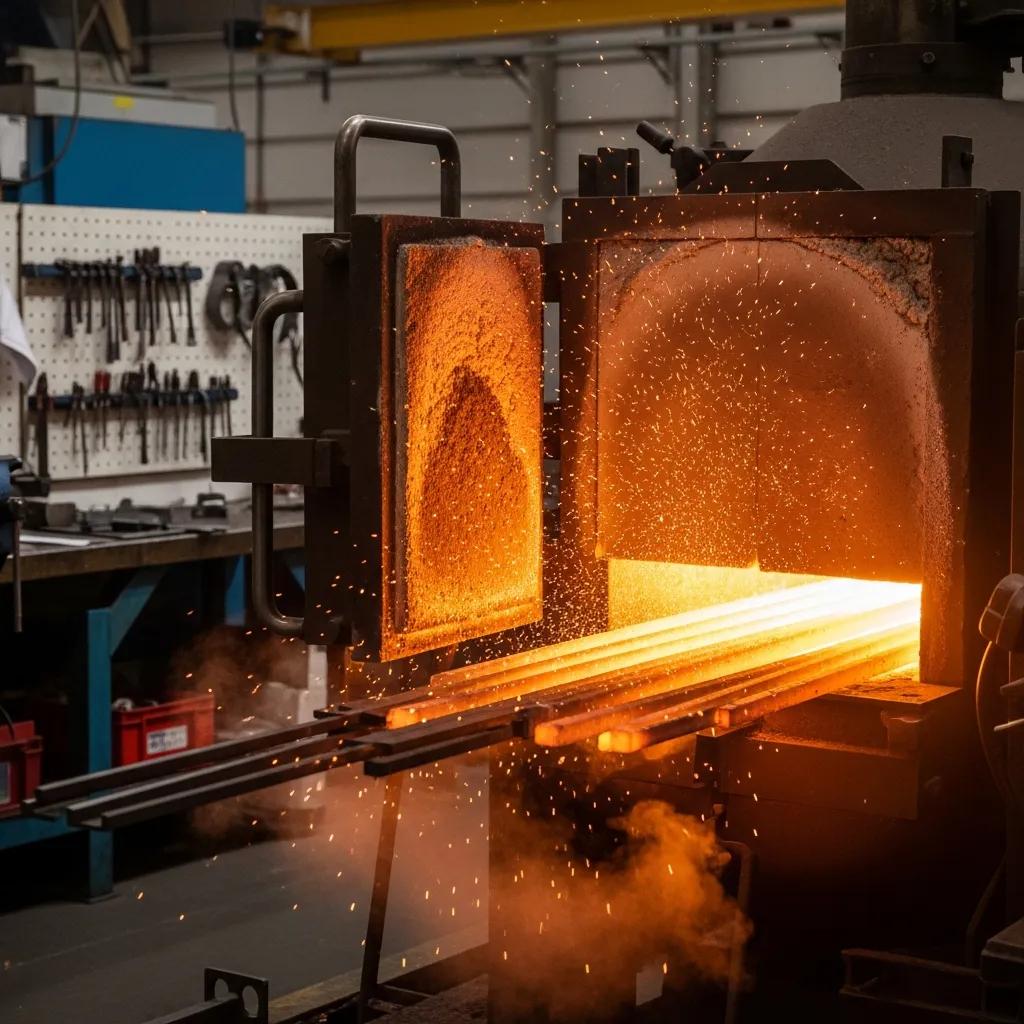
Heat treatment turns EN18 from a mill bar into component‑grade material by refining microstructure and tuning hardness and toughness to application needs. The sequence is process → microstructure → property outcome: normalizing refines grain size and evens the structure, hardening (quench) produces martensite for high strength, and tempering reduces brittleness while restoring toughness. The table below maps each main heat‑treat step to typical parameters and outcomes so engineers can match process to performance targets for gears, shafts and similar parts.
Introductory heat‑treatment mapping:
| Heat-Treatment Step | Typical Parameter Range | Resulting Property / Microstructure |
|---|---|---|
| Normalizing | 840–900°C, air cooling | Refined ferrite/pearlite grains; more uniform structure and improved machinability |
| Hardening (quench) | 820–860°C → oil/quench | Martensite formation; marked increase in hardness and tensile strength |
| Tempering | 450–650°C, time per thickness | Reduces brittleness, adjusts hardness and restores required toughness |
This mapping links process steps to expected microstructures and sets up the discussion on wear and fatigue improvements.
What Are the Effects of Normalizing, Hardening, and Tempering on EN18 Steel?
Normalizing reduces chemical segregation and refines grain size, producing a stable starting microstructure that minimizes distortion during machining. Quenching converts austenite to martensite, sharply raising strength and hardness but increasing brittleness. Tempering then relieves stresses, reduces brittleness and adjusts toughness to the component’s needs. By combining these steps, manufacturers can create hard, wear‑resistant surfaces or uniformly tempered cores depending on service demands.
How Does Heat Treatment Improve EN18 Steel’s Wear and Fatigue Resistance?
Proper heat treatment increases surface hardness and sets beneficial residual stresses for improved wear resistance, while tempering builds a tougher core that resists crack initiation and propagation—raising fatigue life. Surface‑hardening techniques and controlled tempering reduce adhesive and abrasive wear on gear teeth and prevent premature fatigue in shafts and crankshafts. Final validation through hardness profiling and representative fatigue testing ensures the chosen schedule meets component specifications and service cycles.
Which Automotive Components Benefit Most from EN18 Steel?

EN18 fits parts that need a balance of fatigue resistance, wear performance and good machinability—typical traits of rotating shafts, gears and hydraulic fittings. The list below highlights high‑value EN18 applications with concise technical reasons to help engineers decide where this grade is a practical match. After the list we cover manufacturing forms and how material format affects final tolerances.
Common EN18 automotive applications:
- Crankshafts — High fatigue resistance and receptive to surface treatments that extend life.
- Axles — Core toughness and dimensional stability under cyclic bending loads.
- Gears — Good combination of wear resistance and core toughness for durable tooth strength.
- Steering components — Impact and fatigue resistance for safety‑critical linkages.
- Hydraulic fittings — Machinability and surface finish needed for reliable sealing.
Dhand Steels supplies EN18 in bright bar formats that align with these manufacturing pathways—straightened, aligned bars in round, hex and square sections ready for machining crankshafts, shafts, gears, steering parts and hydraulic fittings. These forms enable tight dimensional control and a fine surface finish, cutting downstream machining time and improving tolerance stability. OEMs and tier suppliers can request samples or discuss OEM volumes through standard procurement channels; Dhand Steels will provide material data and capacity information on request.
How Does EN18 Steel Compare to Other Automotive Steel Grades?
EN18 sits in the midrange among chromium alloy steels: it trades some ultimate strength and deep‑section hardenability for better machinability and lower cost versus higher‑alloy grades or AHSS. The table below compares EN18, EN19, EN24 and AHSS across key attributes—tensile, hardness, wear, fatigue resistance and typical applications—so engineers can quickly choose the best material for a part.
| Grade | Key Attributes | Practical Recommendation |
|---|---|---|
| EN18 | Balanced tensile strength and toughness; good machinability | Ideal for medium‑section rotating parts and machined components |
| EN19 | Higher carbon/chromium for increased strength | Use when higher fatigue strength and hardenability are required |
| EN24 | Higher alloy content for premium strength and fatigue life | Preferred for highly stressed, critical rotating components |
| AHSS (category) | Very high strength‑to‑weight; lower machinability | Choose for formed, structural lightweight parts where forming is primary |
What Are the Differences Between EN18 and Grades Like EN19 or EN24?
EN19 and EN24 contain higher carbon and alloying levels than EN18, enabling greater tensile strength and hardenability but typically reducing machinability and increasing processing costs. Those alloys can reach higher hardness and fatigue capacity after similar heat treatment, making them suitable for very highly stressed shafts and critical rotating parts. EN18’s advantage is easier machining from bright bars and lower material cost for components where extreme strength isn’t necessary. Choose between grades based on stress profile, section size and production economics.
Why Choose EN18 Steel Over Advanced High‑Strength Steels for Certain Applications?
EN18 remains competitive when production relies on heavy machining rather than forming: its machinability from bright bars shortens cycle times and reduces tooling wear while still delivering adequate fatigue and wear resistance for small rotating parts. AHSS offers superior strength‑to‑weight for pressed or formed structures but requires different fabrication methods and may be over‑specified for gears, shafts or fittings. The right choice depends on manufacturing route, cost targets and whether weight reduction or fatigue performance is the primary driver.
What Role Does Dhand Steels Play in Supplying Quality EN18 Steel for Automotive?
Dhand Steels manufactures, supplies and exports premium bright bars tailored for automotive component production, offering EN18 in practical, market‑relevant forms with a focus on precision and quality control. Capabilities include straightened and aligned bright bars in round, hex and square sections, plus HHB and HB wire formats to support different downstream processes. The value points below help OEM purchasing teams evaluate supplier fit before requesting quotes or samples.
Summary of supplier capabilities and UVPs:
- Production of high‑precision, straightened and aligned bright bars.
- Wide grade range including EN18 and other alloy options.
- Established relationships with automotive customers, supporting supply continuity and part suitability.
This snapshot helps procurement teams decide which suppliers to engage for data sheets, capacity details or samples.
How Does Dhand Steels Ensure High Precision and Premium Quality in EN18 Bright Bars?
Dhand Steels focuses on precision—producing straightened, aligned bright bars with tight dimensional tolerances and consistent surface finish that are essential for fine machining and sealing surfaces. The EN18 range includes round, hex and square profiles plus HHB/HB wires, offering flexibility for machinists and planners. Quality control reduces the need for extra straightening or surface work, shortening lead times and cutting scrap—supporting reliable production planning and consistent part performance.
What Sustainable Practices Does Dhand Steels Implement in EN18 Steel Production?
Dhand Steels pursues “smarter steels” and manufacturing improvements to lower carbon emissions and boost energy efficiency—efforts that align with OEM decarbonization goals. Practices include process optimizations and material‑selection strategies that lower energy intensity per tonne. For automotive buyers tracking ESG metrics, sourcing EN18 from suppliers with energy‑efficiency commitments can reduce lifecycle emissions while preserving material performance. Sustainability is an additional procurement factor alongside technical fit.
What Is the Future of EN18 Steel in Automotive Lightweighting and Electric Vehicles?
EN18 will continue to serve a targeted role in lightweighting and EV designs where fatigue resistance and machinability meet component‑level needs without the complexity of AHSS processing. It’s unlikely to replace AHSS in structural lightweight applications, but EN18 stays relevant for shafts, gears and auxiliary components where durability, surface finish and machining efficiency matter. Hybrid approaches—combining optimized grades with localized heat treatment or selective substitution—can keep EN18 useful while contributing to mass‑reduction goals.
How Does EN18 Steel Contribute to Lightweight Vehicle Design?
EN18 supports lightweighting by enabling tighter tolerances and optimized part geometry that avoid unnecessary oversizing, and by accepting surface treatments that allow smaller sections while retaining fatigue life. Its machinability helps designers reduce conservative safety factors, trimming component mass where appropriate. In assemblies where reliability outweighs absolute weight savings, EN18 offers a pragmatic balance that lets teams reserve lightweight materials for the highest‑value locations.
What Potential Does EN18 Steel Have in Electric Vehicle Component Manufacturing?
EN18’s fatigue and wear resistance suit EV components like drive shafts, transmission gears in hybrids, and auxiliary mechanical linkages that still face cyclic loads and require precision machining. While EV packaging and thermal constraints shift some demands, rotating assemblies remain—and EN18’s processing simplicity and durability make it a viable option. Continued alloy tuning and heat‑treat optimization could expand its role in EVs by enabling thinner sections or enhanced surface treatments; OEMs should include EN18 in targeted testing against EV‑specific load profiles.
Below are concise checklists and validation steps to help specification and procurement.
EN18 selection checklist for engineers:
- Define load profile: Clarify peak tensile loads, expected fatigue cycles and wear conditions.
- Specify heat treatment: Set normalizing, quench and temper targets tied to component needs.
- Choose material form: Prefer bright bars (round/hex/square) when tight machining tolerances are required.
Manufacturing validation steps for EN18 components:
- Hardness profiling across the section to verify heat‑treat uniformity.
- Fatigue testing representative of service cycles to confirm life predictions.
- Surface finish and dimensional inspection after machining to ensure sealing and assembly fit.
Supply-side UVPs summary (Dhand Steels):
- Precision bright bars and varied bar forms that speed machining.
- Comprehensive grade offering, including EN18, to support mixed production lines.
- Commitments to sustainability and energy efficiency that align with OEM ESG targets.
| Heat-Treatment Process | Typical Temperature / Practice | Expected Hardness / Benefit |
|---|---|---|
| Normalizing | 840–900°C, air cool | Homogeneous microstructure; improved machinability |
| Quench (hardening) | 820–860°C, oil/quench | Martensite formation; raised hardness and tensile strength |
| Tempering | 450–650°C, appropriate soak | Adjusted toughness and reduced brittleness for fatigue life |
| Component | Primary Requirement | Why EN18 Fits |
|---|---|---|
| Crankshafts | High fatigue resistance | Tempered martensite core plus surface treatments extend service life |
| Gears | Wear resistance + toughness | Hardened surfaces with tempered cores resist pitting and tooth failure |
| Hydraulic fittings | Surface finish and sealing | Bright bar machinability enables tight sealing surfaces |
These mappings help designers match EN18 attributes to component requirements.
This article combines technical explanation, practical selection guidance and supplier context to help engineers and procurement teams assess EN18 material, properties and sourcing. OEMs and tier suppliers ready to evaluate samples or request technical data and capacity information should contact Dhand Steels through standard procurement channels to discuss EN18 bright bars, sample supply and production volumes.
Frequently Asked Questions
What are the advantages of using EN18 steel in automotive applications?
EN18 delivers a practical mix of strength, toughness and machinability, making it well suited for parts such as crankshafts and gears. Its medium‑carbon, chromium‑alloy chemistry provides wear resistance and good fatigue life, and its compatibility with common heat‑treat routes lets manufacturers tailor properties to specific service demands. That balance of attributes makes EN18 a go‑to choice for many engineering applications.
How does the heat treatment process affect the performance of EN18 steel?
Heat treatment refines EN18’s microstructure and tailors mechanical properties. Normalizing evens the structure and improves machinability, quenching forms martensite for strength and hardness, and tempering reduces brittleness while restoring toughness. The right combination of these steps lets manufacturers optimize EN18 for fatigue life, wear resistance and dimensional stability.
What are the typical applications of EN18 steel in the automotive industry?
EN18 is commonly used in crankshafts, axles, gears, steering components and hydraulic fittings—parts that need fatigue resistance, wear performance and good machinability. Its versatility suits both high‑stress rotating parts and components that require precise machining and reliable sealing surfaces.
How does EN18 steel compare to other steel grades like EN19 and EN24?
EN19 and EN24 generally offer higher strength and hardenability due to increased carbon and alloying, at the cost of reduced machinability and higher processing expense. EN18 provides easier machining and lower material cost for applications where extreme strength is not necessary. Grade selection depends on the part’s stress profile, section size and production economics.
What role does Dhand Steels play in the supply of EN18 steel?
Dhand Steels manufactures and supplies precision bright bars in EN18 and other grades, tailored for automotive machining applications. We deliver straightened, aligned bars in round, hex and square sections with quality control focused on tight tolerances and surface finish—helping OEMs achieve predictable production performance.
What are the sustainability practices associated with EN18 steel production?
Dhand Steels pursues energy‑efficiency and process improvements to lower carbon intensity in production. These measures—combined with careful material selection—help OEMs meet supply‑chain sustainability goals while maintaining the performance required for automotive components.
Conclusion
EN18 stands out for a practical balance of strength, toughness and machinability—making it a reliable choice for components such as crankshafts and gears. Its chemistry and heat‑treat options enable wear resistance and dependable fatigue life, while bright bar forms support efficient machining and consistent tolerances. For tailored EN18 bright bars, samples or technical discussions, contact Dhand Steels to explore solutions that match your production and performance needs.


Comments
0 Comment On Post