
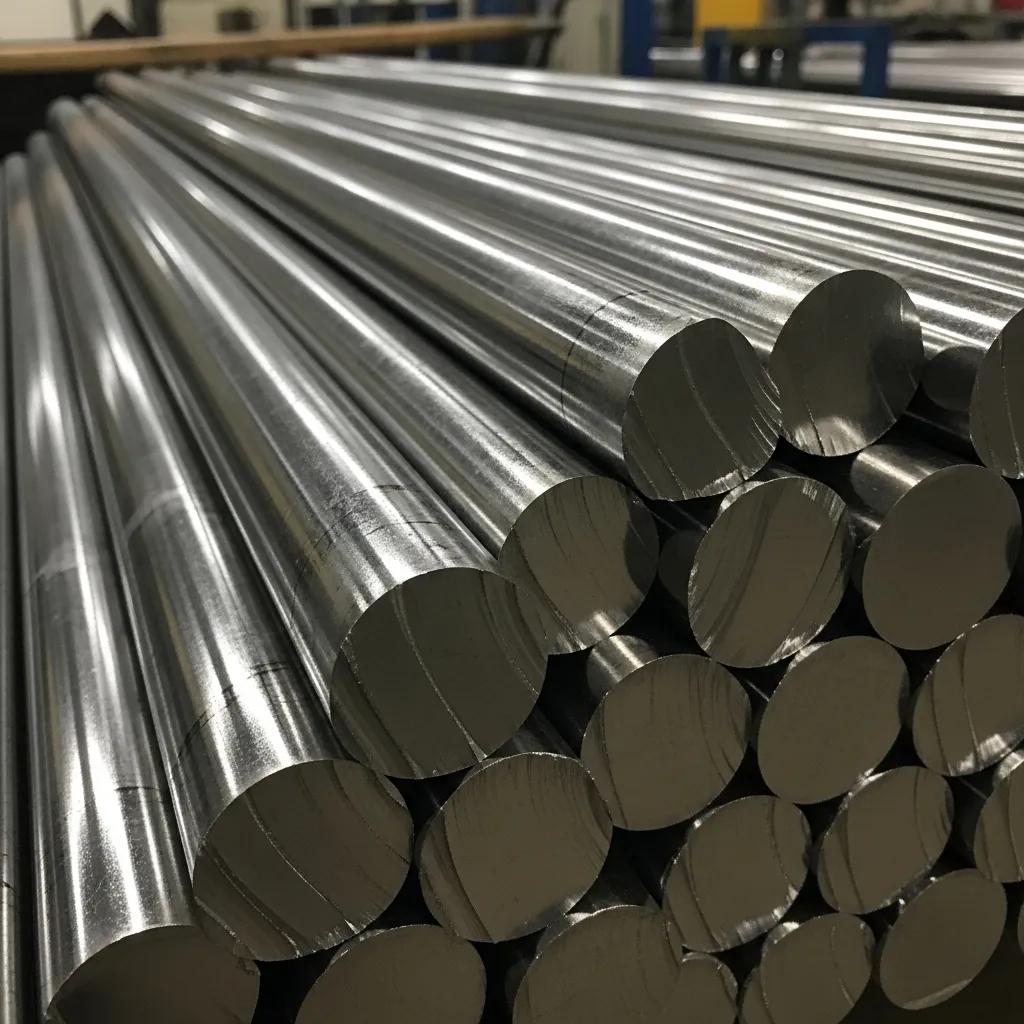
C45 Steel — Why It’s the Most Widely Used Medium‑Carbon Steel: Properties, Applications & Supplier Insights
C45 steel is a medium‑carbon engineering steel (nominal C ≈ 0.42–0.50%) prized for a practical balance of strength, machinability and heat‑treatability. This guide explains why C45 (commonly specified alongside equivalents such as AISI 1045 and EN 1.0503) is a go‑to choice for shafts, gears and precision turned parts. You’ll find clear, actionable details on chemical composition, tensile and hardness ranges, suitable heat‑treatment routes, common applications, and how to evaluate suppliers. Practical tables and lists speed decision‑making, and we include concise supplier notes on C45 bright bars from Dhand Steels — a manufacturer and exporter based in Ludhiana, Punjab. Armed with these points, design engineers, purchasing managers and machinists can pick the right C45 variant and post‑process workflow to meet performance and cost targets.
What Are the Key Properties of C45 Steel That Make It Popular?
C45 pairs a medium carbon level with controlled manganese and silicon to deliver a useful mix of tensile strength, ductility and reliable heat‑treatment response — ideal for turned and machined components. In simple terms: carbon raises potential hardness during quenching; manganese helps hardenability and tensile performance; silicon supports strength and toughness in the ferrite‑pearlite matrix. Engineers choose C45 when they need moderate strength, good machinability and predictable heat‑treatment outcomes. Below is a quick reference to composition and a short summary of mechanical targets to support fast specification and procurement decisions.
C45 typical chemical composition and its metallurgical role:
| Element | Typical Content (%) | Effect on Properties |
|---|---|---|
| Carbon (C) | 0.42–0.50 | Increases strength and hardenability; raises achievable hardness after quenching |
| Manganese (Mn) | 0.50–0.80 | Improves hardenability and tensile strength; helps refine grain structure |
| Silicon (Si) | 0.10–0.40 | Supports ferrite strength; aids deoxidation and toughness |
| Phosphorus (P) | ≤0.040 | Residual impurity; higher levels can reduce toughness |
| Sulfur (S) | ≤0.035 | Can improve machinability in controlled amounts but may lower toughness |
This chemistry gives C45 the flexibility to meet a range of mechanical requirements; the section below quantifies those properties and links them to common component needs.
C45’s core mechanical properties and practical implications are:
- Tensile strength: Typical range 580–800 MPa depending on heat treatment and condition.
- Yield strength: Generally 355–600 MPa in normalized or tempered conditions.
- Hardness: Normalized ≈170–210 HB; quenched & tempered up to ≈250–300 HB (roughly HRC 20–30).
These ranges make C45 well suited for load‑bearing turned parts that require predictable fatigue and wear behaviour. Next we look at heat treatment options to tailor these properties.
What Is the Chemical Composition of C45 Steel and Its Impact?
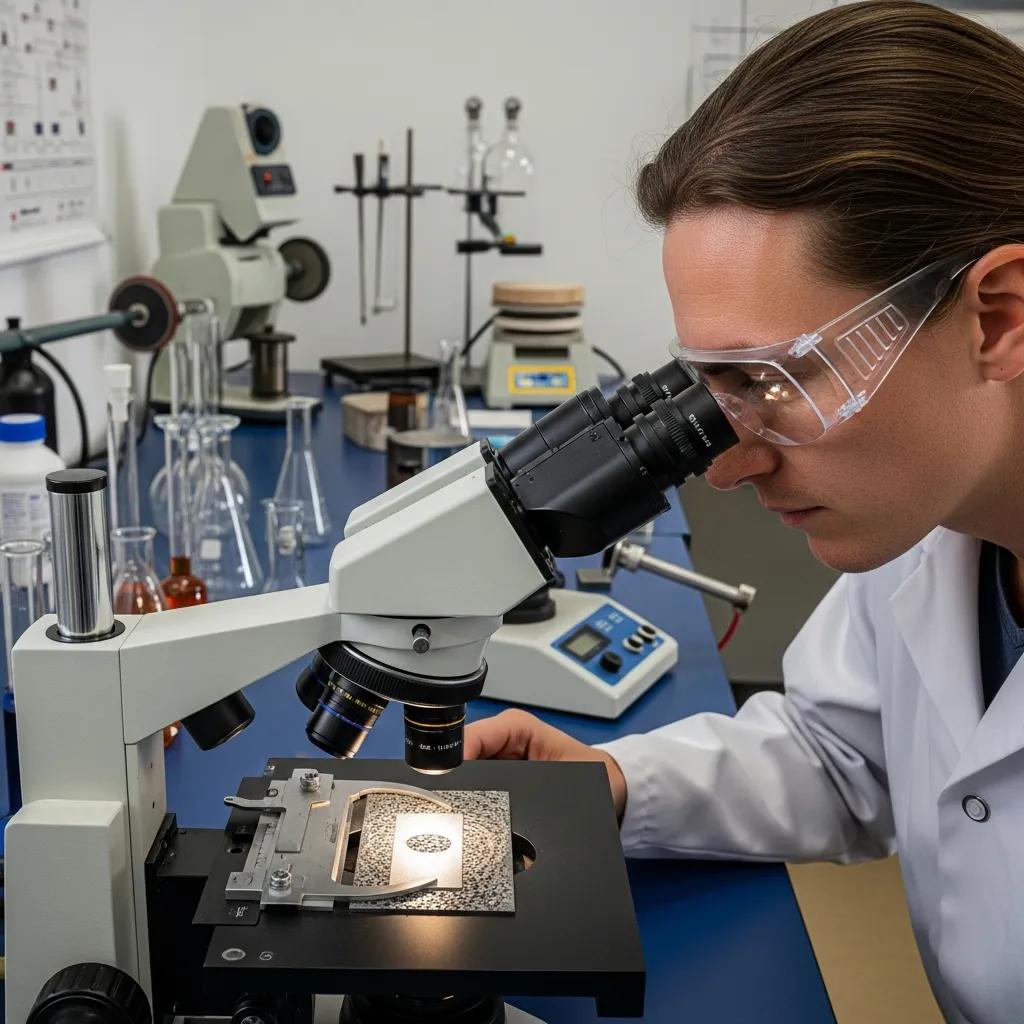
C45’s nominal chemistry centres on carbon for strength, manganese for hardenability and small silicon additions for toughness; phosphorus and sulfur are limited to preserve ductility. Each element influences the microstructure: carbon controls the martensite fraction possible after quench, manganese shifts transformation curves to deepen hardening, and silicon boosts strength without excessive embrittlement. For reliable processing, mills and suppliers hold composition to narrow tolerances and provide test certificates before heat treatment. That documentation lets designers predict tensile strength, impact resistance and the success of surface‑hardening methods.
These composition‑driven behaviours are also why procurement often specifies C45 bright bars for turned components that need good surface finish and tight dimensional tolerances — and why checking the certificate of analysis before machining is essential.
How Do Mechanical Properties Like Tensile Strength and Hardness Define C45 Steel?
C45’s mechanical properties depend on its starting condition and the chosen heat treatment. Normalized material offers good ductility and moderate strength, while quenched‑and‑tempered parts reach higher tensile strength and hardness at some cost to toughness. In normalized condition expect tensile strength around 580–700 MPa and Brinell hardness near 170–210 HB — suitable for general machining and assembly. After quench & temper, tensile strength can exceed 800 MPa and hardness can approach the mid‑20s HRC, useful for gears and shafts needing wear resistance. Acceptance testing to recognised standards (EN, ASTM equivalents) confirms that delivered bars meet the required mechanical profile.
Matching required tensile and hardness levels to part geometry and loading avoids over‑engineering and unnecessary cost, and points you to the right heat‑treatment route to reach target properties.
How Does Heat Treatment Enhance the Performance of C45 Steel?
Heat treatment lets you tune C45’s microstructure — turning ferrite/pearlite into tempered martensite or producing a hard surface layer while keeping a ductile core — to control hardness, wear resistance and toughness. Normalizing refines grain size and evens out as‑rolled structure; quenching creates martensite that is then tempered to restore toughness and stabilise dimensions; induction hardening produces a hard case with a tough core. The best process depends on desired case depth, component geometry and allowable distortion. The table below summarises common processes, typical parameters and expected outcomes to guide your choice.
Common C45 heat‑treatment processes and expected results:
| Process | Typical Parameters | Typical Outcome (Hardness / Tensile) |
|---|---|---|
| Annealing | 680–720°C, slow furnace cool | Soft, highly machinable microstructure; approx 150–180 HB |
| Normalizing | 840–880°C, air cool | Refined grain and improved toughness; ~170–220 HB |
| Quench & Temper | Austenitise 820–860°C, quench (oil/water), temper 450–650°C | Higher strength with tempered martensite; hardness variable (HRC 20–30) |
| Induction Hardening | Surface induction to 900–1100°C, rapid quench | Hard surface (case HRC 50+), tough core for fatigue‑critical shafts |
Choosing the right process means balancing hardness, wear resistance and toughness while minimising distortion and residual stress. The next subsection covers common parameters and practical production notes.
What Are the Common Heat Treatment Processes for C45 Steel?
Typical processes for C45 include annealing for maximum machinability, normalizing to stabilise the microstructure, quench‑and‑temper for higher strength and wear resistance, and induction or flame hardening to produce a hard case on rotating shafts. For quench & temper, austenitising is usually in the 820–860°C band; oil or polymer quench media are chosen to balance cooling rate and distortion. Induction hardening heats the surface rapidly and quenches locally to form a martensitic case while the core stays pearlitic or tempered, keeping toughness. Practical tips: allow machining stock for distortion control and use controlled tempering cycles to reduce retained austenite — these steps lower scrap and rework in production.
Knowing how heat treatment shifts hardness and wear resistance helps make clear post‑process workflows for different service conditions.
How Do Heat Treatments Affect C45 Steel’s Hardness and Wear Resistance?
Heat treatment changes hardness and wear resistance by altering phase fractions and dislocation structures: quenching increases hardness by trapping carbon in martensite, while tempering reduces brittleness and restores toughness through carbide precipitation. Typical hardness outcomes run from softened annealed conditions (~150 HB) to mid‑hardness tempered states (~250–300 HB), with surface‑hardened cases that can exceed HRC 50. A hardened case greatly improves wear life on sliding or rolling surfaces, but be aware of reduced core toughness and cracking risk if tempering is inadequate. Mitigation measures include staged tempering, controlled cooling and post‑hardening straightening to keep dimensional tolerances within spec.
These trade‑offs show why selecting the correct heat‑treatment route is essential; the next section highlights where C45 performs best in industry.
What Are the Main Industrial Applications of C45 Steel?
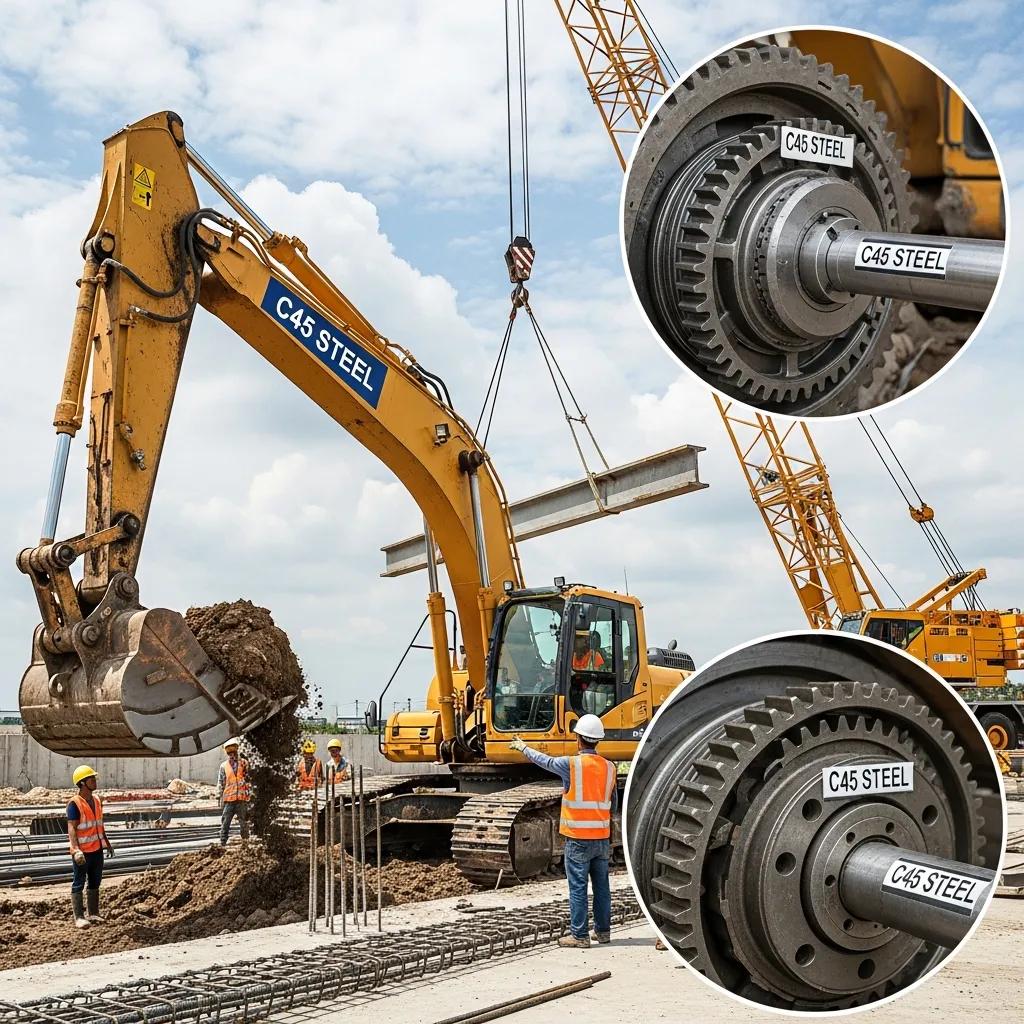
C45 is widely used for machined, strength‑critical parts: shafts, gears, crankshafts, axles, studs and fasteners across automotive, general machinery, agriculture, construction and heavy engineering. Its machinability and heat‑treatment responsiveness let manufacturers deliver parts that meet fatigue and wear targets at competitive cost. Engineers pick C45 when a hardened surface and ductile core are needed or when quench‑and‑temper can boost performance without moving to costlier alloy steels. The list below highlights high‑value components and typical industry contexts for C45.
Typical component applications for C45 steel:
- Shafts and axles: Turned and ground, often induction‑hardened at journals for wear resistance.
- Gears and splines: Case‑hardened or quenched & tempered for tooth strength and contact fatigue resistance.
- Fasteners and studs: Machined bright bars for applications needing moderate strength and precise tolerances.
- Machine components: Bushings, couplings and studs where surface finish and dimensional consistency matter.
These examples reflect C45’s balance of cost, machinability and post‑process performance. Knowing industry demands helps set the correct processing route for longer service life.
Dhand Steels supplies C45 bright bars to automotive, agricultural and construction customers, offering precision bright‑bar finishes and QC documentation to support component manufacturing.
Why Is C45 Steel Preferred in Automotive and Machinery Components?
In automotive and machinery uses, C45 meets common design requirements — adequate tensile strength, predictable fatigue behaviour and the ability to accept surface hardening — while remaining more economical than many alloy steels. For rotating parts like drive shafts and axles, induction hardening of journal areas gives a wear‑resistant surface while the core stays ductile to absorb impact. Gears made from C45 are typically quenched & tempered or case‑hardened depending on tooth geometry and load cycles. The cost‑to‑performance case is straightforward: C45 lets you target surface properties where they matter without paying for higher‑alloy chemistry throughout the section.
With these benefits in mind, specifying correct heat treatment and inspection criteria is essential to meet field durability expectations.
How Is C45 Steel Used in Agriculture, Construction, and Heavy Engineering?
In agriculture, construction and heavy engineering, C45 bright bars are commonly used for couplings, linkages and medium‑load shafts where toughness and cost control are priorities. Parts subject to impact and abrasion benefit from a tempered core plus surface hardening or protective coatings to limit wear and corrosion. Outdoor or dusty environments — moist soil or abrasive conditions — often call for coatings or galvanic protection in addition to heat treatment to preserve fatigue life. Practical procurement steps such as specifying minimum impact energy and confirming supplier test certificates reduce field failures and support long‑term reliability.
Seen this way, C45 remains a practical choice for heavy‑duty components where lifecycle cost and reparability matter.
Which Grades Are Equivalent to C45 Steel and How Do They Compare?
C45 corresponds closely to several international equivalents — AISI 1045, EN 1.0503 and JIS S45C — sharing similar carbon ranges but differing slightly in allowable trace elements or delivery tolerances that can affect processing and qualification. In practice: AISI 1045 ≈ C45 ≈ EN 1.0503 ≈ S45C for most engineering uses, but procurement must consider each standard’s test and delivery conditions. The table below helps purchasing and engineering teams map specifications and avoid mis‑matched materials.
Comparative mapping of C45 equivalents:
| Grade | Standard / Name | Key Differences | Typical Applications |
|---|---|---|---|
| AISI 1045 | SAE/AISI 1045 | Similar C and Mn ranges; follows US test and certification norms | Shafts, gears, studs |
| EN 1.0503 | EN standard | European delivery conditions and documentation conventions may apply | General engineering parts |
| S45C | JIS S45C | Japanese spec with comparable composition; may differ in permitted impurities | Precision machined parts |
While chemical equivalence is generally reliable, buyers should always verify certificates and delivery conditions to ensure interchangeability for critical applications.
For procurement comparisons, Dhand Steels offers C45 bright bars matching EN 1.0503 / AISI 1045 chemistry with test certificates and consistent dimensions; teams can request technical datasheets or a tailored quote to confirm suitability.
What Are the International Equivalent Grades of C45 Steel?
International equivalents include AISI 1045 (US), EN 1.0503 (Europe) and S45C (Japan). Each carries similar carbon and manganese levels but may differ slightly in delivery requirements or permitted impurity limits. Mapping these grades helps align drawings and purchase specs across supply chains. Key procurement notes: ensure equivalent heat‑treatment response and request test certificates documenting carbon, manganese and hardness. Citing the relevant standard on purchase orders reduces ambiguity and helps ensure the supplier delivers the intended variant.
Because grade names are sometimes interpreted differently by suppliers, specifying composition and mechanical targets explicitly prevents downstream rework or rejection.
How Do Equivalent Grades Differ in Properties and Applications?
Minor compositional differences between equivalents mainly affect hardenability and heat‑treatment windows, which in turn influence achievable case depth and post‑treatment toughness. For example, a slightly higher manganese content increases hardenability and may allow deeper through‑hardening on large sections, while variations in permitted phosphorus or sulfur can affect impact performance. Practical recommendations follow these nuances: larger shafts may prefer variants with greater hardenability, while precision machined parts demand tight sulfur control and bright‑bar finishes. Insisting on mill test reports and hardness checks during incoming inspection ensures the chosen equivalent meets the required performance envelope.
Those checks complete the loop between grade selection and dependable component performance.
Why Choose Dhand Steels as Your Trusted C45 Steel Supplier in India?
Dhand Steels manufactures and exports bright bars from Ludhiana, Punjab, supplying C45 bright bars prepared for precision machining and downstream processing. We focus on careful raw‑material selection, strict quality checks and competitive pricing, delivering bright finishes and tolerances suited to shafts, gears and turned components. Our differentiators — premium bright‑bar quality, flexible supply options and responsive after‑sales support — match procurement needs for traceable chemistry, consistent dimensions and reliable delivery. If you require C45 bright bars with test certificates and manufacturing controls, Dhand Steels is positioned as a practical sourcing partner within India’s steel supply chain.
This supplier profile highlights the operational advantages a dedicated bright‑bar manufacturer brings to component production workflows.
What Makes Dhand Steels’ C45 Bright Bars High-Quality and Reliable?
At Dhand Steels we control quality through careful raw‑material selection, controlled rolling and straightening, surface finishing and routine checks including chemical verification and hardness testing at critical stages. Our production focus is on dimensional tolerances and surface finish that minimise pre‑machining work. Each shipment includes test certificates and datasheets to support incoming inspection and process planning at your facility. These practices lower the risk of rejects and help ensure consistent component performance based on verified material properties.
Strong manufacturing controls and clear documentation are vital for matching C45 properties to design and lifecycle requirements.
How Does Dhand Steels Support Clients with Flexible Supply and Post-Sales Service?
Dhand Steels offers flexible supply arrangements and post‑sales support including order coordination, custom‑size bright bars and quality documentation for every batch. Our post‑sale process responds to quality queries with traceable test records and supports repeat orders and specification clarifications to keep production running. For procurement teams needing quick technical feedback or tailored dimensions, this level of commercial and technical support reduces downtime and eases integration into manufacturing lines.
Prospective buyers can contact Dhand Steels to discuss specifications, available sizes and request technical datasheets or quotes to verify fit‑for‑purpose supply.
Frequently Asked Questions
What are the advantages of using C45 steel over other carbon steels?
C45 delivers a practical balance of strength, machinability and heat‑treatability, making it a preferred choice for many engineering parts. Versus lower‑carbon steels, C45 offers higher tensile strength and, when heat‑treated, better wear resistance. Its medium carbon content allows effective hardening while retaining enough ductility for dynamic loads. Compared with higher‑alloy steels, C45 is more cost‑efficient for parts where targeted surface enhancement or quench & temper delivers required performance.
How does the heat treatment process affect the lifespan of C45 steel components?
Heat treatment directly extends the life of C45 parts by optimising mechanical properties. Quench & temper raises hardness and wear resistance for high‑stress, friction‑exposed components, improving fatigue life. However, incorrect heat treatment can introduce brittleness or harmful residual stresses, shortening service life. Choosing the right process and proper parameters is therefore key to maximising durability in your specific application.
What are the common challenges faced when machining C45 steel?
Machining C45 can be challenging because its medium carbon content increases tool wear and generates heat during cutting. Hardened conditions make machining harder and often require tougher tooling and adjusted cutting parameters. Maintaining dimensional accuracy and surface finish on complex parts can also be demanding. Mitigation includes selecting appropriate cutting speeds, modern tool materials, good cooling and planning for any pre‑machining from softer conditions when possible.
What factors should be considered when selecting a supplier for C45 steel?
Key supplier selection factors include the ability to provide test certificates that confirm chemical composition and mechanical properties, evidence of quality control processes, flexibility to meet custom sizes, and a track record of on‑time delivery. Good after‑sales support and clear documentation reduce procurement risk and help maintain production continuity.
How does the carbon content in C45 steel influence its applications?
C45’s carbon content (typically 0.42–0.50%) is central to its behaviour: higher carbon increases attainable hardness and strength, making it suitable for wear‑resistant parts like gears and shafts. The trade‑off is reduced inherent toughness unless heat treatment is applied correctly. Knowing the exact carbon level helps engineers pick the right heat‑treatment schedule to balance strength, ductility and toughness for the intended use.
What are the environmental considerations when using C45 steel in construction and agriculture?
Environmental factors include corrosion risk and exposure to abrasive or wet conditions. C45 parts used outdoors often need protective coatings or galvanisation to prevent rust. Consider lifecycle aspects such as recyclability and the energy footprint of production; using recycled inputs and following good maintenance practices reduces environmental impact while keeping components serviceable for longer.
Conclusion
Choosing C45 steel gives you a dependable combination of strength, machinability and heat‑treatability — ideal for critical parts like shafts and gears. This guide has covered the key properties, heat‑treatment options, applications and procurement checks you need to specify the right material and process. For high‑quality C45 bright bars made to your specifications, contact Dhand Steels — we can provide technical datasheets, test certificates and quotes to help you move from design to production with confidence.


Comments
0 Comment On Post