
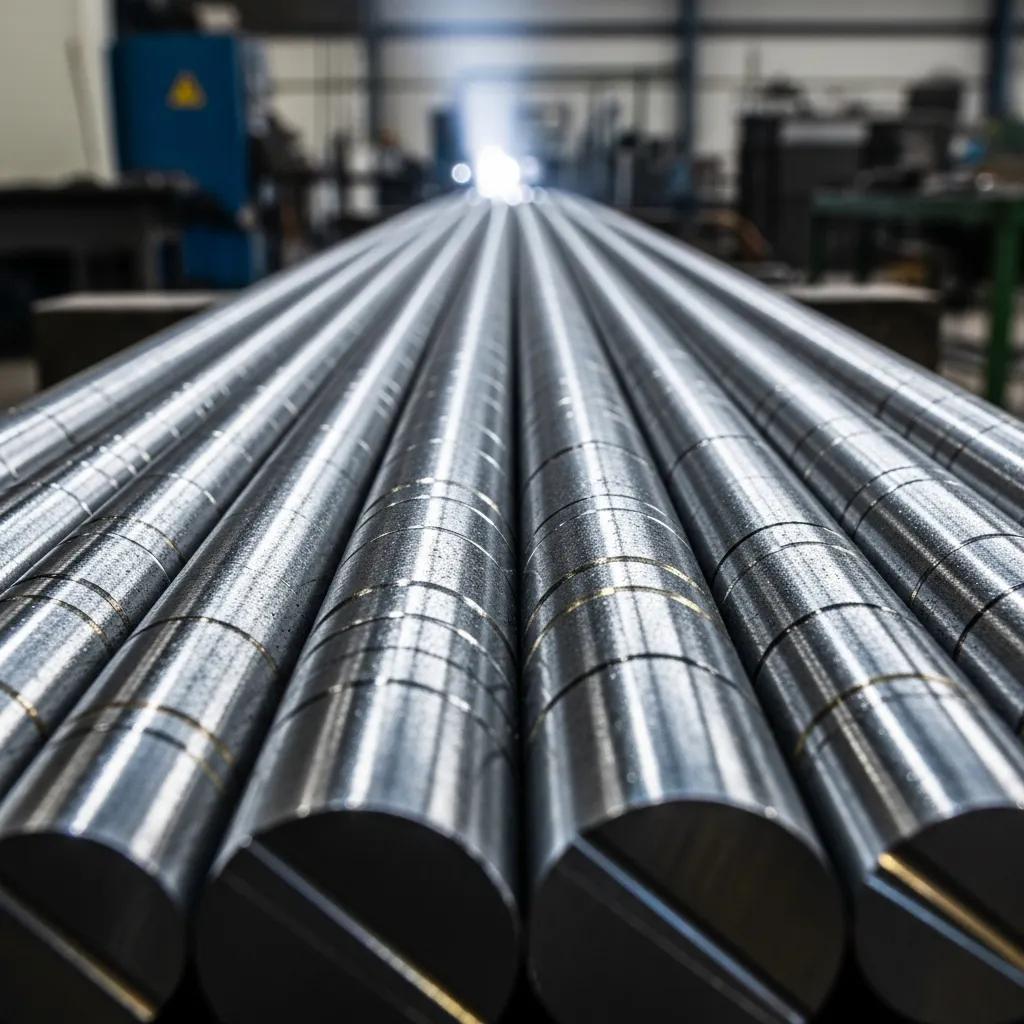
16MnCr5 Steel — Properties, Heat‑Treatment Guidance and Case‑Hardening Applications
16MnCr5 is a low‑alloy chromium‑manganese grade engineered for case hardening. With a modest base carbon level and targeted alloying additions, it accepts carburizing readily to form a hard, wear‑resistant surface over a tough, ductile core. This page breaks down the chemistry that makes 16MnCr5 responsive to carburizing, the mechanical targets to expect in both annealed and case‑hardened states, and the practical heat‑treatment steps — carburizing, quenching and tempering — needed to achieve the surface/core property profile for gears, shafts and other fatigue‑critical parts. You’ll find element ranges and their metallurgical roles, typical tensile and hardness targets, recommended heat‑treatment temperatures and outcomes, application examples for automotive and heavy engineering, and common international equivalents to help with procurement. Finally, we outline how Dhand Steels supplies 16MnCr5 in bright and round bar forms with test certificates and precision straightening for demanding workflows.
What are the key chemical elements in 16MnCr5?
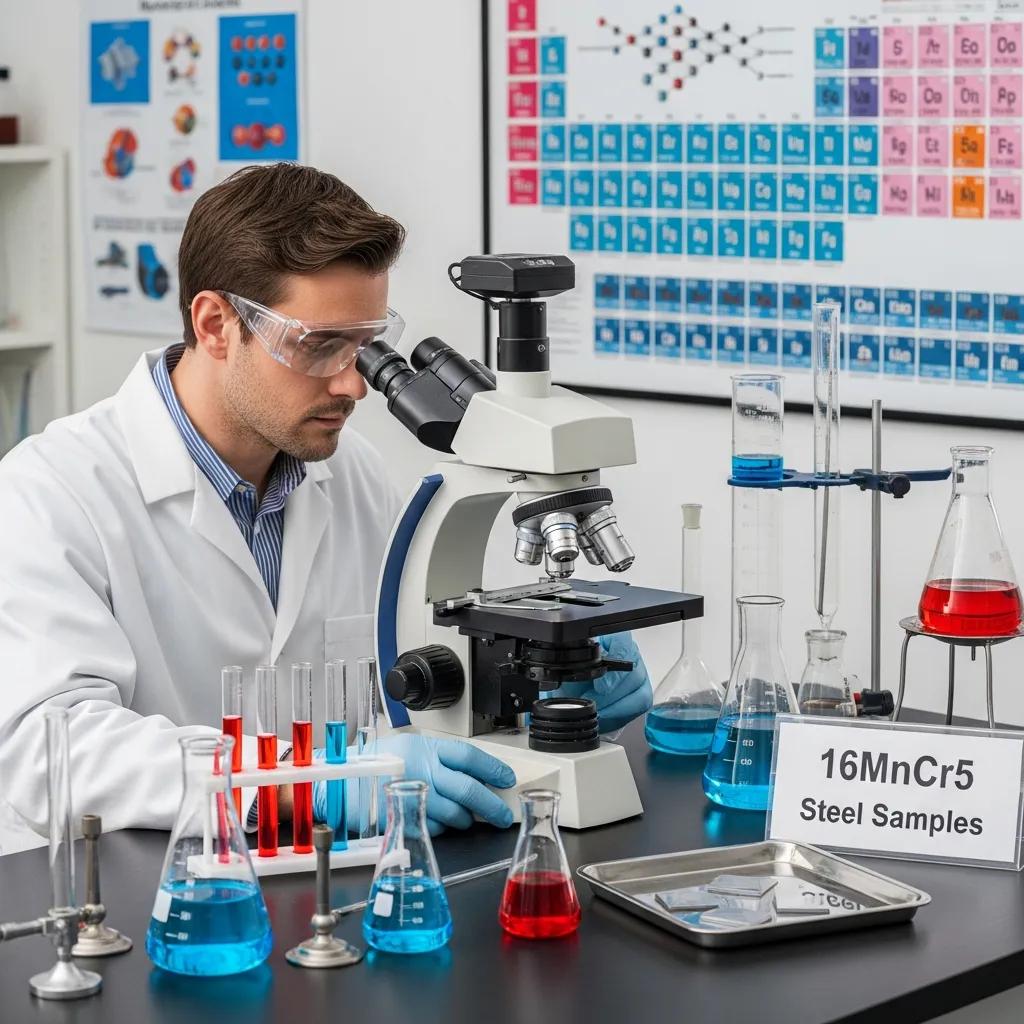
16MnCr5 is defined by a controlled balance of carbon, manganese, chromium and small residuals that together enable effective carburizing and a predictable hard case with a ductile core. The alloy mix improves hardenability and tempering resistance while preserving core toughness for rotating parts. Standards constrain these limits so heat‑treatment response is repeatable. The table below lists typical ranges and the practical effect each element has during processing and service.
| Element | Typical Range (%) | Role/Effect |
|---|---|---|
| Carbon (C) | 0.14–0.19 | Acts as the carbon reservoir for the carburized case and influences core strength; a low base carbon helps control depth and gradient during carburizing. |
| Manganese (Mn) | 0.70–1.00 | Raises hardenability and tensile strength and assists carbon diffusion during carburizing. |
| Chromium (Cr) | 0.70–1.00 | Improves wear resistance and tempering stability of the case and helps refine carbides. |
| Silicon (Si) | 0.15–0.35 | Used as a deoxidizer; contributes modestly to strength and hardness after heat treatment. |
| Phosphorus (P) | ≤0.025 | Kept low because higher levels embrittle grain boundaries and reduce impact toughness. |
| Sulfur (S) | ≤0.035 | Controlled amounts can aid machinability; excess sulfur forms inclusions that harm toughness and surface quality. |
These ranges show how 16MnCr5 balances a low base carbon for a ductile core with alloying that increases hardenability and case performance. Designers use these limits to predict carburized case growth, core tempering response and the final mechanical gradient that controls service life.
Which elements shape 16MnCr5’s alloy behavior?
Manganese and chromium are the principal alloying contributors, with controlled carbon and silicon completing the mix. Carbon provides the basis for a high‑carbon case during carburizing; manganese boosts hardenability so the case transforms to martensite on quench; chromium enhances the case’s tempering resistance and wear performance; silicon mainly deoxidizes and adds small strength gains. These interactions determine how the steel responds to carburizing atmospheres and quench cycles and inform decisions on case depth and tempering regimes for target properties.
How do phosphorus and sulfur affect quality?
Phosphorus and sulfur are residual elements that influence toughness and machinability and are intentionally limited in 16MnCr5 to protect fatigue life and surface integrity. Elevated phosphorus can embrittle grain boundaries and lower impact toughness; sulfur, while helpful in controlled amounts for machining, forms sulfide inclusions that can initiate cracks under cyclic loading if excessive. Steelmakers control these through refining, inclusion morphology control and by specifying maximum P and S limits on material certificates. Keeping these impurities low preserves core toughness and reliable fatigue performance after case hardening.
What mechanical properties make 16MnCr5 suitable for industry?
16MnCr5 delivers a predictable combination of a ductile base metal and the ability to develop a hard, wear‑resistant case after heat treatment — ideal for parts exposed to contact stresses and cyclic loads. In annealed or normalized condition it shows moderate tensile strength and good elongation; after carburizing, quenching and tempering the surface hardness increases substantially while the core stays relatively tough. Key attributes — tensile strength, yield, hardness, elongation and impact toughness — translate directly to performance metrics such as gear tooth fatigue life or shaft shear resistance. The table below summarizes typical targets and why they matter for design.
| Property | Typical Value / Range | Relevance to Application |
|---|---|---|
| Tensile strength (base) | 600–800 MPa (after some heat treatments) | Defines baseline load capacity and affects safety factors for rotating components. |
| Hardness (annealed core) | ~180–220 HB | Allows machining and preserves core ductility for in‑service toughness. |
| Surface hardness (carburized & tempered) | 58–62 HRC (case) | Gives wear resistance and contact fatigue strength for gears and splines. |
| Elongation (A%) | ≥10–16% | Ensures enough ductility to absorb shock and avoid brittle failure. |
| Impact toughness (core) | Application dependent | Essential for resisting sudden loads and maintaining fatigue life under cyclic stress. |
This table links measurable properties to engineering decisions. Engineers use these values to set machining allowances, case depth and tempering windows that meet expected service life.
Typical tensile and hardness values — what to expect
Values differ between the base metal (annealed/normalized) and the final case‑hardened condition, so it’s important to specify both for design and inspection. In the uncarburized state 16MnCr5 typically measures about 180–220 HB depending on mill treatment and allows machining and some cold forming. After carburizing, quenching and tempering, the case hardness can reach 58–62 HRC while the core usually remains much softer — commonly 250–350 HB depending on tempering. Specify hardness mapping and tensile testing standards on procurement documents to ensure parts meet expectations.
How do ductility, toughness and fatigue resistance affect performance?
Ductility and core toughness determine how a part reacts to impact, misalignment and cyclic loading; surface hardness governs wear and rolling contact fatigue resistance. A ductile core that retains toughness after tempering reduces the chance of catastrophic failure because it absorbs overloads instead of propagating surface cracks. Fatigue resistance depends on case depth, hardness gradient, residual stresses and surface finish — when processed correctly, 16MnCr5 components show excellent fatigue life for gears and shafts. For high‑demand parts, designers typically require non‑destructive inspections such as hardness profiles and case depth checks before assembly.
How is 16MnCr5 heat treated for effective case hardening?
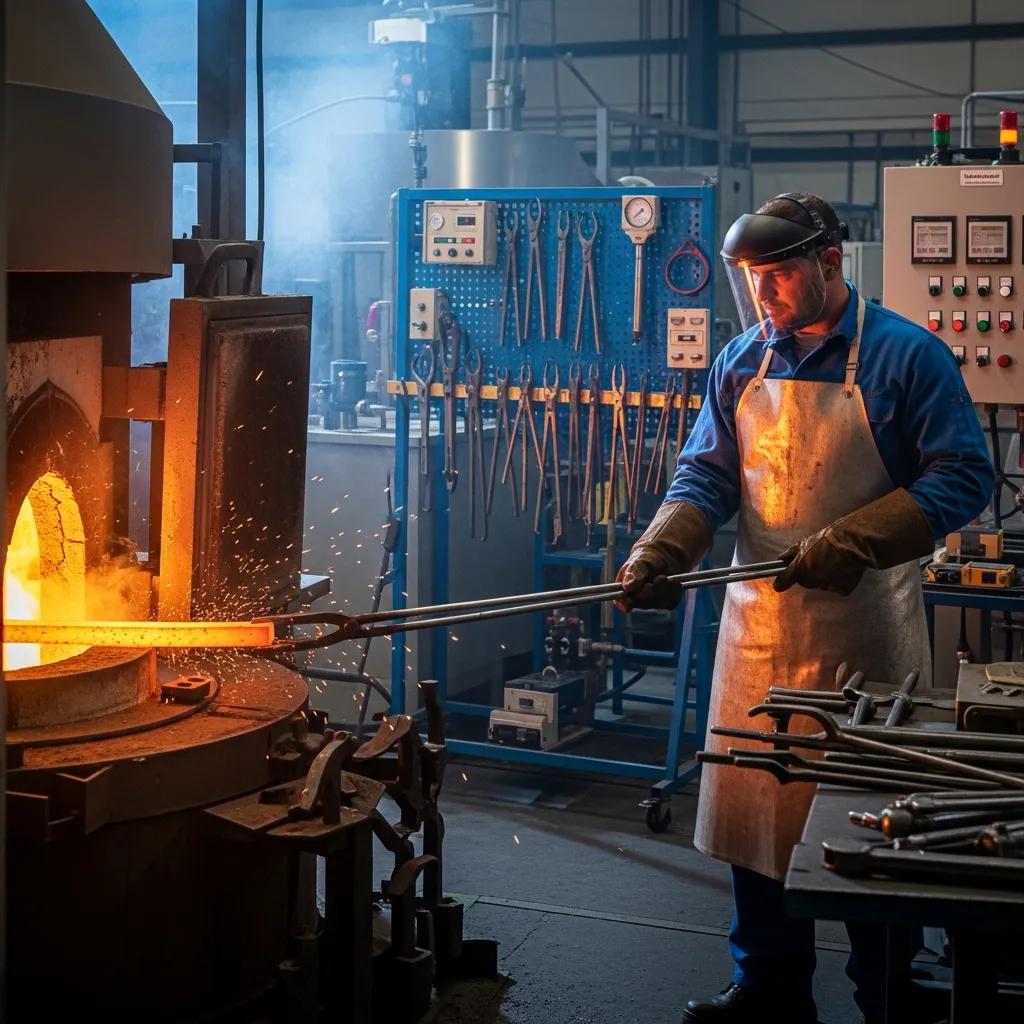
Case hardening of 16MnCr5 generally follows three stages: carburizing to enrich the surface with carbon, quenching to transform the enriched layer to martensite, and tempering to relieve stresses and tune toughness. Carburizing atmosphere, temperature and time set achievable case depth and carbon gradient; quench medium and technique determine surface microstructure and distortion risk; tempering temperature balances hardness against core toughness. Alternatives like vacuum carburizing or carbonitriding offer trade‑offs in case uniformity and distortion control depending on geometry and tolerance requirements. The concise process checklist below highlights typical steps and considerations.
- Pre‑clean and fixture: Clean and fixture parts to reduce scale and ensure even case growth.
- Carburizing: Heat to 900–940°C in a carbon‑rich atmosphere for the calculated time to reach the target case depth.
- Quenching: Rapidly cool in oil or polymer quench to form martensite in the enriched case while managing distortion.
- Tempering: Reheat to 150–200°C (or specified value) to reduce quench brittleness and set the surface/core toughness balance.
These steps form the backbone of a robust case‑hardening cycle. Choosing gas, pack or vacuum carburizing depends on production volume, part complexity and acceptable distortion. The next sections expand on method selection.
Carburizing 16MnCr5 — steps and advantages
Carburizing raises surface carbon to allow formation of a hard martensitic case after quench, while leaving a lower‑carbon, ductile core. Typical carburizing temperatures are 900–940°C with times adjusted to achieve desired case depths — commonly 0.5–2.0 mm for gears and pinions or deeper for heavy‑wear components — using gas, pack or vacuum methods. Gas carburizing offers precise atmosphere control and scalability; pack carburizing is economical for small batches; vacuum carburizing reduces surface oxidation and improves case uniformity. The result is a high‑hardness surface (58–62 HRC) that resists wear and pitting, supported by a low‑carbon core that absorbs shock and bending loads.
Quench and temper — tuning properties
Quenching transforms the carburized surface to martensite, delivering the surface hardness needed for wear resistance; tempering then adjusts the hardness/toughness balance and relieves residual stresses. Quench medium — oil, polymer or pressurized gas — controls cooling rate, martensite formation and distortion. Oil quench is common for its balance of cooling power and distortion control; polymer quenches offer adjustable cooling curves. Tempering temperature is chosen to meet target core and case properties: low tempering preserves surface hardness, higher tempering increases toughness at some hardness cost. Carefully controlled quench and temper cycles minimize cracking, produce a stable hardness gradient and ensure parts meet fatigue and wear requirements.
Where is 16MnCr5 typically used?
16MnCr5 is widely used where a wear‑resistant surface and a tough core are required — for example gears, pinions, shafts and splines in automotive drivetrains, agricultural machinery and heavy engineering. Its predictable carburizing response and ability to accept uniform cases make it a common choice for components subject to contact fatigue, sliding wear or repeated bending. Designers select 16MnCr5 when service life depends on a hard surface to resist pitting and a ductile core to prevent catastrophic fatigue cracks. The list below highlights the most common, high‑value applications.
- Gears and pinions: High contact stresses and rolling fatigue need a hard case and a fatigue‑resistant core.
- Shafts and axles: Bending and torsional loads require ductile cores with wear‑resistant surfaces.
- Sprockets and splines: Sliding contact and indexing applications benefit from controlled case depth.
These application groups show where the material’s strengths deliver measurable benefits and guide decisions on case depth, hardness targets and inspection methods. In practice, many manufacturers order 16MnCr5 in specific product forms to suit machining and heat‑treatment workflows.
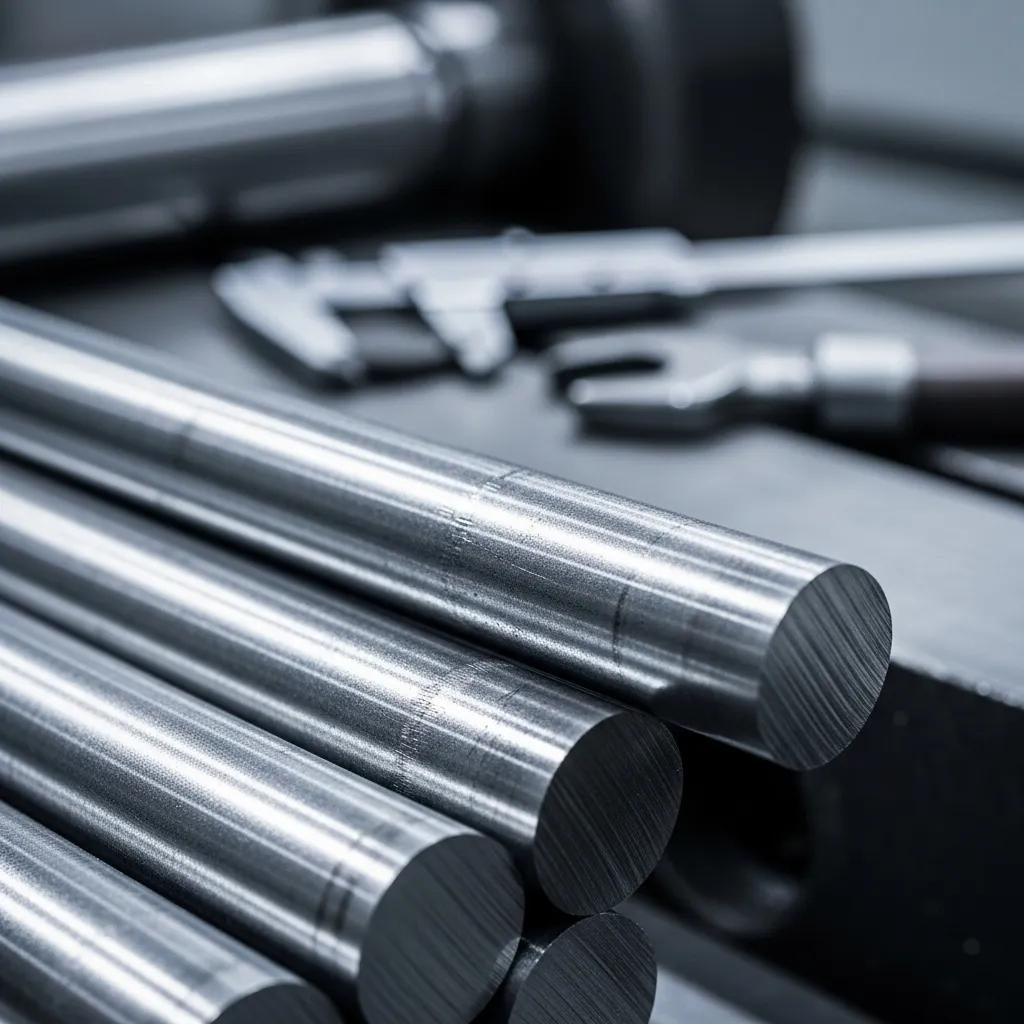
Dhand Steels supplies 16MnCr5 in precision bright and round bars for machining and case‑hardening workflows, and can provide material test certificates or samples on request to support specification verification and initial trials.
Which automotive parts commonly use 16MnCr5?
In automotive applications 16MnCr5 is commonly specified for transmission gears, pinions, driveshaft splines and selector shafts — parts where contact fatigue, wear and bending are primary failure modes. These components need a hard surface to resist micro‑pitting and wear while retaining a core that tolerates bending and impact. Correct case depth, surface hardness and core toughness reduce wear, extend service intervals and lower noise and vibration. Typical quality controls include hardness mapping across tooth profiles, case depth measurement by metallography or microhardness traverses, and residual stress checks for high‑speed parts. Clear inspection criteria ensure predictable on‑vehicle performance.
How is 16MnCr5 used in industrial and heavy equipment?
In industrial and heavy engineering contexts, 16MnCr5 is used for large sprockets, pinion shafts, couplings and similar parts where surface wear and cyclic loading limit life. Harsh environments — for example abrasive conditions in agricultural equipment — may call for thicker cases or protective coatings combined with correct core tempering to avoid premature failure. Key design actions include selecting case depths that move the high‑hardness layer beyond stress concentration zones, planning machining allowances for distortion control, and applying corrosion protection where needed. These steps help maximize service intervals and reduce downtime.
Which international grades and standards align with 16MnCr5?
Buyers commonly cross‑reference 16MnCr5 to international equivalents to support procurement. Typical equivalents include DIN 1.7131, AISI 5115 and JIS SCM415, though small differences in chemistry or processing can affect interchangeability. Procurement teams should always review material test certificates and confirm carbon, manganese and chromium levels plus recommended heat‑treatment practices before accepting substitutes. The table below summarizes common equivalents and practical notes for cross‑referencing.
| Standard | Equivalent Grade | Typical Differences / Notes |
|---|---|---|
| DIN | 1.7131 | Commonly cited as equivalent; verify carbon range and impurity limits. |
| AISI/ASTM | 5115 (approx.) | Similar case‑hardening designation; confirm manganese and chromium minima for interchange. |
| JIS | SCM415 (approx.) | Comparable chemistry; check heat‑treatment guidance and mechanical targets. |
| BS/IS | Comparable case‑hardening grades | Local standards may use different numbers; always request certificates for confirmation. |
This comparison helps procurement and engineering teams identify likely equivalents but underlines the need to review certificates and processing history for true interchangeability.
Dhand Steels can supply 16MnCr5 bright bars compatible with these internationally referenced grades and will provide material test certificates on request to support technical verification and purchasing decisions.
How does 16MnCr5 compare with DIN 1.7131, AISI 5115 and JIS SCM415?
Across standards 16MnCr5 generally aligns closely with DIN 1.7131; AISI 5115 and JIS SCM415 show similar case‑hardening chemistries with modest differences in element limits. Small shifts in carbon or manganese can affect hardenability and required carburizing practice, so buyers should compare certified chemical analyses rather than rely on grade names alone. Interchangeability is common in practice, but always request material test certificates showing actual element percentages and mill heat numbers to confirm suitability for the intended case depth and hardness requirements.
What distinguishes 16MnCr5 from 20MnCr5?
The primary difference is base carbon: 20MnCr5 generally has a slightly higher base carbon than 16MnCr5, which can lead to a harder core if not processed carefully. 16MnCr5’s lower base carbon is often preferred when deeper carburizing is required without creating an overly hard core. Designers pick 16MnCr5 when they need a deep, ductile core with a hard surface produced by controlled carburizing; 20MnCr5 may be chosen where a bit more core strength or a different quench response is acceptable. Verify suitability with certificates and trial heat treatments before substituting grades.
Why choose Dhand Steels for 16MnCr5 bright bars?
Dhand Steels supplies precision bright and round bars of 16MnCr5 tailored for machining and case‑hardening workflows across automotive, agricultural and heavy engineering sectors. We focus on straightened, aligned bars to reduce pre‑processing setup and help deliver predictable heat‑treatment outcomes. Below are the supplier strengths procurement teams commonly evaluate when selecting a bright‑bar vendor.
- Precision straightened bright bars: Supplied straight and accurately aligned to reduce machining setup and improve dimensional consistency.
- Material test certificates available: Batch traceability with chemical and mechanical data supports your quality assurance needs.
- Export and supply capability: We serve domestic and international customers with 16MnCr5 in bright and round bar forms.
These points explain why procurement teams choose a supplier that can meet material specifications and fit their production workflow. Below are additional notes on our quality and customer support practices.
What quality assurance and certifications does Dhand Steels provide?
We prioritise traceability and documented quality by supplying material test certificates with our bright and round bars; certificates typically include chemical composition and basic mechanical test results so buyers can verify grade compliance. Our quality focus also covers dimensional accuracy of straightened bars to reduce machining errors and improve heat‑treatment consistency. For specific certification needs or third‑party test reports, please request documentation at enquiry stage so we can confirm conformance to your project standards and inspection plan.
How does Dhand Steels ensure precision and customer satisfaction?
We ensure precision through manufacturing and straightening practices that deliver aligned bright bars, reducing handling and machine setup time and helping control final part geometry after heat treatment. Our approach emphasises dimensional accuracy and consistent material quality to support predictable case depth control and heat‑treatment outcomes. For new projects we support technical enquiries, provide material test certificates and can arrange sample deliveries so engineering teams can validate machining and heat‑treatment performance before full production.
Frequently Asked Questions
What is the significance of case hardening in 16MnCr5 steel?
Case hardening gives 16MnCr5 a hard, wear‑resistant surface while keeping a tough, ductile core. Carbon is diffused into the surface and converted to martensite on quench, producing a layer that resists wear and contact fatigue — ideal for gears, shafts and other parts under high contact stress. The surface/core balance is what lets these parts run longer and fail safely if overloaded.
How does heat treatment change 16MnCr5’s mechanical properties?
Heat treatment controls final properties: carburizing increases surface carbon so quenching produces a hard case; tempering then reduces brittleness and sets the toughness‑hardness balance. Final tensile strength, impact toughness and hardness are direct outcomes of carburizing parameters, quench method and tempering temperature. Correct cycles are essential to meet application requirements.
What common challenges arise during heat treatment of 16MnCr5?
Typical issues include distortion, cracking and inconsistent case depth. Uneven cooling can cause distortion; excessive residual stress can lead to cracking; and poorly controlled carburizing conditions give variable case depth. Mitigations include good fixturing, controlled quench techniques, proper process monitoring and careful selection of carburizing method for the part geometry.
What role does carbon content play in 16MnCr5 performance?
Carbon is pivotal for case hardening. The specified base range (0.14–0.19%) allows effective carburizing to build a high‑carbon case while keeping the core ductile. Higher base carbon increases core hardness risk and can reduce toughness if not managed; the specified balance supports deep, controllable case growth.
How does 16MnCr5 compare to other case‑hardening steels?
Compared with grades like 20MnCr5 or AISI 5115, 16MnCr5 generally has a lower base carbon, making it preferable when deeper carburizing and a ductile core are required. Each grade has trade‑offs in core hardness and hardenability, so choose based on required case depth, core toughness and processing constraints.
What inspection methods ensure quality of 16MnCr5 components?
Recommended inspections include hardness testing across case and core, metallographic case depth measurement or microhardness traverses, and non‑destructive testing (e.g., ultrasonic) to detect internal flaws. These checks verify the carburizing and heat‑treatment results and reduce the risk of in‑service failure.
Conclusion
Knowing 16MnCr5’s chemistry, mechanical targets and heat‑treatment best practices helps engineers choose the right material for demanding components that need a hard surface and a tough core. When specified and processed correctly, 16MnCr5 delivers reliable wear resistance and fatigue life for gears, shafts and similar parts. At Dhand Steels we supply precision bright bars with traceable test certificates and straightening to support predictable machining and heat‑treatment outcomes. Contact us to discuss samples, certificates or volume supply for your next project.




Comments
0 Comment On Post